




🍓 JUNE’S STRAWBERRY MOON 🍓
This Tuesday night and Wednesday morning, look to the sky for June’s full moon, often called the Strawberry Moon. It will reach its peak fullness at 3:44 a.m. ET on Wednesday, but you can still catch it as a bright, low orb in the east after sunset on Tuesday, and again in the west opposite the sunrise on Wednesday morning.
The Lowest Full Moon in Decades
This month also brings the summer solstice on June 20, which typically means the sun is high in the sky and the moon appears closer to the horizon. However, this Strawberry Moon will be the lowest full moon visible from the Northern Hemisphere in decades! This unusual phenomenon is due to a major lunar standstill. During a standstill, which occurs every 18.6 years, the moon’s orbit is gravitationally pulled by the sun, causing the moon to appear to “stop” changing direction as it reaches its northernmost or southernmost point. While the standstill technically occurred in January, its effects are still influencing our view of the full moon. The last major lunar standstill was in 2006. Conversely, observers in the Southern Hemisphere will witness this full moon at its highest point.
The Strawberry Moon’s Sweet Origin
Despite its name, this full moon won’t resemble a berry. The moniker “Strawberry Moon” comes from indigenous tribes who named it after the ripening and peak season of sweet berries like strawberries. Both the Anishinaabe and Sioux people call it the Strawberry Moon, while the Creeks refer to it as the “blackberry moon” and the Shawnee tribe as the “raspberry moon.”
Spotting the Milky Way and Planets
The full moon isn’t the only celestial highlight this June. The Strawberry Moon will appear near the center of the Milky Way, which enters its “Core Season” from June through August, making its bright core visible annually. To spot it, look for a faint, hazy band arcing towards the south, best seen away from city lights. Long-exposure photography will make it even more vivid.
Additionally, several planets will be visible this month:
- Mars, Jupiter, and Mercury will be low in the west after sunset.
- Venus will shine brightly low in the eastern sky for about two hours before sunrise throughout the month. On June 22, the crescent moon and Venus will appear close together in the early morning eastern sky.
Upcoming Full Moons and Eclipses in 2025
There are six more full moons to anticipate in 2025, including supermoons in October, November, and December. Here’s the remaining list for 2025:
- July 10: Buck Moon
- August 9: Sturgeon Moon
- September 7: Corn Moon
- October 6: Harvest Moon
- November 5: Beaver Moon
- December 4: Cold Moon
Lunar and Solar Eclipses
The sky will also feature two eclipse events later in the year:
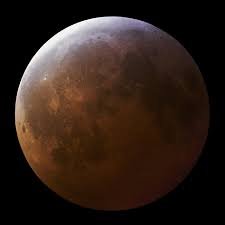
- A total lunar eclipse will be most visible from Europe, Africa, Asia, Australia, parts of eastern South America, Alaska, and Antarctica on September 7 and 8. During a lunar eclipse, Earth is positioned between the sun and moon, causing the moon to pass into Earth’s shadow. When the moon is in the darkest part of this shadow (the umbra), it takes on a reddish hue, earning it the nickname “blood moon.”
- A partial solar eclipse will occur on September 21. This happens when the moon passes between the sun and Earth, but they aren’t perfectly aligned, resulting in the moon blocking only part of the sun’s face, creating a crescent shape. This event will be visible in more remote areas of Australia, Antarctica, and the Pacific Ocean.
Will you be looking up to catch the Strawberry Moon or any of these other celestial events?