





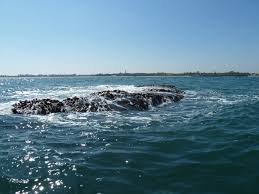
The vast, rugged coastline of Alaska, a land intimately familiar with the raw power of nature, experienced a profound geological event yesterday, Wednesday, July 16, 2025. A formidable magnitude 7.3 earthquake jolted the deep blue waters off its southern expanse, sending a ripple of apprehension – and a subsequent tsunami alert – across its remote communities.
This significant seismic shift, registered by the U.S. Geological Survey (USGS), had its focal point approximately 54 miles (or 87 kilometers) south of the community of Sand Point, close to the picturesque Popof Island. What added to the immediate concern was its relatively shallow depth, pegged at roughly 12.5 miles (about 20.1 kilometers) beneath the ocean floor. Such shallow quakes often impart a more potent jolt to the surface, raising the stakes for coastal regions.
When a significant earthquake rocks a coastal region, time is of the essence. In the wake of yesterday’s robust seismic event off Alaska’s shores, the National Tsunami Warning Center (NTWC) in Palmer swiftly activated its protocols. Their immediate deployment of an urgent tsunami warning underscored the critical need for rapid communication and coordinated action in the face of such natural phenomena. It was a testament to the vigilance and preparedness that such monitoring centers embody, designed precisely for moments when seconds can make all the difference in safeguarding communities. This cautionary measure encompassed a substantial stretch of the Alaskan Peninsula and specific parts of the southern Alaskan coastline, including the strategically important marine passage from Kennedy Entrance to Unimak Pass. Residents in locales like Sand Point, Cold Bay, and the historic fishing town of Kodiak found themselves under the imminent threat of a surge.
The familiar wail of emergency sirens cut through the crisp Alaskan air in places like Kodiak, prompting a swift, orderly evacuation of inhabitants to elevated safety zones. Even the U.S. Coast Guard temporarily relocated personnel from its Kodiak base as a precautionary step.
Fortunately, the initial moments of alarm gave way to a measure of relief. Within approximately an hour of the initial advisory, the NTWC commendably downgraded the warning to a less severe tsunami advisory. This indicated that while localized, potent ocean currents or minor sea-level fluctuations might still pose a peril near the shore, a widespread, destructive inundation was no longer anticipated. Continuous monitoring confirmed the absence of any substantial wave generation, leading to the complete cancellation of the alert by mid-afternoon on July 16th.
Indeed, the observed tsunami proved to be a benign ripple, with a mere 0.2 feet (around 2.4 inches or 6.1 centimeters) recorded at Sand Point. Encouragingly, preliminary assessments have revealed no major structural damage or serious injuries across the affected areas. A solitary report detailed some minor disarray within a Sand Point general store – primarily the breakage of glass containers.
This latest geological stir serves as a vivid illustration of Alaska’s profound connection to the “Pacific Ring of Fire.” This expansive, horseshoe-shaped seismic belt encircles the Pacific Ocean, acting as a geological crucible where tectonic plates constantly grind, collide, and dive beneath one another. It’s a dynamic zone renowned for intense volcanic activity and frequent, powerful earthquakes. For Alaska, residing squarely within this energetic ring, experiencing such substantial tremors is not an anomaly but rather an intrinsic characteristic of its very landscape. It’s a constant, powerful reminder of the Earth’s relentless subterranean ballet that shapes our world. Intriguingly, this particular earthquake marks the fifth instance of a magnitude 7 or greater tremor in roughly the same geographical vicinity since 2020, underscoring a persistent and active seismic pattern in these captivating, yet tectonically vibrant, Alaskan waters.
Here are 21 unique points expanding on the role of the NTWC and Alaska’s geological setting, as of July 17, 2025:
On the National Tsunami Warning Center (NTWC) Response:
- The NTWC, situated in Palmer, Alaska, acts as a primary sentinel for tsunami threats across a vast portion of North America.
- Its activation is a standard, critical protocol immediately following any significant offshore seismic event with potential tsunamigenic characteristics.
- The center’s swift issuance of an urgent tsunami warning demonstrates a robust, pre-established emergency response framework.
- This rapid alert is designed to provide coastal communities with precious time for evacuation and preparedness.
- The NTWC’s operations are a testament to advanced seismological monitoring and real-time data analysis capabilities.
- It continuously monitors a network of seismic sensors and deep-ocean tsunami detection buoys (DART buoys) for anomalies.
- The decision to downgrade the warning to an advisory, then cancel it, highlights the center’s dynamic assessment process based on evolving data.
- Such adjustments prevent unnecessary prolonged disruption while maintaining public safety as the paramount concern.
- The NTWC’s existence and efficacy are a direct legacy of past devastating tsunami events, particularly the 1964 Great Alaska Earthquake.
- Beyond immediate alerts, the NTWC also plays a role in public education and community preparedness programs for tsunami hazards.
- Their communication channels extend through various platforms, ensuring wide dissemination of critical information to emergency managers and the public.
On Alaska’s Geological Setting and the Pacific Ring of Fire:
- Alaska is not merely “on” the Pacific Ring of Fire; it forms a crucial and highly active segment of this global seismic belt.
- The “Ring of Fire” is a misnomer in shape, being more of a horseshoe, but aptly named for its intense volcanic and seismic activity.
- This geological activity is driven by the relentless movement and interaction of several major tectonic plates, particularly the Pacific Plate subducting beneath the North American Plate.
- This subduction process is directly responsible for the frequent large earthquakes and numerous active volcanoes found throughout Alaska, especially along the Aleutian Arc.
- The recent 7.3 magnitude event is a recurring signature of this underlying tectonic dynamism, not an isolated incident.
- Alaska experiences an average of one “great” (magnitude 8 or larger) earthquake every 13 years and a magnitude 7 to 8 earthquake annually.
- The profound marine trenches and volcanic island arcs that characterize the Ring of Fire are evident features along Alaska’s coastline.
- Living in Alaska means a constant awareness of seismic risk, shaping everything from building codes to emergency drills.
- The geological forces at play in this region are colossal, constantly reshaping the landscape and dictating the natural hazards faced by its inhabitants.
- Understanding the intricate dance of these tectonic plates is fundamental to predicting and mitigating the risks associated with living in this geologically vibrant part of the world.