




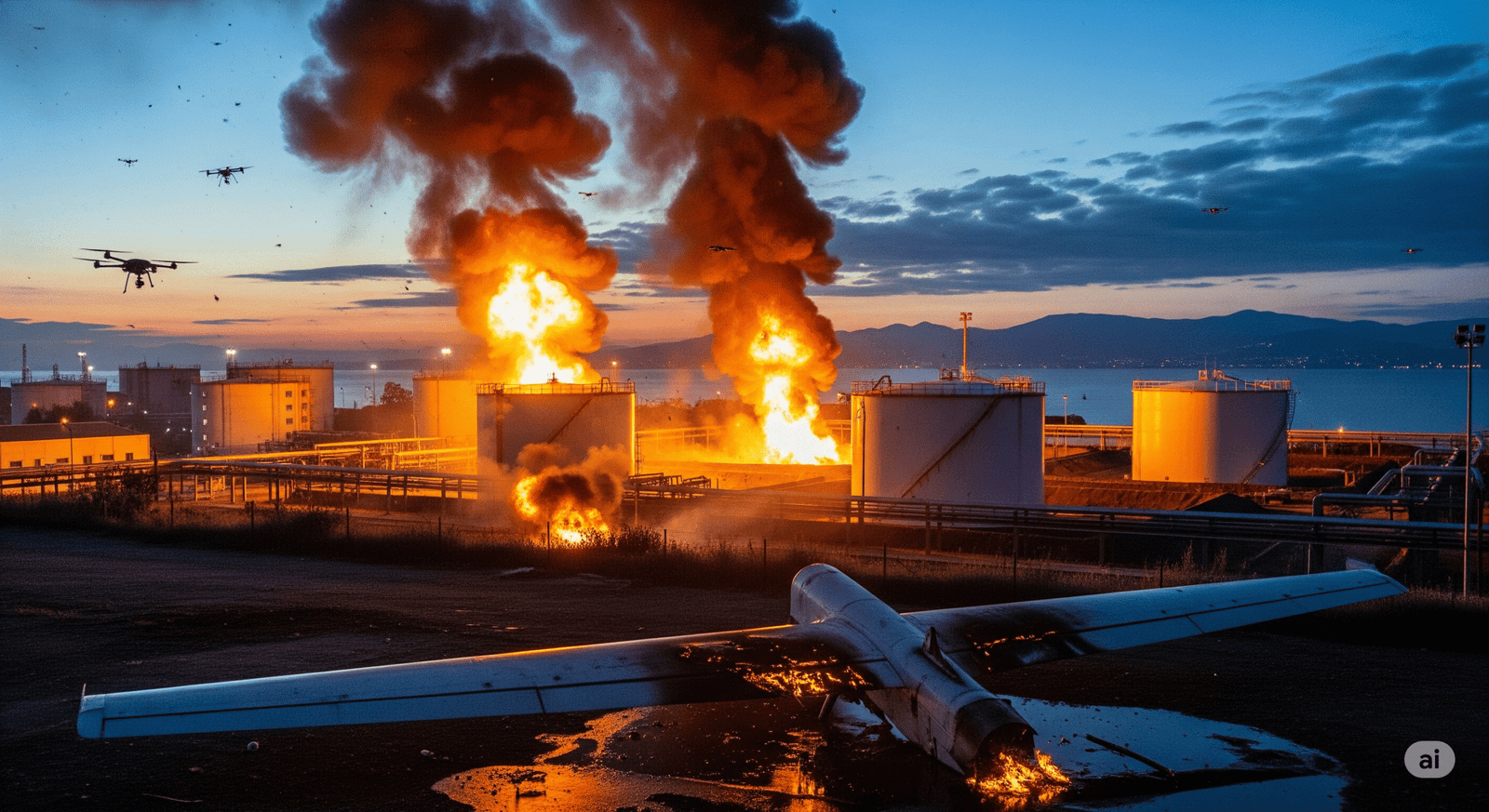
The conflict between Russia and Ukraine has entered a new and increasingly volatile phase, defined not by large-scale ground offensives, but by a relentless and expanding shadow war fought primarily with unmanned aerial vehicles. The latest strike on an oil depot in Sochi, a major Russian resort city on the Black Sea, is a stark reminder that the battlefront is no longer confined to the territories of Ukraine. This attack, confirmed by Russian authorities on Sunday, August 3, 2025, represents a significant escalation in Ukraine’s strategy of deep-strike retaliation.
For months, the world has watched as the skies above Ukraine have become a theater of devastating aerial assault. July 2025, in particular, was a grim milestone, with Russia launching a record number of drones at its neighbor. These attacks have caused immense suffering, claiming civilian lives and leaving communities shattered. In response, Ukraine has systematically taken the fight to Russian territory, focusing on critical infrastructure that fuels Moscow’s war machine. The strike in Sochi, which caused a massive fire at a key oil storage facility, fits this pattern perfectly. It is a powerful, symbolic, and strategic blow aimed at disrupting the flow of fuel and resources to the Russian military.
The location of the attack itself is highly significant. Sochi, a city renowned for hosting the 2014 Winter Olympics, is far from the traditional front lines and is not a frequent target of Ukrainian aggression. This deliberate choice sends a clear message: no part of Russia’s economic or logistical network is beyond the reach of Ukrainian drones. While Russian authorities were quick to report the incident and confirm that air traffic at the local airport was briefly suspended, they were also keen to state that there were no casualties, likely to downplay the severity of the strike. The immediate and widespread response from Russian firefighters, however, paints a picture of a serious and large-scale incident.
This new phase of the war is a dangerous cycle of tit-for-tat escalation. As Ukraine’s drone strikes become more frequent and effective, so too does Russia’s retaliatory bombardment. The same day as the Sochi attack, Russian forces launched a missile strike on the Ukrainian city of Mykolaiv, injuring at least seven people and causing significant damage to civilian infrastructure. Overnight, the Ukrainian capital of Kyiv was also targeted. This reciprocal violence leaves little room for optimism regarding an imminent end to the conflict. Both sides are increasingly committed to a strategy of attrition, aiming to cripple the other’s capacity to wage war.
The international community, though united in its condemnation of the initial invasion, finds itself in a complex diplomatic landscape. While Western allies continue to supply Ukraine with military aid, a lasting peace agreement remains elusive. U.S. President Donald Trump has issued a series of ultimatums and deadlines for a peace deal, threatening new tariffs on Russia. However, these threats have so far failed to halt the fighting. Russian President Vladimir Putin and his allies have consistently rejected the terms of such ultimatums, signaling an unwavering commitment to their long-term military objectives.
The war has now entered its fourth year, and the human cost continues to mount. The UN has reported a significant increase in civilian casualties in the first half of 2025, highlighting the devastating impact of the intensified hostilities on ordinary people. The strategic targeting of infrastructure, while a military tactic, invariably has ripple effects on civilians, from disrupted transport and energy supply to the constant threat of aerial bombardment.
In this climate of escalating violence, the drone attack on the Sochi oil depot is more than just a single news story; it is a critical piece of a larger puzzle. It is a testament to Ukraine’s evolving military capabilities, a symbol of Russia’s vulnerability, and a grim indicator of a conflict with no clear end in sight. As the summer of 2025 unfolds, the world watches with bated breath, hoping that this dangerous cycle of strikes and retaliation does not spiral further out of control.
Based on the most recent reports from August 3, 2025, here are 21 bullet points on the latest developments in the Russia-Ukraine war, with a specific focus on the attack in Sochi.
- Date: August 3, 2025
- Event: A Ukrainian drone attack caused a significant fire at an oil depot.
- Location: The attack occurred in Sochi, a major resort city in southwestern Russia, specifically in the Krasnodar region.
- Impact: Drone wreckage reportedly hit an oil tank, sparking a large fire.
- Emergency Response: More than 120 firefighters were deployed to the site to extinguish the blaze.
- Casualties: Russian officials have so far reported no casualties from the attack.
- Infrastructure Disruption: Air traffic at Sochi’s airport was temporarily suspended but has since resumed.
- Context of Retaliation: This strike is part of a series of Ukrainian attacks on Russian energy and military infrastructure.
- Escalation: The attack follows a period of heightened hostilities, particularly a record number of Russian drone attacks on Ukraine in July.
- Ukrainian Strategy: Ukraine’s targeting of Russian energy infrastructure is seen as a strategic move to disrupt Russia’s war machine and retaliate for similar attacks on its own territory.
- Recent Precedent: Just days prior, on August 2, Ukraine also reportedly struck the Ryazan oil refinery in central Russia.
- Ukrainian Silence: Ukrainian officials have not officially commented on the Sochi attack, a common practice for such operations.
- Russian Response: The governor of the Krasnodar region, Veniamin Kondratiev, confirmed the attack via a public message on Telegram.
- Mykolaiv Attack: Simultaneously, Russia launched a missile strike on the city of Mykolaiv in southern Ukraine, injuring at least seven civilians and damaging civilian homes.
- Kyiv Under Attack: Russia also conducted a short-lived missile attack on the Ukrainian capital, Kyiv, overnight.
- July’s High-Intensity: The month of July 2025 saw Russia launch over 6,000 drones at Ukraine, a record high since the full-scale invasion began in 2022.
- International Condemnation: The increase in attacks from both sides has drawn renewed international concern and calls for a ceasefire.
- Civilian Casualties: The UN mission in Ukraine has noted a significant increase in civilian casualties in the first half of 2025 compared to the previous year.
- Geographic Significance: Sochi, located approximately 400km from the Ukrainian border, is a relatively rare target for such attacks, making this strike particularly notable.
- Propaganda War: Both Russia and Ukraine use these attacks to showcase their military capabilities and project an image of strength to their respective populations and the world.
- Diplomatic Stalemate: Despite continued international pressure and the U.S. setting deadlines for a peace deal, diplomatic efforts have so far failed to produce a lasting ceasefire.
When, Where, Why, and Who
- When: The attack occurred on the night leading into Sunday, August 3, 2025.
- Where: The target was an oil depot in the city of Sochi, located in the Krasnodar region of southwestern Russia.
- Why: Ukraine has been systematically targeting Russian energy and military infrastructure in retaliation for Russia’s relentless missile and drone attacks on Ukrainian cities and infrastructure. This specific strike aims to disrupt Russian logistics and military supply chains by hitting a key fuel storage facility.
- Who: The attack was carried out by the Ukrainian military, using drones. The Russian governor of the Krasnodar region, Veniamin Kondratiev, confirmed the attack.