




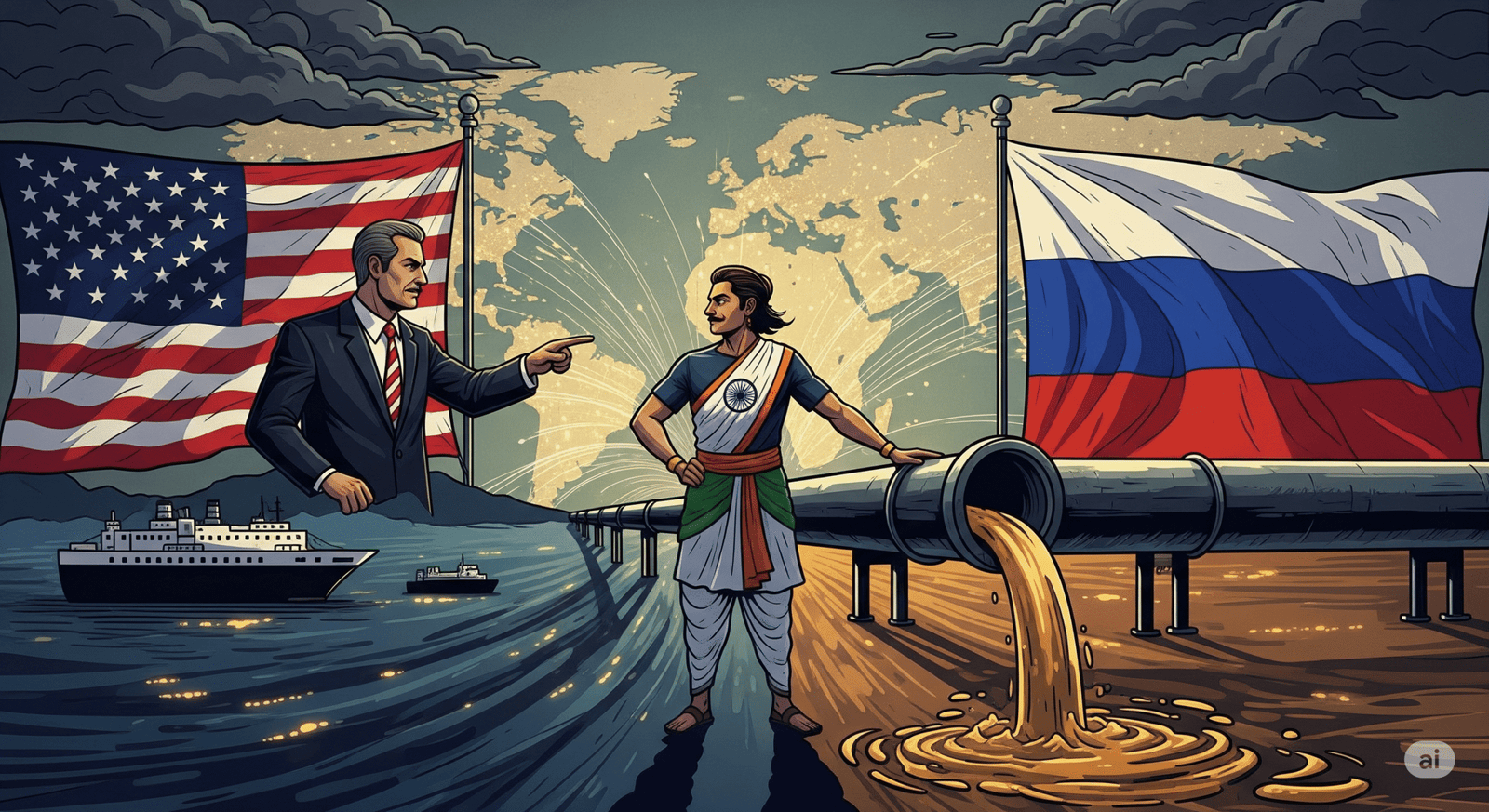
In a powerful demonstration of its commitment to an independent foreign policy and national self-interest, India has officially declared that it will continue to purchase crude oil from Russia. This decision, announced by senior government officials on Sunday, August 3, 2025, is a direct and public defiance of a new ultimatum from the United States, which had threatened to impose sweeping tariffs on any nation that continues to do business with Russia. India’s stance underscores a new reality in global geopolitics, where non-Western powers are increasingly willing to chart their own course, even in the face of immense pressure from a long-time strategic partner.
India’s decision is rooted in a clear and compelling economic logic. Since the onset of the Ukraine war in 2022, when Western sanctions isolated Russia from its traditional European energy markets, India emerged as a crucial buyer of Russian crude. The price advantage was simply too significant to ignore. By purchasing oil at a steep discount, India has been able to stabilize its domestic economy, manage soaring inflation, and meet the energy demands of its 1.4 billion citizens and rapidly growing industrial sector. For a country that imports over 85% of its crude oil, the savings from this trade are a vital component of its economic resilience. As one senior Indian official stated, “Our energy needs are paramount, and we will not compromise on our energy security.” This statement is not just a diplomatic platitude; it is an assertion of a nation’s fundamental right to prioritize its own economic survival.
The U.S. threat, which came in the form of a deadline from the Trump administration, aimed to create a binary choice: either align with Washington’s policy of isolating Russia or face severe economic penalties. For India, however, this was a false choice. Its relationship with Russia is not a new one. It is a decades-old strategic partnership rooted in defense, technology, and energy cooperation. Furthermore, its ties with the U.S. are also vital, particularly in the context of the Indo-Pacific region and the shared goal of counterbalancing China’s rise. India’s refusal to buckle under pressure demonstrates its strategic dexterity and its determination to maintain its non-aligned stance, which allows it to engage with multiple global powers without being dictated to by any single one.
The economic and diplomatic fallout of this decision could be significant. While India and the U.S. have a strong and growing partnership, particularly in defense and technology, a public defiance of a key U.S. policy could strain relations. Washington has invested considerable diplomatic capital in trying to create a united front against Russia, and India’s decision undermines that effort. However, India appears to be banking on the fact that its strategic importance to the U.S., particularly as a counterbalance to China, is too great for Washington to risk a total rupture in the relationship. The use of alternative currencies like the rupee and ruble for a significant portion of the oil trade also insulates India from potential U.S. sanctions on financial institutions, further strengthening its resolve.
In a world where new power centers are emerging, India’s decision is a harbinger of a multipolar future. It shows that the era of Western-led policy imposition may be drawing to a close. India is not alone in this. Other countries have also demonstrated a willingness to prioritize their own national interests over those of the U.S., suggesting a growing global consensus that the old rules no longer apply. For India, the continued purchase of Russian oil is more than just a transaction; it is a declaration of sovereignty, a vote of confidence in its own economic future, and a clear signal to the world that it will not be swayed from its chosen path.
Based on the latest reports from August 3, 2025, here are 21 bullet points on India’s decision to continue purchasing Russian oil.
- Date: August 3, 2025
- Stance: Indian officials have officially stated that the country will continue to purchase crude oil from Russia.
- Reason: The primary reason cited is the country’s national interest and energy security.
- U.S. Threats: This decision comes despite threats from the U.S. regarding tariffs and potential sanctions.
- Tariff Context: The threats are linked to U.S. President Donald Trump’s new tariff regime, which aims to punish nations that continue to do business with Russia.
- India’s Purchase History: India became one of the largest buyers of Russian crude oil following the start of the Ukraine war in 2022.
- Price Advantage: India has been able to purchase Russian oil at discounted prices, which has been a major financial benefit.
- Oil Import Volume: India’s oil imports from Russia have remained consistently high over the past three years.
- Official Statement: A senior Indian government official stated, “Our energy needs are paramount, and we will not compromise on our energy security.”
- Diplomatic Pressure: India has faced significant diplomatic pressure from Western nations to reduce its reliance on Russian energy.
- Strategic Partnership: India’s refusal to comply highlights its commitment to an independent foreign policy, balancing its relationships with both the U.S. and Russia.
- Economic Benefit: The cheap oil has helped India to manage domestic inflation and stabilize its economy.
- U.S. Ultimatum: President Trump had given countries a deadline to cease business with Russia or face new economic penalties.
- India’s Response to Ultimatum: India’s statement is a direct defiance of the U.S. ultimatum.
- Meeting Demand: The purchases are crucial for meeting the energy demands of India’s rapidly growing economy.
- Long-Term Contracts: Indian refineries have entered into several long-term supply contracts with Russian oil companies.
- Broader Context: The decision is part of a larger trend where non-Western powers are resisting U.S. pressure to isolate Russia.
- Rupee-Ruble Trade: A significant portion of the oil trade is conducted in national currencies, bypassing the U.S. dollar and Western banking systems.
- Future Outlook: India is expected to continue its policy, citing its responsibility to its 1.4 billion citizens.
- Impact on U.S.-India Relations: The move could strain relations between the U.S. and India, a key American partner in the Indo-Pacific.
- Global Energy Market: India’s continued purchases of Russian oil keep a significant amount of Russian crude in the global market, undermining Western sanctions.
When, Where, Why, and Who
- When: The official statement was made on Sunday, August 3, 2025. The U.S. threats and deadlines were issued in the preceding weeks.
- Where: The decision was announced in New Delhi, India. The crude oil trade takes place between Russia and India.
- Why: India’s government has decided to continue purchasing Russian oil to secure its energy needs, take advantage of discounted prices to support its economy, and assert its independent foreign policy. This is being done in defiance of new U.S. tariffs and sanctions aimed at isolating Russia.
- Who: The decision was announced by senior Indian officials on behalf of the government. The key figures involved are the Indian government, particularly its Ministry of Petroleum and Natural Gas, the U.S. government under President Donald Trump, and various Indian and Russian oil companies.