





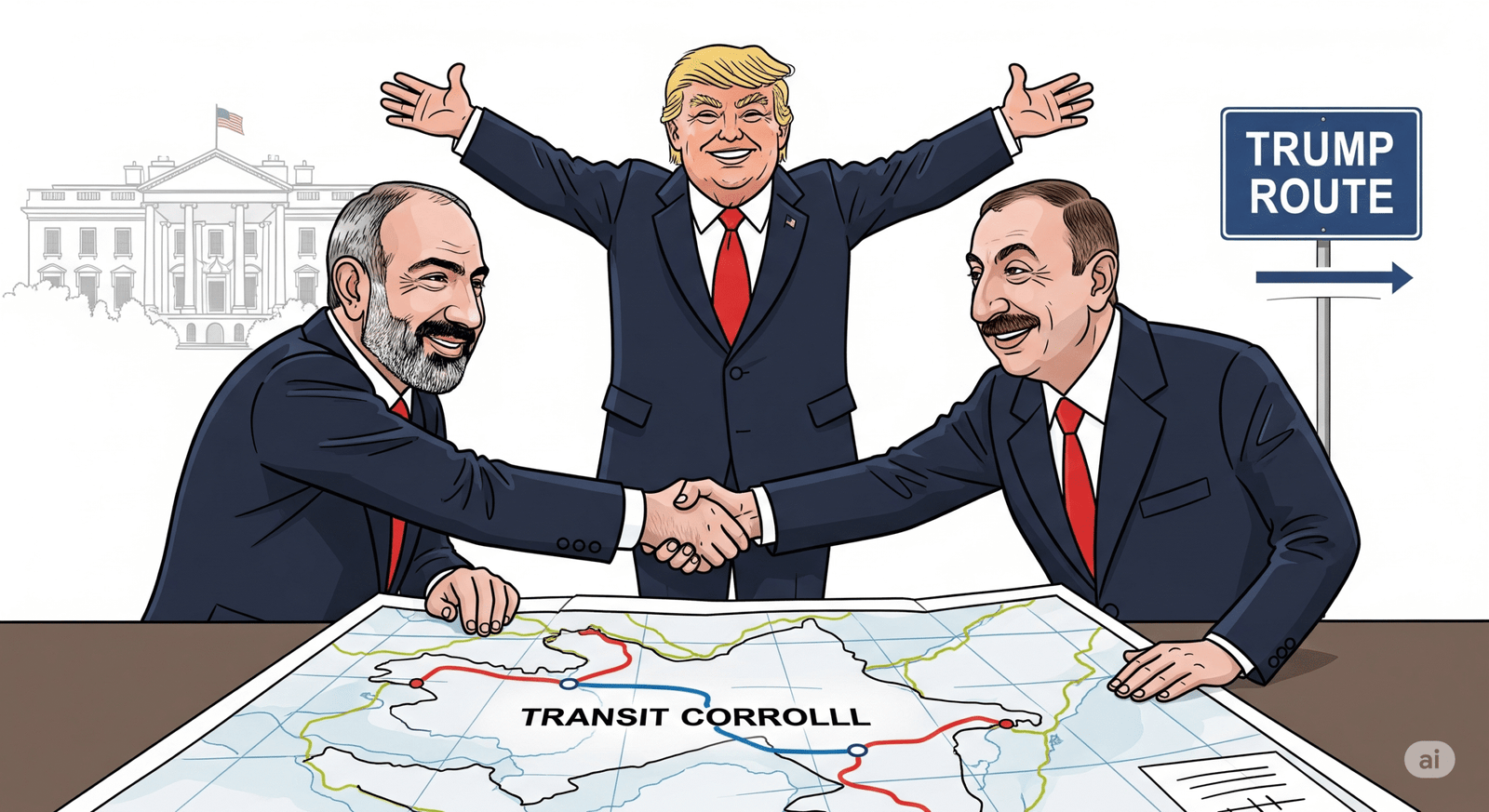
In a stunning diplomatic breakthrough, the leaders of Armenia and Azerbaijan have signed a landmark peace agreement at the White House, brokered by U.S. President Donald Trump.30 This historic pact, which aims to bring a definitive end to a conflict spanning nearly four decades, not only reshapes the geopolitical landscape of the South Caucasus but also introduces a new and highly significant element: a major transit corridor to be named the “Trump Route for International Peace and Prosperity.”31 While the ink on the documents is still fresh, the implications are already reverberating across the globe, signaling a new era of connectivity and a notable shift in regional power dynamics.
The conflict between Armenia and Azerbaijan, primarily centered around the disputed Nagorno-Karabakh region, has been a source of immense suffering and instability for generations.32 Despite numerous attempts at international mediation, including efforts by the OSCE Minsk Group, a lasting resolution remained elusive.33 The recent peace deal, however, addresses one of the most contentious issues that has long stalled negotiations: the demand for a transit corridor connecting Azerbaijan to its Nakhchivan exclave through Armenian territory.34 This is where the “Trump Route” comes in, a proposed network of railway lines, oil and gas pipelines, and fiber optic cables that promises to unlock the economic potential of a region long isolated by hostility.35
For Azerbaijan, the corridor is a game-changer. It provides a direct and reliable link to Nakhchivan and, crucially, to its ally, Turkey.36 This newfound connectivity could significantly bolster its position as a major energy and trade hub, strengthening its ties with Europe and beyond. For Armenia, a landlocked nation, the agreement, while controversial to some, offers the promise of open borders and economic opportunities that have been dormant since the early 1990s.37 The White House has affirmed that the deal respects Armenia’s sovereignty and territorial integrity, a critical point that the Armenian government has emphasized in its public statements.38
The diplomatic triumph is a major geopolitical win for the United States. By successfully mediating this agreement, the Trump administration has not only secured a significant foreign policy achievement but has also effectively challenged Russia’s traditional role as the primary power broker in the region.39 Russia, which has historically maintained a presence and influence over both former Soviet republics, has seen its sway diminish, particularly after its peacekeepers failed to prevent a full-scale military operation in 2023.40 The new deal gives the U.S. exclusive rights to develop the transit corridor for up to 99 years, solidifying a long-term American presence and commercial interest in the South Caucasus.41 This move is a clear signal that the U.S. is seeking to expand its influence and create new strategic partnerships, much to the dismay of regional rivals like Russia and Iran.
The reactions to the deal have been varied. On one hand, both President Ilham Aliyev and Prime Minister Nikol Pashinyan have been effusive in their praise for President Trump, with both leaders indicating their intention to nominate him for the Nobel Peace Prize.42 This support from two former adversaries is a powerful testament to the perceived success of the American-brokered negotiations. On the other hand, the deal has been met with skepticism and even bitterness from some segments of the Armenian community, particularly in light of the 2023 events in Nagorno-Karabakh which resulted in the exodus of over 100,000 ethnic Armenians.43 Critics argue that normalizing relations so soon after what they consider to be ethnic cleansing is a moral compromise.44
As negotiations for the development of the “Trump Route” begin, and with at least nine developers already expressing interest, the world will be watching closely. While the peace declaration is not yet a legally binding treaty, it represents a momentous step forward. The challenge now lies in the implementation of the agreement, ensuring that the promise of peace and prosperity is realized while respecting the sovereignty and security of both nations. If successful, this deal could not only end a long and bloody conflict but also serve as a blueprint for American diplomacy in other intractable disputes around the world.
Based on recent news reports, it appears there has been a significant development in the relationship between Armenia and Azerbaijan.1 The leaders of both countries, with the mediation of U.S. President Donald Trump, have signed an agreement at a White House summit aimed at ending decades of conflict.2 The deal includes the creation of a transit corridor, referred to as the “Trump Route,” which will connect Azerbaijan to its Nakhchivan exclave.3
Here are 21 key points about this latest news:
- Date: August 9, 2025.4
- A peace agreement has been signed by the leaders of Armenia and Azerbaijan.5
- The agreement was brokered by U.S. President Donald Trump.6
- The signing ceremony took place at a White House summit.7
- The deal is aimed at ending decades of conflict between the two nations.8
- A major feature of the agreement is the creation of a new transit corridor.9
- This corridor is to be named the “Trump Route for International Peace and Prosperity.”10
- The route will connect Azerbaijan to its Nakhchivan exclave, which is separated by a strip of Armenian territory.11
- The corridor’s development rights will be held by the United States for up to 99 years.12
- The deal is seen as a significant geopolitical shift, reducing Russia’s influence in the region.13
- Both Armenian Prime Minister Nikol Pashinyan and Azerbaijani President Ilham Aliyev have credited Trump for the breakthrough.14
- Aliyev and Pashinyan have both indicated they will nominate Trump for the Nobel Peace Prize.15
- The agreement also includes bilateral deals between the U.S. and both countries to boost cooperation in energy, technology, and the economy.16
- The deal opens key transportation routes that have been closed since the early 1990s.17
- The “Trump Route” is expected to include a rail line, oil and gas pipelines, and fiber optic lines.18
- While the deal has been hailed as a breakthrough, some experts caution that it is not yet a legally binding document.19
- The agreement allows the U.S. to lift restrictions on security cooperation with Azerbaijan, which were in place since 1992.20
- Negotiations on the development of the corridor are expected to begin soon, with at least nine developers reportedly interested.21
- The deal is viewed with bitterness by some Armenians, particularly in light of the 2023 military action in Nagorno-Karabakh.22
- The deal also reportedly includes the dissolution of the OSCE Minsk Group, which has mediated the conflict since the 1990s.23
- The reopening of the transit corridor provides Azerbaijan with a more direct link to Turkey and onward to Europe.24
When, Where, Why, and Who
- When: The peace agreement was signed on Friday, August 8, 2025.25
- Where: The signing ceremony was held at the White House in Washington, D.C.26
- Why: The agreement was brokered to bring an end to a decades-long conflict between Armenia and Azerbaijan, which has caused significant loss of life and instability in the South Caucasus region.27 The deal aims to reopen key transportation routes and normalize relations, while also increasing U.S. influence in a region where Russia’s power has been declining.28
- Who: The key parties involved are Armenian Prime Minister Nikol Pashinyan, Azerbaijani President Ilham Aliyev, and U.S. President Donald Trump, who mediated the deal.29