





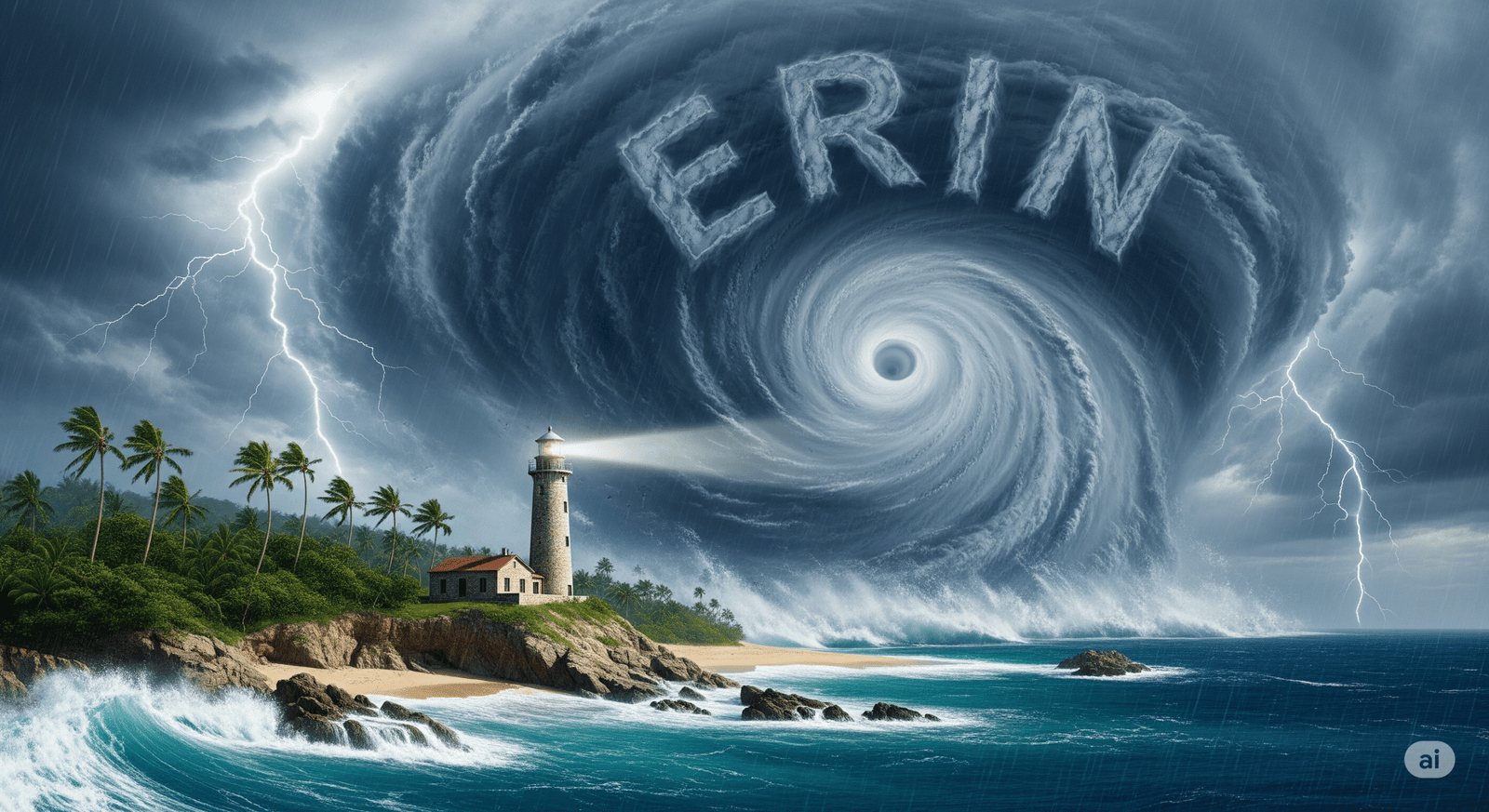
The tranquility of the Caribbean has been shattered as Hurricane Erin rapidly intensified into a dangerous Category 5 storm, posing a significant threat to several islands in its projected path. With sustained winds reaching formidable speeds, Erin is now considered a major hurricane, capable of causing catastrophic damage. As the storm churns across the warm waters of the Atlantic, governments and residents are bracing for its impact, with a particular focus on preparedness and evacuation efforts. In a proactive move, the U.S. government has already begun deploying emergency workers to Puerto Rico as a precautionary measure, signaling the seriousness with which this impending natural disaster is being taken.
The intensification of Hurricane Erin to a Category 5 status is a cause for grave concern. Category 5 hurricanes are the most powerful on the Saffir-Simpson scale, characterized by sustained wind speeds of 157 mph (252 km/h) or higher. Such storms are capable of causing widespread and devastating damage, including the destruction of homes and businesses, the collapse of infrastructure, and significant coastal erosion due to storm surge. The potential for loss of life in areas directly impacted by a Category 5 hurricane is also very high, making timely and effective preparedness measures absolutely critical.
The projected path of Hurricane Erin is being closely monitored by meteorological agencies. While the exact trajectory can shift, current forecasts suggest that several Caribbean islands lie within the potential impact zone. Residents in these areas are being urged to heed the warnings issued by their local authorities, which typically include instructions on securing homes, stocking up on essential supplies, and identifying evacuation routes and shelters. The experience of past devastating hurricanes in the Caribbean underscores the importance of taking these warnings seriously and acting decisively to protect life and property.
The preemptive deployment of emergency workers to Puerto Rico by the U.S. government is a commendable step in disaster preparedness. This early action will allow for a more rapid and effective response in the aftermath of the hurricane, should Puerto Rico be significantly impacted. Emergency workers are typically equipped to provide essential services such as search and rescue, medical assistance, and the distribution of aid. Having these resources in place before the storm hits can significantly enhance the ability to save lives and alleviate suffering.
Beyond Puerto Rico, other Caribbean nations are undoubtedly activating their own disaster preparedness plans. These plans often involve measures such as securing infrastructure, clearing drainage systems, activating emergency shelters, and communicating vital information to the public. The level of preparedness can vary from island to island, often depending on resources and past experiences with severe weather events. However, the intensification of Erin to a Category 5 storm serves as a stark reminder for all potentially affected areas to be on high alert and to take all necessary precautions.
The formation and intensification of hurricanes are complex processes influenced by factors such as sea surface temperatures, atmospheric conditions, and wind patterns. Climate change is also increasingly being studied for its potential role in influencing the frequency and intensity of these powerful storms. While attributing any single hurricane solely to climate change is difficult, the scientific consensus suggests that warmer ocean temperatures can provide more energy for hurricanes to develop and intensify.
As Hurricane Erin continues its westward track across the Atlantic, the focus remains on monitoring its path and intensity. The coming days will be crucial in determining which areas will bear the brunt of this formidable storm. For the residents of the threatened Caribbean islands, and for those with loved ones in the region, the hope is that Erin will weaken or change course. However, the current Category 5 status demands that all necessary preparations are made to mitigate the potential for widespread devastation. The resilience and spirit of the Caribbean people have been demonstrated time and again in the face of natural disasters, and the international community stands ready to offer support and assistance in the aftermath of Hurricane Erin.
21 Bullet Points on the Latest News
- Date: August 17, 2025
- Hurricane Erin has intensified into a Category 5 storm.
- Category 5 is the highest level on the Saffir-Simpson hurricane wind scale.
- Sustained winds in Hurricane Erin are at or above 157 mph (252 km/h).
- Hurricane Erin is currently threatening parts of the Caribbean.
- The exact path of the hurricane is being closely monitored.
- Category 5 hurricanes can cause catastrophic damage.
- This includes destruction of homes, infrastructure, and severe coastal erosion.
- The U.S. government has deployed emergency workers to Puerto Rico.
- This deployment is a precautionary measure ahead of Erin’s potential impact.
- Emergency workers are equipped to provide search and rescue and other aid.
- Residents in the projected path are urged to heed local authorities’ warnings.
- These warnings typically include evacuation orders and preparedness instructions.
- Other Caribbean nations are also activating their disaster preparedness plans.
- These plans involve securing infrastructure and activating emergency shelters.
- The intensification of Erin highlights the potential for rapid strengthening of hurricanes.
- Warm ocean temperatures can contribute to hurricane intensification.
- Climate change is being studied for its influence on hurricane intensity.
- Residents are advised to stock up on essential supplies like food and water.
- Monitoring Hurricane Erin’s progress and official advisories is crucial.
- The international community stands ready to assist if needed.
The Four W’s: When, Where, Why, and Who
- When: Hurricane Erin intensified to a Category 5 storm and the U.S. government deployed emergency workers in mid-August 2025, as per the latest news reports. The situation is currently unfolding.
- Where: Hurricane Erin is currently located in the Atlantic Ocean and is threatening parts of the Caribbean. The U.S. government has deployed emergency workers to Puerto Rico as a precautionary measure. The specific islands within Erin’s projected path are being closely monitored.
- Why: Hurricane Erin intensified to a Category 5 storm due to favorable atmospheric conditions and warm sea surface temperatures, which provide the energy for hurricanes to strengthen. The U.S. government deployed emergency workers to Puerto Rico as a precautionary measure to be prepared to respond quickly and effectively if the hurricane causes significant damage to the island.
- Who: The key entities involved are Hurricane Erin itself, the residents of the Caribbean islands in its projected path (particularly those in Puerto Rico at this stage of preparedness), the U.S. government and its emergency response agencies, and the meteorological agencies tracking the storm’s development and trajectory.