




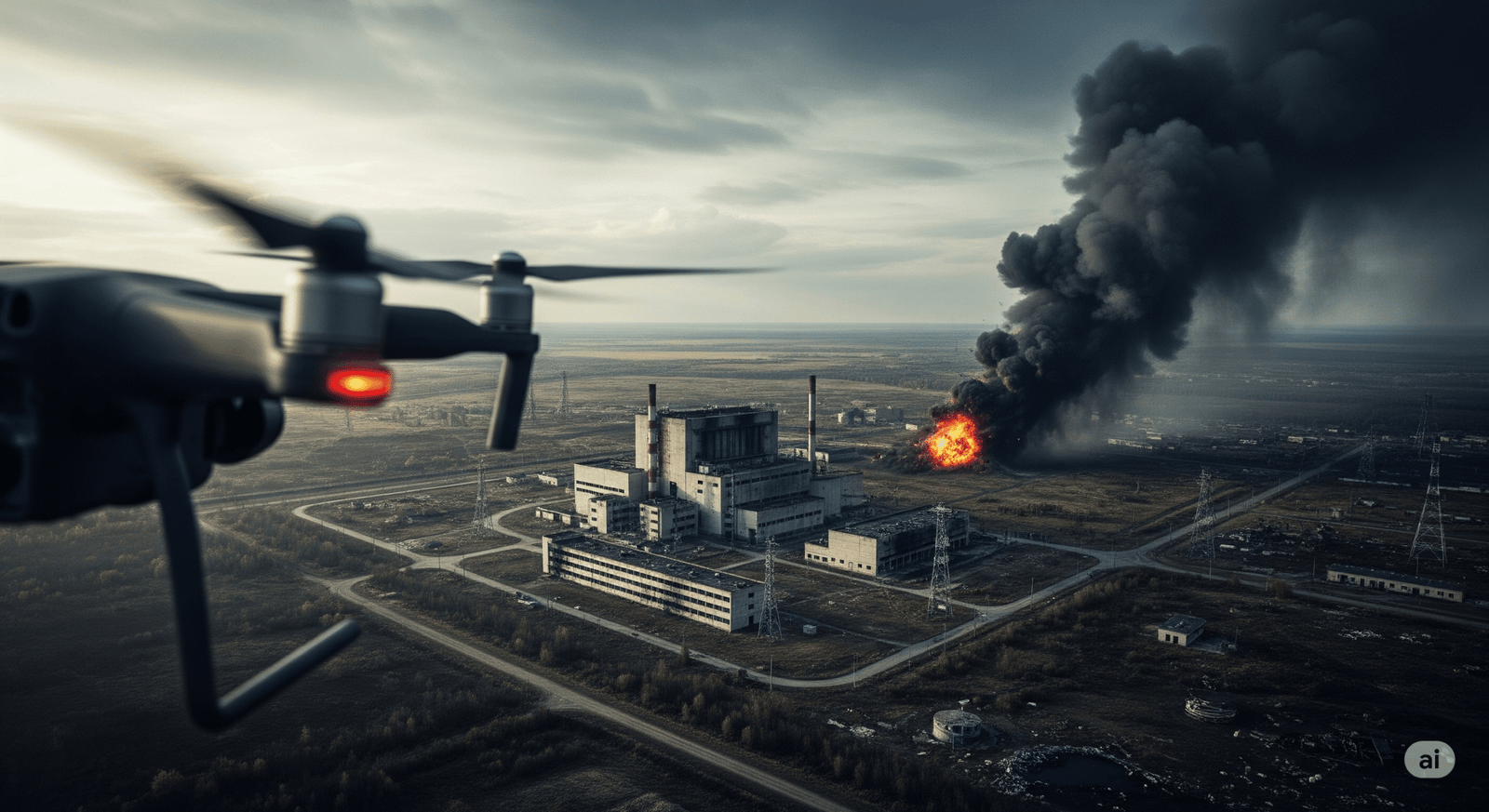
The conflict between Russia and Ukraine has entered a new phase, marked by audacious military strikes and a worrying schism within the Western alliance. On Ukraine’s Independence Day, a day meant for celebration and defiance, the war’s grim reality was brought home with a series of drone attacks deep inside Russian territory. Most notably, a Ukrainian drone reportedly struck a transformer at the Kursk Nuclear Power Plant, a move that, while not causing a radiation leak, sent a chilling message and ignited a fire. This calculated strike on a nuclear facility is a major escalation, pushing the boundaries of what was once considered unthinkable and raising global fears of a nuclear accident. The attack, which Russia claims it largely intercepted, nonetheless showcased Ukraine’s growing capability to project power far beyond the front lines. It signals a shift in strategy, moving from a defensive war of attrition to one that targets Russia’s critical infrastructure and demonstrates the Kremlin’s vulnerability on its own soil.
Meanwhile, a political fault line has opened up on the European stage, highlighting the fragility of the coalition supporting Ukraine. Poland, one of Ukraine’s staunchest allies, has vetoed legislation that would have extended benefits for Ukrainian refugees. The decision by Polish President Karol Nawrocki, who took office earlier this year with the support of the national-conservative Law and Justice (PiS) party, is a stark reversal of the overwhelming solidarity Poland showed in the early days of the war. The move, framed by the president as a matter of “social justice” and “Poland first,” is a clear signal of the growing domestic pressure and anti-Ukrainian sentiment that has been simmering in the country. While Polish officials maintain that the country remains open to assisting Ukrainians, the veto sends a message of shifting priorities. The legislation would have extended crucial financial support, child benefits, and access to healthcare for the nearly one million Ukrainian refugees who have settled in Poland.
The timing of these two events—a military escalation on the front lines and a political rift among allies—is particularly poignant. The drone strike at the nuclear plant, whether a direct hit or a strike by debris, serves as a grim reminder of the war’s increasing unpredictability and the high stakes involved. The attack not only risks a potential nuclear catastrophe but also further complicates the already strained international diplomatic efforts to find a peaceful resolution. Concurrently, Poland’s veto undermines the very fabric of European solidarity that has been a cornerstone of the response to the Russian invasion. While Poland’s president has stated he will propose alternative legislation that would tie benefits to employment, the move is a public rebuke of the Tusk-led government’s approach and a victory for populist and far-right forces.
The juxtaposition of these two events paints a complex and troubling picture of the current state of the Russia-Ukraine war. On one hand, Ukraine is demonstrating its resilience and ingenuity by striking at the heart of the Russian homeland. On the other hand, the support it has so desperately needed from its closest allies is beginning to fray. The war is no longer confined to the battlefields of Ukraine; it is being fought in the skies over Russia and in the halls of European parliaments. This dual escalation—military on one side, political on the other—suggests that the conflict is entering an even more dangerous and unpredictable chapter, with no end in sight. The veto in Poland may be a sign of things to come, as the initial flood of support for Ukraine starts to recede under the pressure of domestic concerns and political maneuvering. The path forward for Ukraine now seems more complicated than ever, as it must not only fend off a determined enemy but also contend with a shifting political landscape among its key allies.
21 Bullet Points on the Russia-Ukraine War
- Date: Tuesday, August 26, 2025
- Ukrainian drones reportedly hit a Russian nuclear power plant on Ukraine’s Independence Day.
- The attack targeted the Kursk Nuclear Power Plant.
- The strike reportedly damaged a transformer at the plant.
- Russian authorities claim the fire was quickly contained.
- No increase in radiation levels was reported.
- The attack is seen as a significant escalation of the conflict, demonstrating Ukraine’s ability to strike deep within Russian territory.
- Other Russian energy facilities, including a fuel export terminal, were also targeted by drones.
- Poland has vetoed legislation to extend benefits for Ukrainian refugees.
- The legislation would have extended various forms of assistance until March 2026.
- Polish President Karol Nawrocki issued the veto.
- The president’s office stated he does not agree with “privileged treatment of citizens of other countries.”
- The veto is a reversal of Poland’s initial policy of full solidarity with Ukrainian refugees.
- The move has created tension between Poland and Ukraine.
- Around one million Ukrainian refugees currently reside in Poland.
- Critics of the veto, including Poland’s Prime Minister Donald Tusk, argue the decision is inhumane.
- The President’s move is seen as a political victory for the national-conservative Law and Justice (PiS) party.
- Nawrocki has stated he will propose new legislation that would tie refugee benefits to employment.
- The veto highlights growing domestic anti-Ukrainian sentiment in Poland.
- The events signify a new, more complex phase of the conflict, both militarily and politically.
- Ukraine continues to push for a peace settlement, but with new obstacles from within the allied camp.
Separate Answer: The Latest Escalation in the Russia-Ukraine War
When?
The Ukrainian drone strikes occurred on Sunday, August 24, 2025, which was Ukraine’s Independence Day. Poland’s veto of the refugee legislation was announced on Monday, August 25, 2025.
Where?
The drone strikes took place in Russia, with a notable strike at the Kursk Nuclear Power Plant in the Kursk region. The political veto occurred in Warsaw, Poland.
Why?
The Ukrainian drone strikes are part of a military strategy to disrupt Russian infrastructure and demonstrate the country’s capability to strike beyond the front lines, putting pressure on the Kremlin. The strikes are a direct escalation of the war. Poland’s veto is a result of growing domestic political pressure and anti-Ukrainian sentiment, with President Nawrocki arguing that benefits for refugees should be contingent on their employment in Poland, and citing a need for “social justice” for Polish citizens first.
Who?
The drone strikes were carried out by the Ukrainian military. The primary targets were Russian energy infrastructure and a nuclear power plant. The political veto was issued by Polish President Karol Nawrocki, with support from the national-conservative Law and Justice (PiS) party, and it affects Ukrainian refugees residing in Poland. The move has drawn criticism from the Tusk-led government in Poland.