





Pune, Maharashtra, India – October 26, 2023
The global narrative is constantly shaped by the movement of people and the diplomatic maneuvers of nations. Today’s headlines bring to the forefront two distinct yet equally significant stories: widespread protests in Australia against immigration policies and a controversial move by the United States regarding Palestinian visa approvals. These events underscore the complex interplay of domestic sentiment, international relations, and deeply entrenched geopolitical issues, painting a picture of a world grappling with identity, belonging, and the future of statehood.
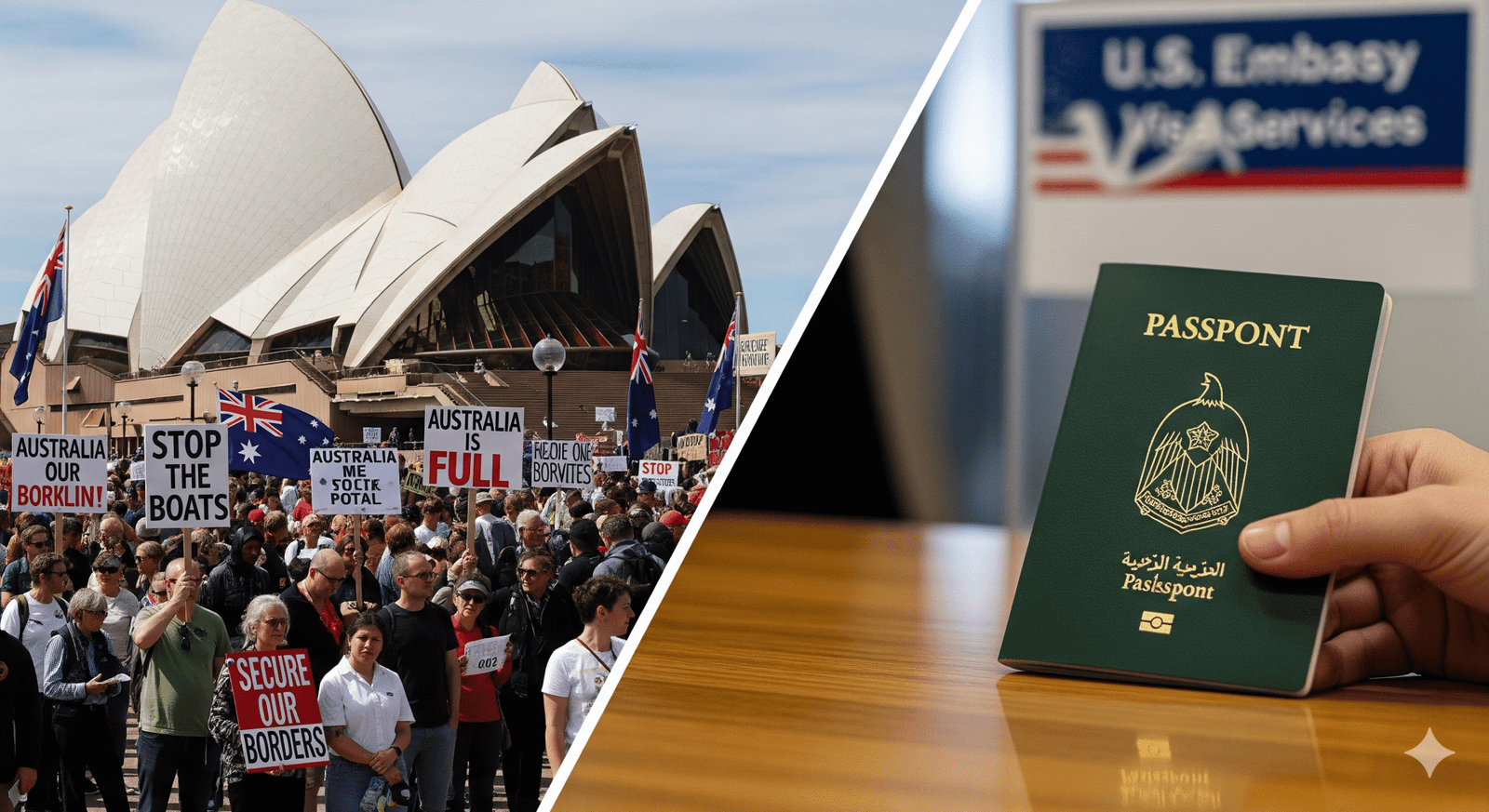
In Australia, the issue of mass immigration has ignited significant public unrest. Australians have protested in Sydney, with reports of clashes in Melbourne, signaling a growing divide within the country regarding its demographic future. Immigration has long been a foundational element of Australia’s growth and multicultural identity, yet debates over its scale and impact are not new. These recent protests likely stem from various concerns, including pressure on infrastructure, housing affordability, job market competition, and cultural integration. While proponents of immigration often highlight economic benefits and cultural enrichment, those protesting often voice fears about the pace of change and the capacity of existing systems to cope. The reported clashes in Melbourne are particularly concerning, indicating a potential escalation of tensions and a hardening of positions on both sides of the debate. Such public demonstrations force governments to re-evaluate their policies and engage with a diverse range of public opinions, highlighting the challenge of balancing economic needs, social cohesion, and individual freedoms in a democratic society. The intensity of these protests underscores how deeply national identity and resource allocation are intertwined with immigration policies.
Simultaneously, the global diplomatic stage is witnessing a highly sensitive development regarding Palestinian rights. The US has reportedly suspended visa approvals for nearly all Palestinian passport holders. This move, which has immediate and severe practical implications for thousands of individuals, carries profound political weight. It comes at a particularly volatile time, preceding the UN General Assembly, where Canada and other nations intend to officially recognize a Palestinian state. This juxtaposition of events creates a highly charged diplomatic environment.
The US decision to suspend visa approvals for Palestinians could be interpreted in several ways. It might be framed as a security measure, a response to recent regional instability, or a political move intended to exert pressure. However, critics are likely to view it as a discriminatory action that further isolates Palestinians and undermines their aspirations for statehood. For many, the ability to travel internationally, to study, work, or visit family, is a fundamental right, and its curtailment can have devastating personal and professional consequences.
The timing of this US action, just ahead of the UN General Assembly vote on Palestinian state recognition, is crucial. If Canada and other nations proceed with their intention to officially recognize a Palestinian state, it would represent a significant diplomatic victory for the Palestinian cause and a potential shift in international consensus. Such recognition would affirm the right of Palestinians to self-determination and sovereign statehood, challenging the long-standing status quo. The US’s reported visa suspension could be seen as an attempt to pre-emptively counter this diplomatic momentum, or as a punitive measure against what it might view as unilateral moves towards statehood recognition.
These two narratives, though geographically distant, both speak to a world in flux. From the domestic anxieties surrounding immigration in a developed nation like Australia to the high-stakes diplomatic maneuvering concerning statehood and international recognition, these events reflect profound questions about identity, justice, and the future world order. The outcomes of these protests and diplomatic decisions will undoubtedly shape geopolitical landscapes and the lives of millions for years to come.
21 Key Updates on Immigration Debates and Diplomatic Shifts (October 26, 2023)
- October 26, 2023: Australians have initiated protests against mass immigration.
- October 26, 2023: Protests were prominently held in Sydney, Australia.
- October 26, 2023: Reports indicate clashes occurred in Melbourne, Australia, during related demonstrations.
- October 26, 2023: The protests reflect growing public debate over immigration levels and their societal impact in Australia.
- October 26, 2023: Concerns likely include pressure on infrastructure, housing, and jobs.
- October 26, 2023: The demonstrations highlight potential divisions within Australian society regarding demographic changes.
- October 26, 2023: The United States has reportedly suspended visa approvals.
- October 26, 2023: This suspension applies to nearly all Palestinian passport holders.
- October 26, 2023: The US move carries significant political and humanitarian implications.
- October 26, 2023: The timing of the visa suspension is critical, occurring ahead of the UN General Assembly.
- October 26, 2023: At the UN General Assembly, Canada intends to officially recognize a Palestinian state.
- October 26, 2023: Other nations are also expected to join Canada in this recognition effort.
- October 26, 2023: The recognition of a Palestinian state would be a major diplomatic step for Palestinians.
- October 26, 2023: The US visa suspension could be seen as a counter-measure to this diplomatic momentum.
- October 26, 2023: It raises questions about US policy towards Palestinian statehood aspirations.
- October 26, 2023: For Palestinians, the suspension impacts their ability to travel for work, study, or family visits.
- October 26, 2023: The events highlight the complexities of international relations and national sovereignty.
- October 26, 2023: Global attention is focused on these issues of identity, rights, and geopolitical strategy.
- October 26, 2023: Both situations demonstrate the interplay between domestic sentiment and foreign policy.
- October 26, 2023: The outcomes will likely influence future diplomatic relations and social cohesion.
- October 26, 2023: These developments underscore the dynamic nature of global migration and political recognition.
When, Where, Why, and Who
Australian Immigration Protests:
- When: The protests occurred on or around October 26, 2023.
- Where: The protests took place in Sydney and Melbourne, Australia.
- Why: Australians protested why against “mass immigration.” The reasons likely include concerns over its impact on infrastructure, housing availability, job markets, and potentially cultural identity, reflecting growing public dissatisfaction with the scale of recent immigration.
- Who: The protestors are citizens of Australia. The protests are directed at the Australian government’s immigration policies.
US Suspension of Visa Approvals for Palestinian Passport Holders:
- When: The US reportedly suspended visa approvals on or around October 26, 2023. This move comes ahead of the UN General Assembly, the specific date of which would determine the exact timing of the upcoming recognition efforts.
- Where: The decision was made by the United States government. It affects individuals holding Palestinian passports. The context involves the United Nations General Assembly.
- Why: The US reportedly suspended visa approvals why for various potential reasons: it could be a security measure, a political move to exert pressure, or a response to recent regional instability. It also comes strategically ahead of anticipated diplomatic moves at the UN General Assembly, possibly to counter efforts by Canada and other nations to recognize a Palestinian state.
- Who: The action was taken by the US government. It impacts Palestinian passport holders. Canada and other nations are the ones intending to officially recognize a Palestinian state at the UN General Assembly.