



The conflict in Gaza has entered a new and increasingly grim phase, marked by a humanitarian crisis of unprecedented scale and a deliberate assault on the truth itself. As the world watches, a generation of Palestinians is being “wiped out,” a stark and chilling assessment from the United Nations. This is not simply a war of bombs and bullets, but a war of starvation, a war on a people’s future, and a war on the very act of bearing witness.
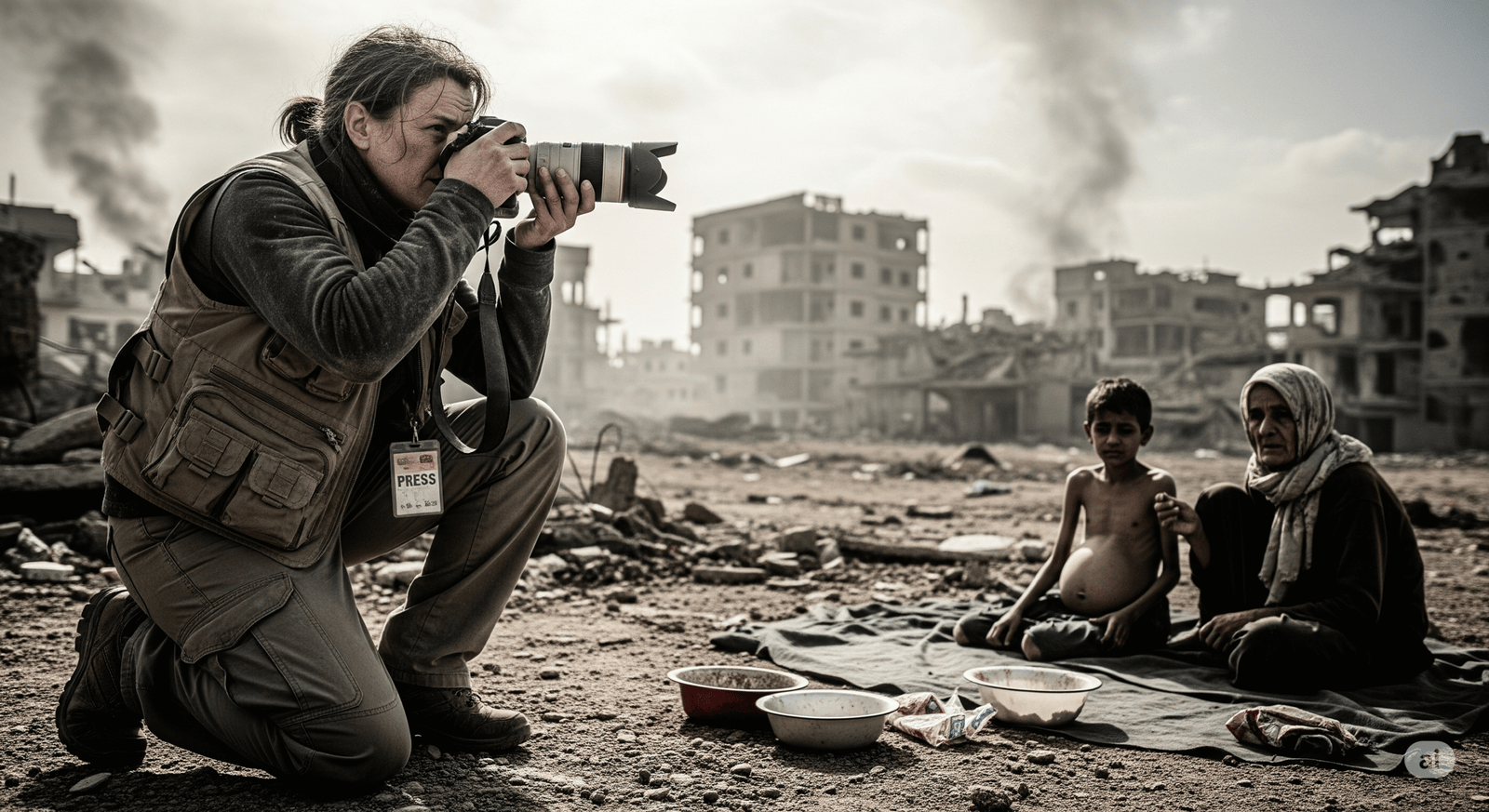
The recent Israeli strikes that claimed the lives of several Al Jazeera journalists have sent shockwaves through the international community and media organizations. For years, Al Jazeera has been one of the few news outlets with correspondents on the ground, providing an unfiltered window into the daily lives and struggles of Gazans. Their reports have been vital in documenting a reality that has been systematically obscured and often denied. The killing of these journalists, including prominent correspondent Anas al-Sharif, is seen by many as a calculated effort to silence one of the last remaining independent voices reporting from within the enclave.
The Israeli military’s claim that al-Sharif was a “Hamas terrorist” is a familiar and deeply troubling narrative that has been used to justify the targeting of journalists. Press freedom groups, including the Committee to Protect Journalists, have vehemently rejected this claim, calling it part of a dangerous pattern of discrediting reporters to justify their assassination. This tactic creates a chilling effect, making it even more perilous for journalists to report on the ground. In a conflict where international media is largely barred from entering Gaza, the loss of every local journalist is a blow to the world’s understanding of what is happening.
But the assault on truth is only one dimension of a much larger tragedy. The UN’s warnings about families and a generation being “wiped out” are not hyperbole; they are a direct reflection of a man-made catastrophe. The blockade of aid, which has prevented the delivery of essential food, medicine, and fuel, has led to a famine that is now killing children and the elderly. The UN Relief and Works Agency for Palestine Refugees (UNRWA) has reported that for months, its aid trucks have been denied entry, resulting in a steep rise in malnutrition deaths.
The numbers are staggering and gut-wrenching. The Gaza Ministry of Health has reported that scores of Palestinians, including children, have died of malnutrition. The Integrated Food Security Phase Classification (IPC), the global standard for assessing food insecurity, has confirmed that famine thresholds have been surpassed in some areas. Stories of families sharing a single cucumber for a day or children too weak to walk to aid distribution points paint a picture of a population pushed to the very brink of survival.
The physical and psychological toll on the population is immeasurable. The constant fear, the loss of homes and loved ones, and the struggle for basic necessities have created a landscape of collective trauma. Children, who are supposed to be learning and playing, are instead being exposed to a level of violence and deprivation that will scar them for life. The destruction of schools, hospitals, and infrastructure means that even if a ceasefire were to be achieved today, the road to recovery would be long and arduous. The mental health crisis, the intergenerational trauma, and the physical disabilities resulting from the conflict will plague the people of Gaza for decades to come.
The international response, while containing elements of condemnation, has been widely criticized as insufficient. Statements and resolutions from global bodies and individual nations have failed to translate into concrete action that would stop the bloodshed and the starvation. The world’s inability to protect journalists, to enforce humanitarian law, and to demand a lasting ceasefire has been a betrayal of the most fundamental principles of humanity. The silence of the international community, as UNRWA has so powerfully stated, is complicity. It’s a silence that allows for the continued targeting of civilians and the slow, deliberate destruction of a society. The question remains: as the voices from Gaza are silenced one by one, who will bear witness? And when will the world finally act?
Date: August 12, 2025
- The United Nations and various media groups have condemned Israel for strikes in Gaza.
- These strikes reportedly killed several journalists working for Al Jazeera.
- The UN has issued a stark warning that families and a generation are being “wiped out” in Gaza.
- The UN statement cites malnutrition and continuous strikes as the primary causes.
- A prominent correspondent, Anas al-Sharif, was among the journalists killed in the recent attack.
- The Israeli military claims al-Sharif was a “Hamas terrorist.”
- Al Jazeera and press freedom groups have strongly rejected Israel’s claims.
- The Committee to Protect Journalists (CPJ) described the Israeli claim as a “pattern” of discrediting journalists without evidence.
- The strike on the journalists occurred outside the Al-Shifa Hospital in Gaza City.
- The UN Relief and Works Agency for Palestine Refugees (UNRWA) has been denied access to deliver aid for months.
- The blockade of aid has led to a steep rise in deaths from malnutrition, particularly among children.
- Famine thresholds have been surpassed in parts of Gaza, according to the Integrated Food Security Phase Classification (IPC).
- Stories of extreme hunger, such as families sharing a single cucumber, have become commonplace.
- The conflict has created a widespread mental health crisis and intergenerational trauma.
- The destruction of essential infrastructure, including schools and hospitals, is a major concern.
- International media have been largely barred from entering Gaza, making local journalists’ work critical.
- The killings are seen as an attempt to silence the last remaining independent voices reporting from the ground.
- UNRWA has stated that “inaction and silence are complicity” in the ongoing crisis.
- The international community has been criticized for not taking concrete action to enforce humanitarian law.
- The loss of each journalist creates a news void, potentially allowing war crimes to go undocumented.
- The crisis is not just a result of military action but also a man-made humanitarian disaster caused by the aid blockade.
When, Where, Why, and Who
When:
The events described, including the killing of journalists and the UN’s recent statements, took place in the days leading up to and including August 12, 2025. The specific strike on the journalists’ tent occurred on Sunday, August 10, 2025.
Where:
The strikes and the humanitarian crisis are taking place in the Gaza Strip. The attack on the journalists specifically occurred near the Al-Shifa Hospital in Gaza City.
Why:
The strikes on journalists are seen by many as a deliberate attempt to silence critical reporting from the ground, especially as international media access is severely restricted. The broader humanitarian crisis, including widespread malnutrition, is a direct result of the ongoing conflict, the destruction of infrastructure, and a prolonged blockade of humanitarian aid. The UN and aid organizations state that this has created a man-made famine.
Who:
The key parties involved are:
- Israel: The military forces that carried out the strikes.
- Al Jazeera: The news network whose journalists were killed. The network has condemned the attack as a deliberate assault on press freedom.
- United Nations (UN): The international body, through its various agencies like UNRWA, that is condemning the violence, warning of a humanitarian catastrophe, and calling for an end to the suffering.
- Journalists: The individuals on the ground in Gaza, particularly Palestinian journalists, who are risking their lives to document the conflict and are increasingly being targeted. The Committee to Protect Journalists and other press freedom groups represent their interests.