





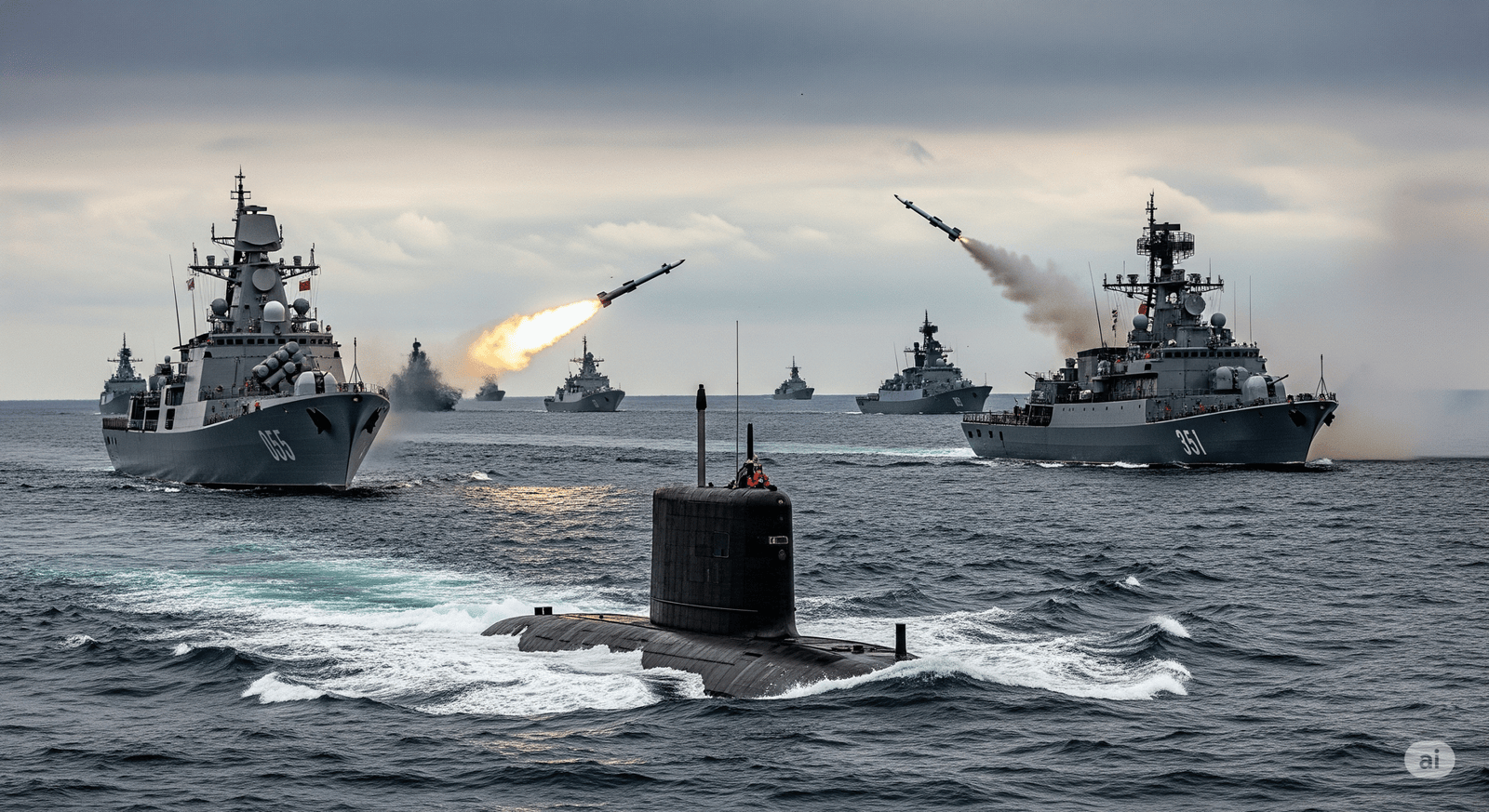
The Sea of Japan has become the latest stage for a powerful display of geopolitical realignment, as China and Russia commence their “Joint Sea-2025” military exercises. These three-day naval drills, which kicked off on Sunday, August 3, 2025, near the Russian port of Vladivostok, are more than just routine maneuvers. They are a clear and unequivocal statement of a deepening strategic partnership, one that is explicitly aimed at challenging and counterbalancing what both nations perceive as a U.S.-led global order.
This year’s exercises, a continuation of a series that began in 2012, are particularly significant due to their location and timing. Unlike last year’s drills, which were held in the relatively distant waters off China’s southern coast, “Joint Sea-2025” is taking place in a region of heightened strategic importance, directly adjacent to Japan. This choice of location has not gone unnoticed. Japan’s Ministry of Defence has already voiced its concerns, noting that the growing military cooperation between China and Russia poses a significant security risk to the region. While the Russian Pacific Fleet has insisted the drills are “defensive in nature” and not directed at any third party, the message of solidarity and military might is unmistakable to regional players and the international community alike.
The drills themselves are comprehensive, involving a wide array of naval operations from submarine rescue and anti-submarine warfare to air defense and maritime combat. The participation of guided-missile destroyers from China and various vessels from the Russian Navy highlights the sophisticated nature of these exercises and the increasing interoperability of the two forces. Following the conclusion of the drills, the two navies are scheduled to conduct joint patrols in the Pacific, a further sign of their growing long-term military coordination and a direct challenge to the U.S. and its allies in the region.
The timing of these drills is also crucial. They are taking place at a moment of extreme geopolitical tension. The U.S., under President Donald Trump, has adopted a more confrontational stance, not only with new, wide-ranging tariffs but also with the recent order to reposition nuclear submarines in response to a public spat with a Russian official. This climate of brinkmanship and heightened rhetoric from Washington and Moscow provides the perfect backdrop for Beijing and Moscow to demonstrate their alliance. It is a calculated move designed to showcase their unity and strength in the face of what they both describe as a Western-led campaign of containment and pressure.
The partnership is not solely military. It is also rooted in a deep economic interdependence that has only grown stronger since Russia’s invasion of Ukraine. With Western sanctions isolating Russia, China has become a vital economic lifeline, providing a crucial market for Russian energy exports and a source of goods. This economic bond has allowed China to maintain its stance of “neutrality” on the Ukraine war while effectively providing the support Russia needs to continue its campaign. This position, which has been widely criticized by the U.S. and its allies, is a key component of the “comprehensive strategic partnership” that the military drills are designed to “further deepen.”
In essence, the “Joint Sea-2025” exercises are a powerful symbol of a changing global order. They represent a world where traditional alliances are being tested, new partnerships are being forged, and military power is being used as a tool of diplomatic signaling. The drills demonstrate that China and Russia are not just engaging in tactical cooperation; they are building a strategic alliance designed to reshape the geopolitical map of the 21st century. As their warships ply the waters of the Sea of Japan, they send a clear message: the Pacific, and indeed the world, is no longer a unipolar domain, and a new, powerful partnership is ready to challenge the status quo
Based on the latest reports from August 3, 2025, here are 21 bullet points on the joint military drills between China and Russia.
- Date: August 3, 2025
- Drill Name: The joint military exercises are officially named “Joint Sea-2025.”
- Location: The drills are taking place in the Sea of Japan, near the Russian port city of Vladivostok.
- Duration: The exercises are scheduled to last for three days.
- Participating Vessels: Four Chinese vessels, including guided-missile destroyers, are participating alongside ships from the Russian Navy.
- Drill Objectives: The exercises include a variety of operations, such as submarine rescue, joint anti-submarine warfare, air defense, anti-missile operations, and maritime combat.
- Strategic Context: The drills are seen as a display of the two nations’ deepening strategic partnership.
- Counterbalancing Act: Both China and Russia view these drills as a way to counterbalance what they describe as a U.S.-led global order.
- Follow-on Patrols: After the exercises conclude, the two navies will conduct joint naval patrols in “relevant waters of the Pacific.”
- History of Drills: The “Joint Sea” exercises have been held annually for several years, with the series beginning in 2012.
- Shift in Location: Last year’s drills were held off China’s southern coast, making this year’s location in the Sea of Japan particularly notable.
- Japan’s Concerns: Japan’s Ministry of Defence has expressed concerns that the growing military cooperation between China and Russia poses significant security risks.
- Official Narrative: China’s Defence Ministry stated that the drills are aimed at “further deepening the comprehensive strategic partnership” between the two countries.
- Official Disclaimer: The Russian Pacific Fleet, in a statement, described the exercises as “defensive in nature” and “not directed against other countries.”
- Economic Ties: The military partnership has been strengthened by China’s role in providing an economic lifeline to Russia in the face of Western sanctions over the invasion of Ukraine.
- China’s Position on Ukraine: China has not condemned Russia’s war in Ukraine, nor has it called for a troop withdrawal.
- Western Perspective: Many Western countries, including the U.S., believe that Beijing has provided support to Moscow, despite China’s insistence that it is a neutral party.
- Interoperability: Experts note that the exercises, particularly those involving submarine-related training, are a sign of deepening military ties and enhanced interoperability between the two navies.
- Broader Geopolitical Tensions: The drills come amidst rising U.S.-China tensions and a more confrontational stance from the U.S. government on both military and economic fronts.
- Link to Other News: The drills are happening at the same time as the U.S. President has ordered the repositioning of nuclear submarines after a public spat with a Russian official.
- Future Military Cooperation: The increasing frequency, complexity, and geographic scope of these joint exercises signal a long-term commitment to a robust military alliance.
When, Where, Why, and Who
- When: The drills commenced on Sunday, August 3, 2025, and are scheduled to last for three days.
- Where: The exercises are being held in the Sea of Japan, specifically in waters near the Russian port city of Vladivostok.
- Why: The primary purpose of the drills is to deepen the military and strategic partnership between China and Russia. Both nations view this alliance as a means to counter the influence of what they see as a U.S.-led global order. The drills also serve to enhance interoperability between their navies.
- Who: The drills involve the naval forces of China and Russia. Key organizations involved are China’s Ministry of National Defence and the Russian Navy Pacific Fleet.