





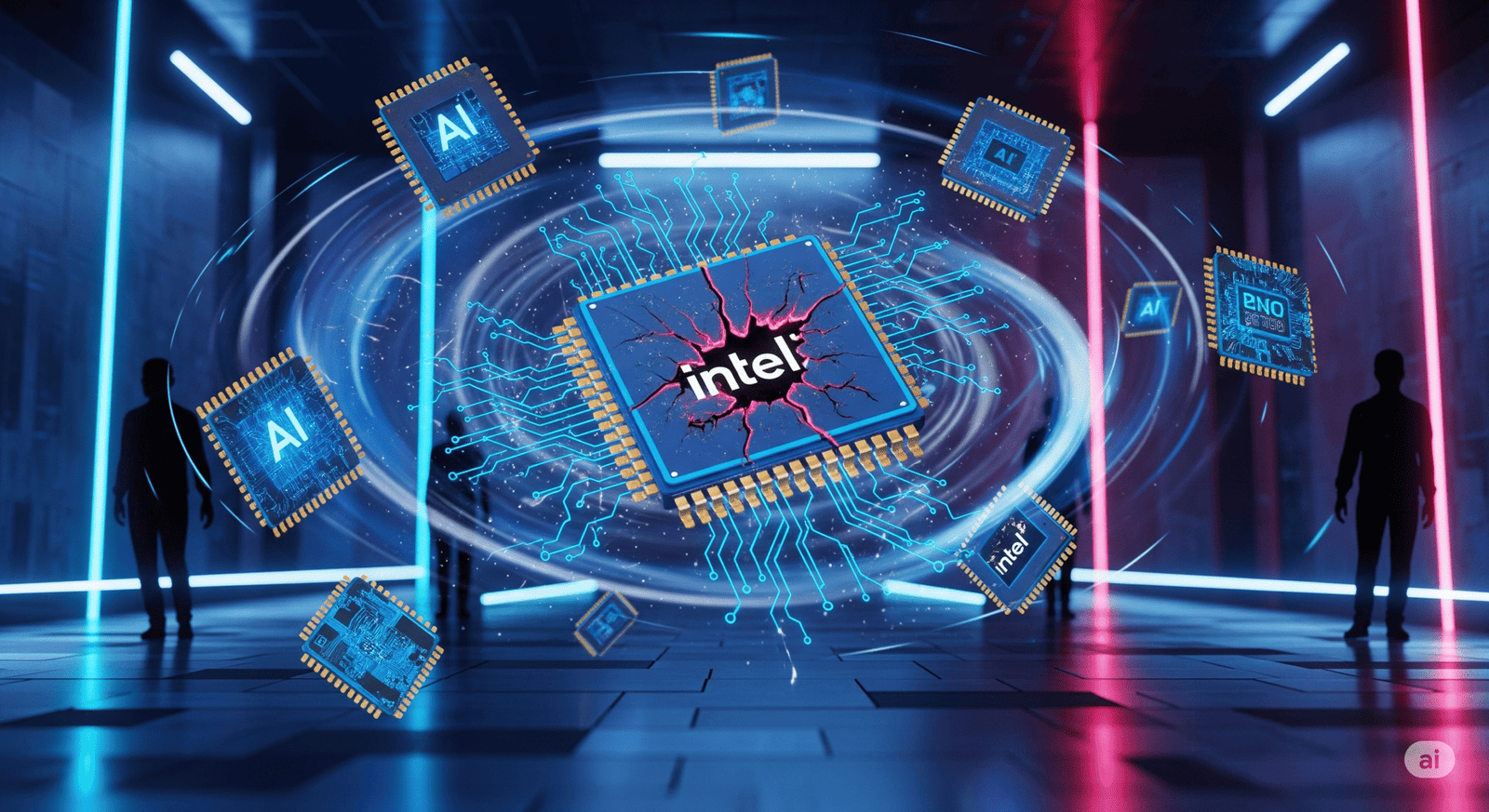
The Chip Wars Intensify: Intel’s Q2 Reality Check and the Global Tech Ripple
Date: July 26, 2025
The technology sector, often seen as an unstoppable engine of innovation and growth, just received a jolt. This week, semiconductor giant Intel delivered its Q2 earnings report, a stark reality check that sent ripples across global financial markets. Not only did the venerable chipmaker post a significant quarterly loss, but it also announced substantial workforce reductions, highlighting the brutal intensity of competition, especially in the red-hot Artificial Intelligence (AI) chip market.
A Giant Stumbles: Unpacking Intel’s Q2 Troubles
For decades, Intel has been synonymous with computing power, providing the “brains” for countless computers worldwide. However, their latest financial results paint a picture of a company struggling to maintain its footing in a rapidly evolving landscape. The reported quarterly loss is a clear signal of pressures on multiple fronts – from slowing demand in traditional markets to fierce competition in emerging high-growth segments.
The market’s reaction was swift and unforgiving. Intel’s stock saw a notable drop, reflecting investor concern over its current trajectory and future prospects. This immediate financial impact is not merely a number on a screen; it represents a collective reassessment by investors of Intel’s ability to navigate the demanding terrain of the semiconductor industry.
Further exacerbating these concerns are the announced plans for significant workforce cuts. Such measures are typically a sign of companies looking to trim operational fat, reduce overheads, and streamline processes in an effort to regain profitability. While often necessary for long-term health, they underscore the immediate challenges the company faces in managing its cost structure amidst declining revenues or thinning margins.
The AI Arena: Where the Real Battles Are Being Fought
The narrative surrounding Intel’s challenges is inextricably linked to the booming AI chip market. Artificial Intelligence is no longer just a buzzword; it’s the driving force behind the next generation of computing, from sophisticated data centers to autonomous vehicles and advanced consumer electronics. The demand for specialized chips capable of handling the immense computational demands of AI algorithms has created a new gold rush in the semiconductor world.
And in this new gold rush, Intel, traditionally a CPU powerhouse, is finding itself outmaneuvered by agile and highly specialized rivals. Companies like Nvidia and AMD have not only successfully pivoted but have aggressively innovated, creating Graphics Processing Units (GPUs) and other AI-optimized processors that are currently dominating this lucrative market. Their superior performance and strategic focus have allowed them to capture significant market share, leaving Intel playing catch-up.
This competitive imbalance is a critical factor in Intel’s recent struggles. While Intel is investing heavily in its own AI initiatives and foundry services, the sheer pace of innovation and market penetration by its rivals means that catching up requires enormous capital, flawless execution, and time – precious commodities in the tech world.
The Ripple Effect: Global Tech Sentiment and Beyond
Intel’s Q2 results and its strategic responses are not isolated events; they send a tangible ripple through the entire global technology sector. As one of the foundational companies in computing, Intel’s health is often seen as an indicator of broader industry trends.
- Investor Confidence: A stumble from a tech giant like Intel can dampen overall investor confidence in the tech sector, prompting a re-evaluation of portfolios and potentially diverting capital to other, perceived safer, industries.
- Competitive Landscape: The increased pressure on Intel intensifies the competitive landscape for all chipmakers. This could lead to further innovation, but also to more aggressive pricing strategies and consolidation within the industry.
- Supply Chain Implications: While not immediately apparent, the long-term health and strategic shifts of a major component supplier like Intel can have downstream effects on the technology supply chain, influencing the availability and cost of components for device manufacturers worldwide.
- Talent Migration: Workforce reductions at one major player can lead to an influx of skilled talent into the market, potentially benefiting smaller, more agile competitors or nascent startups in the AI space.
In conclusion, Intel’s latest earnings report serves as a potent reminder that even giants are not immune to market shifts and relentless competition. The “chip wars” are escalating, particularly in the AI arena, and the outcomes will determine not just the future of individual companies, but the trajectory of global technological advancement itself. For now, the spotlight remains firmly on how Intel plans to innovate, execute, and reclaim its lost ground in an industry that never stops evolving.
Here are 21 bullet points based on the provided news segment, with dates as of Friday, July 25, 2025:
- Intel’s Q2 Performance: Chipmaker Intel reported its financial results for the second quarter (Q2). (July 25, 2025)
- Quarterly Loss: Intel recorded a significant quarterly financial loss. (July 25, 2025)
- Stock Price Drop: Following the Q2 announcement, Intel’s stock experienced a substantial decline. (July 25, 2025)
- Workforce Reduction Plans: Intel revealed intentions for considerable cuts to its workforce. (July 25, 2025)
- Industry Competition Highlighted: These developments underscore the fierce competition within the technology industry. (July 25, 2025)
- Focus on AI Chip Market: The competition is particularly intense in the rapidly expanding market for Artificial Intelligence (AI) chips. (July 25, 2025)
- Rival Outperformance: Competitors such as Nvidia and AMD are currently showing superior performance in this market segment. (July 25, 2025)
- Global Tech Sector Impact: Intel’s struggles have a cascading effect on overall sentiment in the global technology sector. (July 25, 2025)
- Investor Concerns: Investors are reacting negatively to Intel’s financial struggles and strategic adjustments. (July 25, 2025)
- Market Share Implications: The situation suggests potential shifts in market share within the semiconductor industry. (July 25, 2025)
- Future Growth Challenges: Intel faces significant challenges in securing future growth, particularly in high-growth areas like AI. (July 25, 2025)
- Semiconductor Industry Dynamics: The news reflects broader dynamics and pressures within the global semiconductor industry. (July 25, 2025)
- Revenue Decline/Profitability Issues: The reported loss indicates issues with revenue generation relative to costs or declining profit margins. (July 25, 2025)
- Operational Efficiency Efforts: Workforce reductions are typically undertaken to improve operational efficiency and reduce costs. (July 25, 2025)
- Technological Shift: The booming AI chip market signifies a major technological shift driving demand in the industry. (July 25, 2025)
- Innovation Race: The performance disparity highlights the ongoing innovation race among chip manufacturers. (July 25, 2025)
- Supply Chain Considerations: The health of major players like Intel can have indirect effects on the broader technology supply chain. (July 25, 2025)
- Impact on Component Pricing: Changes in the competitive landscape could eventually influence component pricing for various tech products. (July 25, 2025)
- Investor Confidence in Tech: This news may cause a general reassessment of investor confidence across the wider tech industry. (July 25, 2025)
- Rethinking Investment Strategies: Fund managers and individual investors may be rethinking their investment strategies in the tech sector. (July 25, 2025)
- Long-term Industry Outlook: Intel’s situation contributes to the evolving long-term outlook for the global technology and chip manufacturing industries. (July 25, 2025)
When, Where, Why, and Who
When:
- The primary timeframe is now, specifically concerning Intel’s Q2 (Second Quarter) results, which were recently reported (as of Friday, July 25, 2025).
- The impact on stock prices and sector sentiment is immediate, happening right after the announcement.
- The workforce reductions are plans announced now, but their implementation will likely unfold over the coming weeks or months.
Where:
- Intel (USA): The company at the center of the news, with its headquarters in Santa Clara, California, USA.
- Global Stock Markets: The impact on Intel’s stock price, which then ripples through major stock exchanges worldwide where tech companies are traded (e.g., NASDAQ in the US, bourses in Europe and Asia).
- Global Tech Sector/Semiconductor Industry: The effect is felt across the entire international technology and semiconductor manufacturing landscape.
- AI Chip Market: Specifically, the competitive pressures are most acute within this global segment of the chip market.
Why:
- Why did Intel’s stock drop and why the loss? The stock dropped because the company reported a quarterly loss, meaning its expenses exceeded its revenues during Q2. This typically signals weaker demand for its products, increased costs, or intense pricing pressure from competitors.
- Why the workforce cuts? Companies typically implement workforce reductions to cut operational costs, improve efficiency, and streamline operations, especially after a period of financial underperformance. It’s a strategic move to return to profitability.
- Why is the AI chip market significant? The AI chip market is booming due to the exponential growth in demand for Artificial Intelligence applications (e.g., machine learning, data centers, autonomous vehicles). Companies that dominate this space are seen as future leaders in technology, making competition fierce.
- Why is there a ripple effect on global tech sector sentiment? Intel is a long-standing titan of the semiconductor industry. Its struggles, particularly in a high-growth area like AI, signal broader challenges or shifts in the tech landscape. If a company of Intel’s stature faces difficulties, it can make investors re-evaluate the health and prospects of other companies within the sector.
Who:
- Who is making the news (the actors):
- Intel: The chipmaker whose financial performance and strategic decisions are the subject of the news.
- Nvidia and AMD: Intel’s key rivals in the AI chip market, who are currently outperforming Intel.
- Who is impacted by the news:
- Intel Shareholders/Investors: Directly impacted by the stock drop and the company’s financial health.
- Intel Employees: Those whose jobs are at risk due to the workforce reductions.
- The Global Tech Sector/Semiconductor Industry: Other chip manufacturers, tech companies relying on chips, and the entire ecosystem are affected by the competitive dynamics and sentiment shifts.
- Consumers: Indirectly, as the health of major chipmakers can influence innovation, pricing, and availability of tech products in the long run.
- Financial Analysts and Economists: Who interpret these results as indicators of broader industry trends and economic health.