




Peru has long been a land of profound archaeological significance, a country where the past is not buried, but merely sleeping beneath the sands and dense cloud forests. The recent wave of discoveries, however, has woken this past with a start, offering a breathtaking glimpse into civilizations that flourished and vanished long before the rise of the Inca Empire. From the ceremonial relics of the “Warriors of the Clouds” to the chilling testament of 3,000-year-old human sacrifice, these new findings are rewriting the history books and captivating the world.
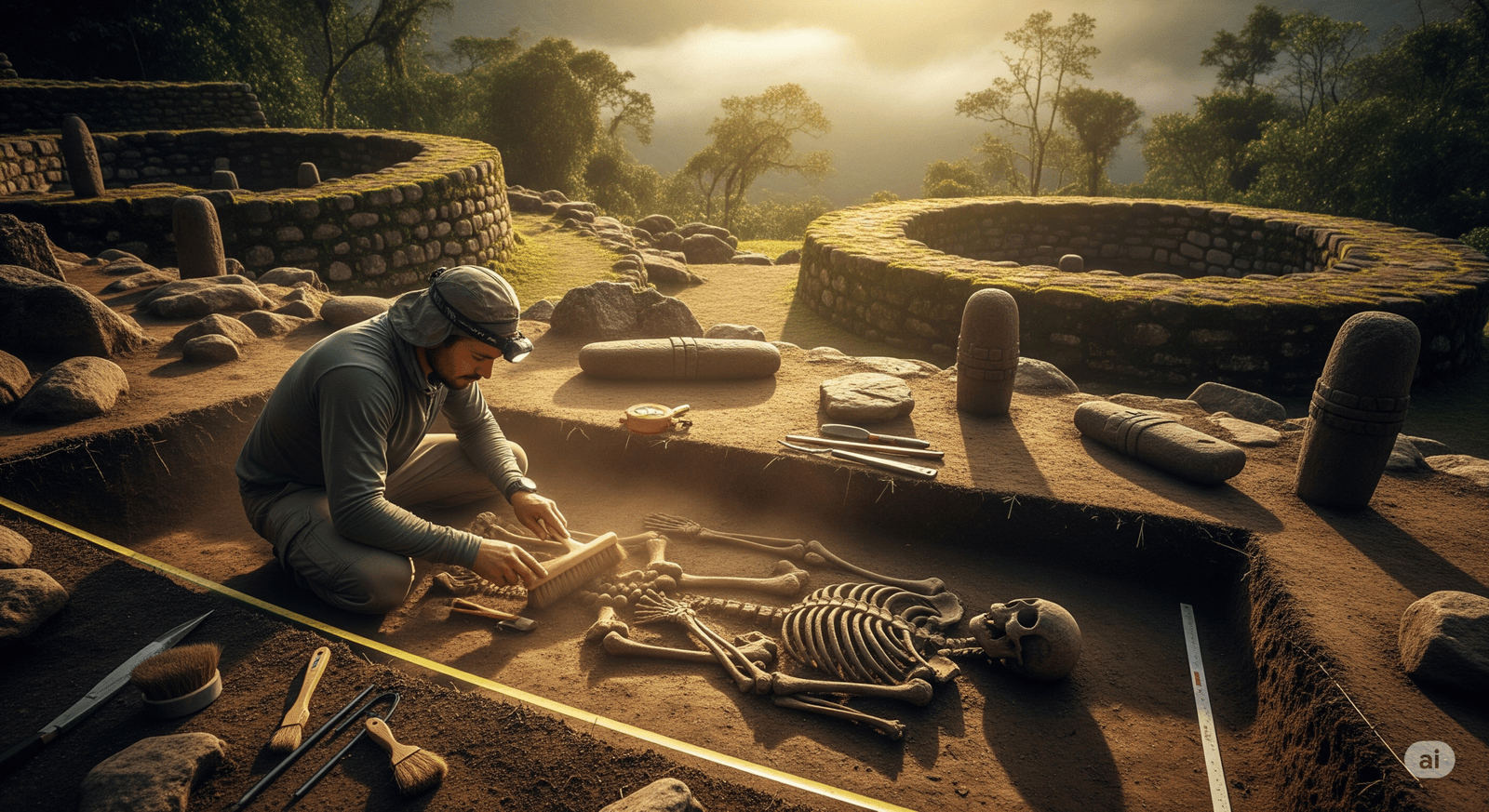
The first major discovery was made in the Amazonian district of La Jalca, where researchers uncovered a lost city of the Chachapoyas culture, also known as the “Warriors of the Clouds.” Using cutting-edge technology like LiDAR and drones, archaeologists were able to pierce through the dense forest canopy, revealing more than 200 pre-Hispanic structures at the Ollape Archaeological Site. This complex network of settlements, far larger than any previously known Chachapoyas site, suggests a society of greater territorial size and social complexity than scholars had previously imagined. The find includes a unique zigzag frieze and, most notably, two rare, 1,000-year-old ceremonial stone club heads, or “clava heads.” The placement of these intricate artifacts suggests they were deliberately positioned for spiritual or symbolic purposes, hinting at ritual practices of a culture whose history is still largely shrouded in mystery.
The second, and perhaps more haunting, discovery took place on Peru’s northern coast. Here, archaeologists unearthed the 3,000-year-old remains of 14 people believed to be victims of a ritual human sacrifice. These skeletons, belonging to the little-known Cupisnique culture, were found buried in simple sand pits near what is thought to be a ritual temple. The chilling evidence of their fate was clear: some bodies were buried face down with their hands tied behind their backs, a position that, according to lead archaeologist Henri Tantalean, is a “typical form of human sacrifice.” This grim find offers a rare and powerful window into the ritualistic violence of an ancient society that thrived more than a millennium before the Incas. Unlike more elaborate burials, these victims were laid to rest without any accompanying treasures or offerings, suggesting a different social status or ceremonial purpose for their sacrifice.
Together, these discoveries provide a stunning contrast between two ancient Peruvian societies. On one hand, we have the Chachapoyas, an advanced civilization thriving in the challenging environment of the cloud forests, leaving behind intricate ceremonial artifacts and extensive settlements. Their story is one of innovation and cultural depth, now being illuminated by technology. On the other, the Cupisnique people, whose legacy is now defined by a stark, ritualistic act of immense power and perhaps a darker side of ancient religious practices.
These new finds are more than just archaeological curiosities; they are vital pieces of a larger, more complex puzzle of human history in the Americas. They challenge preconceived notions, fill in gaps in our understanding of pre-Columbian societies, and remind us that the story of ancient Peru is far from fully told. The use of modern technology is unlocking secrets that have been hidden for millennia, promising even more incredible revelations in the years to come. As these ancient cultures re-emerge from the depths of time, they offer a humbling reminder of the enduring mystery and resilience of the human past.
Date: August 10, 2025
New Archaeological Discoveries in Peru: 21 Key Points 🇵🇪
- Multiple Discoveries: Recent archaeological work in Peru has uncovered two distinct sets of major findings.
- Chachapoyas City: A lost city of the Chachapoyas civilization, also known as the “Warriors of the Clouds,” has been found.
- Advanced Technology: The city was discovered using LiDAR technology and drones, which penetrated the dense cloud forest canopy.
- Ollape Archaeological Site: The discovery was made at the Ollape Archaeological Site in the Amazonas region of Peru.
- Extensive Structures: More than 200 pre-Hispanic structures were unearthed at the site.
- Larger than Expected: The complex of settlements is of a greater territorial size and social complexity than previously believed for the Chachapoyas culture.
- Ceremonial Heads: The most significant artifact find includes two rare, 1,000-year-old ceremonial stone club heads.
- Unique Frieze: Archaeologists also found a unique zigzag-patterned frieze, the first of its kind in the region.
- Ceremonial Significance: The ceremonial club heads are believed to have been deliberately positioned for symbolic or ritual purposes.
- Chachapoyas Timeline: The Chachapoyas culture flourished in the cloud forests of Peru from around 900 to 1450 A.D.
- Human Sacrifice Skeletons: A separate, older discovery on the northern coast of Peru uncovered ancient human remains.
- 3,000-Year-Old Remains: The skeletons are believed to be 3,000 years old.
- Cupisnique Culture: These remains are linked to the Cupisnique culture, a civilization that predates the Incas by more than a millennium.
- 14 Bodies: A total of 14 skeletal remains were unearthed in what is thought to be a ritual temple area.
- Ritual Burial: The bodies were buried in simple pits in sand mounds, rather than elaborate tombs.
- Tied Hands: Some of the victims were found buried face down with their hands tied behind their backs.
- Atypical Burials: The manner of burial, including the body position and lack of grave goods, is considered a “typical form of human sacrifice” by the lead archaeologist.
- Glimpse into Beliefs: This find offers a rare window into the ritualistic and sacrificial practices of ancient Peruvian cultures.
- Lead Archaeologists: The Chachapoyas discovery was led by Pablo Solis, and the Cupisnique sacrifice find was led by Henri Tantalean.
- Ongoing Research: Both sites are subjects of ongoing research, with future excavations expected to reveal more details.
- Rewriting History: The discoveries challenge existing narratives and provide new insights into the diversity and complexity of pre-Columbian societies in Peru.
When, Where, Why, and Who
- When: The discoveries were announced in August 2025, following recent excavations. The artifacts themselves date back to two distinct periods: approximately 1,000 years ago for the Chachapoyas finds and 3,000 years ago for the Cupisnique skeletons.
- Where: The ceremonial heads and structures were found at the Ollape Archaeological Site in the Amazonas region of Peru. The human sacrifice skeletons were unearthed on the northern coast of Peru, near a beach in the La Libertad region, about 420 miles north of Lima.
- Why: The discoveries were made as part of ongoing archaeological research projects aimed at understanding and documenting Peru’s rich pre-Columbian past. The Chachapoyas find was made possible by the use of new, non-invasive technology like LiDAR and drones to explore previously inaccessible areas. The Cupisnique discovery offers vital clues into the ritual and religious practices, including human sacrifice, of an early civilization that existed long before the Inca.
- Who: The key individuals and groups involved are:
- Pablo Solis, the lead archaeologist of the Chachapoyas excavation project.
- Henri Tantalean, the archaeologist who led the excavation of the 3,000-year-old human sacrifice site.
- The Chachapoyas civilization, known as the “Warriors of the Clouds,” which created the ceremonial heads and structures.
- The Cupisnique culture, an ancient civilization responsible for the ritual sacrifices.
- Various research teams and institutes collaborating on the projects.