




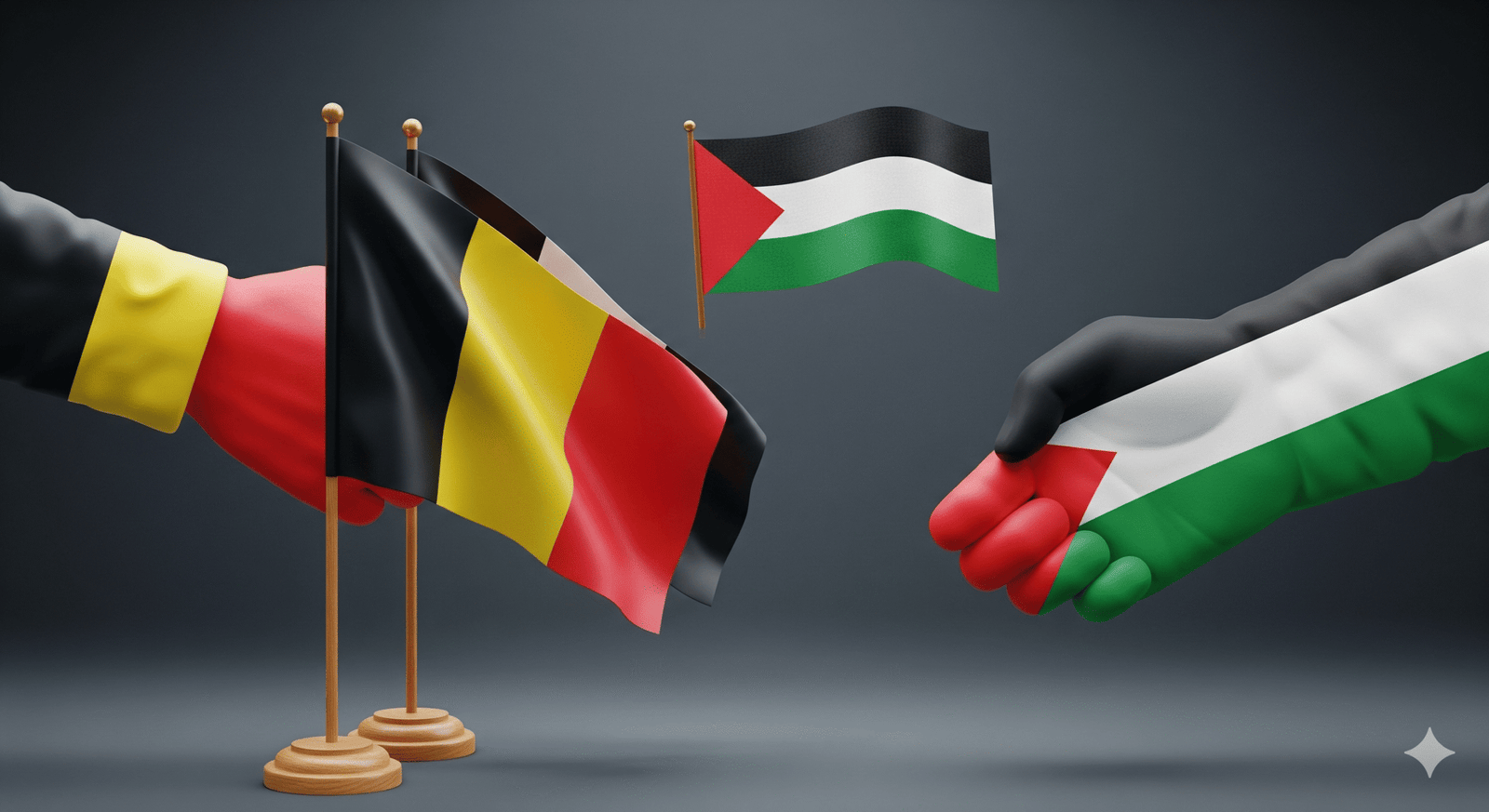
In a significant diplomatic move that highlights the growing international frustration with the ongoing conflict in the Middle East, Belgium has announced it will officially recognize the State of Palestine at the upcoming United Nations General Assembly (UNGA). The announcement, made by Foreign Minister Maxime Prévot, also includes the imposition of 12 “firm sanctions” against Israel. This decision, set to be formalized by a royal decree, is a clear signal of Belgium’s concern over the escalating humanitarian crisis in Gaza and its commitment to pressuring the Israeli government and Hamas to respect international law.
The action by Belgium is part of a wider, coordinated effort among several European nations. It follows a similar declaration by France in July and comes alongside pledges of recognition from countries like Australia, Canada, and the United Kingdom. While some of these nations have placed conditions on their recognition, the collective shift in policy from key Western allies of Israel marks a turning point. It demonstrates that the traditional diplomatic stances are eroding under the weight of the immense civilian casualties, displacement, and what the UN has described as a “man-made famine” in Gaza. For many, including Belgian officials, the time for dialogue alone has passed, and concrete actions are necessary to force a change in the situation on the ground.
The sanctions outlined by Prévot are designed to exert economic and political pressure on Israel. They include a ban on importing products from Israeli settlements in the West Bank and a review of public procurement policies with Israeli companies. These measures specifically target the illegal settlements, which are seen as a major obstacle to the two-state solution and a violation of international law. The Belgian foreign minister also stressed that the recognition and sanctions are not aimed at punishing the Israeli people but at holding the government accountable for its actions. This distinction is crucial as it seeks to separate the policies of the government from the lives of ordinary citizens, while also attempting to prevent any rise in antisemitism within Belgium.
The political decision is rooted in a moral and legal framework. Belgium has stated its belief that the violence perpetrated by Israel is in violation of international law and its own obligations under the duty to prevent any risk of genocide. This strong language reflects a growing consensus in parts of the international community and aligns with a recent ruling by a Belgian court which ordered the government to stop the transit of military equipment to Israel. The court’s decision, in July, highlighted the perceived failure of the Flemish government to uphold its legal obligations under the Genocide Convention, adding a legal precedent to the political momentum.
The move by Belgium, a key member of the European Union, carries significant weight. It contributes to a a snowball effect of recognition that is altering the global diplomatic landscape on the Israeli-Palestinian conflict. This growing international pressure is a direct result of the events in Gaza. It pushes back against the long-held US position that a Palestinian state can only come into existence through direct negotiations between Israelis and Palestinians. As more countries take this step, the path to a two-state solution becomes more solidified in the international arena, whether or not Israel’s current government is willing to participate. The upcoming UNGA session from September 9 to 23 will likely be a historic moment where a significant portion of the international community formally stands in support of Palestinian statehood.
21 Bullet Points on Belgium’s Actions Towards Israel and Palestine (September 2, 2025)
- Belgium will officially recognize the State of Palestine at the UN General Assembly this month.
- The announcement was made by Belgian Foreign Minister and Deputy Prime Minister, Maxime Prévot.
- The decision was announced on Tuesday, September 2, 2025.
- The formal recognition will be made during the UNGA session, which runs from September 9 to 23.
- Belgium will also impose 12 “firm sanctions” on Israel.
- The sanctions include a ban on importing products from Israeli settlements.
- A review of public procurement policies with Israeli companies is also part of the sanctions.
- The move is a response to the “humanitarian tragedy” unfolding in Gaza.
- Belgian officials cited Israel’s actions as a “violation of international law.”
- The decision also aims to put pressure on both the Israeli government and Hamas.
- The government’s decision is separate from its condemnation of any antisemitism or glorification of terrorism.
- France announced a similar move in July, pledging to recognize Palestine at the same UNGA session.
- Other countries, including Australia, Canada, and the UK, have also pledged to recognize Palestine, some with conditions.
- The US maintains that a Palestinian state should only be created through direct negotiations.
- Belgium’s decision aligns with a recent ruling by a Belgian court.
- The court ruling ordered a halt to the transit of military equipment to Israel.
- The move is intended to hold the Israeli government, not the Israeli people, accountable.
- The official recognition will be formalized by a royal decree in Belgium.
- As of April this year, 147 out of 193 UN member states have recognized Palestine.
- The growing number of countries recognizing Palestine is seen as a reward for Hamas by the Israeli Foreign Ministry.
- The action aims to push for a sustainable two-state solution and a lasting peace in the region.
Separate Answer: When, Where, Why, and Who
When
The decision was announced on Tuesday, September 2, 2025. The official recognition of Palestine is set to occur later this month, during the UN General Assembly session, which is scheduled from September 9 to 23.
Where
The announcement was made in Belgium, specifically by its Foreign Minister. The formal recognition will take place at the United Nations General Assembly in New York. The sanctions will be applied on a national level within Belgium.
Why
Belgium’s decision was made in response to what its officials called the “humanitarian tragedy” in Gaza and what they perceive as “violence perpetrated by Israel in violation of international law.” The move is intended to increase pressure on the Israeli government to change its policies, respect international and humanitarian law, and work toward a two-state solution. The sanctions, in particular, aim to target Israeli actions related to settlements in the West Bank.
Who
- The Actor: The government of Belgium, led by its Foreign Minister Maxime Prévot.
- The Subject of Recognition: The State of Palestine.
- The Subject of Sanctions: The Israeli government.
- The Context: The United Nations General Assembly, where the recognition will be formally announced, and the broader international community, including other countries like France and the UK, that are making similar pledges.