
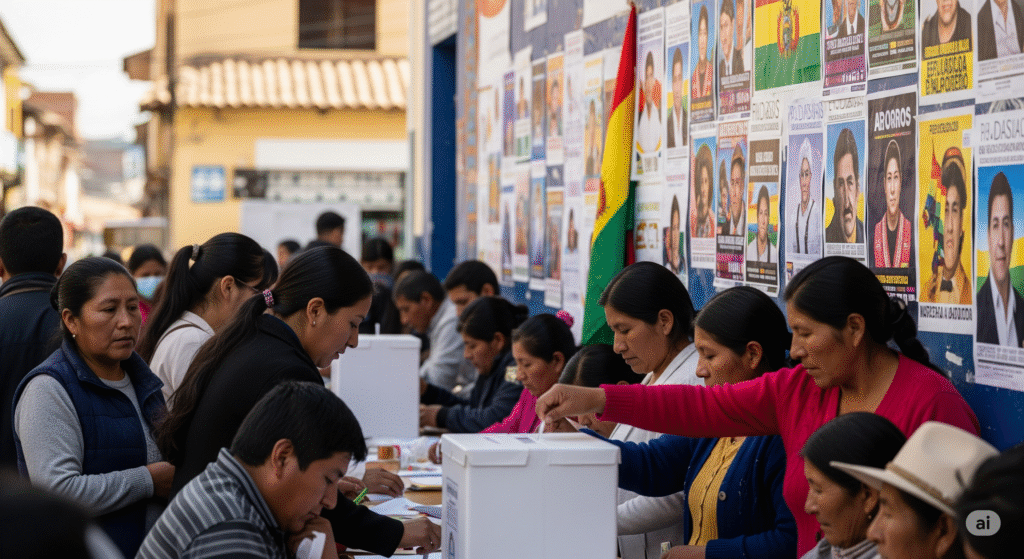
Bolivia’s recent presidential election has delivered a stunning blow to the established political order, with early results pointing towards a highly anticipated runoff vote.1 This outcome has sent ripples of excitement and uncertainty throughout the nation, as it signifies a potential end to nearly two decades of leftist dominance that began with the rise of Evo Morales.2 The fragmented opposition, led by a mix of centrist and right-wing contenders, has managed to tap into a wellspring of public discontent, setting the stage for a nail-biting second round that could dramatically alter the country’s political trajectory.3
For years, the Movement for Socialism (MAS), the party of former President Morales, held an iron grip on Bolivian politics.4 Their policies, often championed as pro-poor and nationalistic, resonated with a significant portion of the population. However, recent years have seen growing unease over issues such as the economy, allegations of corruption, and the increasingly authoritarian tendencies perceived by some within the MAS leadership.5 This simmering discontent appears to have finally boiled over in this election, with voters seemingly ready to explore alternative political paths.6
The early vote counts paint a picture of a deeply divided electorate.7 No single candidate has managed to secure the outright majority needed to avoid a second round.8 Instead, the results show a tight race between the leading contenders from the opposition, representing a diverse range of ideologies and platforms.9 Centrist candidates, often emphasizing economic stability and institutional reforms, have gained considerable traction among urban and middle-class voters. Simultaneously, right-wing candidates, focusing on issues such as law and order and a more business-friendly economic approach, have garnered significant support in other regions.
The fragmentation of the opposition, which once seemed like a major hurdle, might paradoxically be their strength in the runoff. With the initial field of candidates narrowed, the various opposition factions will now have to coalesce behind a single banner to challenge the MAS candidate in the second round. This process of political negotiation and compromise will be crucial in determining the ultimate outcome. The ability of the opposition leaders to bridge their ideological differences and present a unified front will be the key to capitalizing on the momentum gained in the first round.
The implications of a potential shift in power in Bolivia are far-reaching. It could lead to significant changes in economic policy, potentially opening up the country to more foreign investment and a different approach to resource management. Social policies, which have been a hallmark of the MAS era, could also be re-evaluated. Furthermore, a new government could recalibrate Bolivia’s international alliances and its role in regional politics.
However, the path to a new political era is not without its challenges. The MAS remains a powerful force, with a strong grassroots organization and significant support in certain segments of society, particularly in rural areas.10 They will undoubtedly mount a vigorous campaign in the lead-up to the runoff, mobilizing their base and highlighting the potential risks of a shift to the right. The second round is expected to be fiercely contested, with both sides vying for the support of undecided voters and those who backed smaller parties in the first round.11
As Bolivia braces for this crucial second vote, the international community watches with keen interest. The outcome will not only shape the future of this South American nation but also send important signals about the broader political trends in the region. The potential end of two decades of leftist rule marks a significant juncture, one that could usher in a new chapter of Bolivian history.
21 Key Bullet Points on Bolivia’s Presidential Election (August 18, 2025)
- Date: August 18, 2025 (date of news reporting)12
- Event: Bolivia’s Presidential Election.
- Outcome: Early results indicate a likely presidential runoff election.13
- End of an Era?: The runoff could potentially end nearly two decades of leftist rule in Bolivia.14
- Dominant Party: The Movement for Socialism (MAS), the party of former President Evo Morales, has been in power.15
- Opposition Strength: Centrist and right-wing candidates are currently leading the fragmented opposition.16
- No Outright Winner: No single candidate secured the majority of votes needed to win in the first round.17
- Divided Electorate: The early results suggest a deeply divided Bolivian electorate.18
- Centrist Candidates: They have gained traction by emphasizing economic stability and institutional reforms.
- Right-Wing Candidates: They have garnered support with platforms focused on law and order and business-friendly policies.19
- Opposition Unity: The various opposition factions will need to unite behind a single candidate for the runoff.
- Runoff Significance: The second round will be crucial in determining the next president of Bolivia.20
- Economic Policy Shifts: A new government could bring about significant changes in Bolivia’s economic policies.
- Social Policy Re-evaluation: Social programs implemented under MAS rule could be subject to review.
- International Relations: Bolivia’s foreign policy and regional alliances could be affected.
- MAS Resilience: The MAS party remains a strong political force with significant grassroots support.
- Runoff Campaign: The second round is expected to be a highly competitive and closely watched campaign.
- Undecided Voters: Both sides will be vying for the support of voters who did not back the leading candidates in the first round.
- Regional Implications: The election outcome will have implications for the broader political landscape of South America.
- Public Discontent: The election results reflect underlying public discontent with the status quo.
- Potential for Change: The runoff election presents a significant opportunity for a change in Bolivia’s political direction.21
The Four W’s: When, Where, Why, and Who
- When: The early results of Bolivia’s presidential election were reported today, Monday, August 18, 2025.22 The actual election took place in the days leading up to this report. The runoff election will occur in the coming weeks.
- Where: The presidential election took place across Bolivia, with polling stations set up in cities, towns, and rural communities nationwide. The results and subsequent political maneuvering are centered in the country’s political capital, likely La Paz.23
- Why: The election was held as part of Bolivia’s regular democratic process to choose a new president.24 The likely runoff is happening because no single candidate managed to secure more than 50% of the valid votes in the first round.25 This indicates a lack of a clear popular mandate for any one candidate and necessitates a second round of voting between the top two contenders.26 The potential end of leftist rule is driven by various factors, including:
- Economic challenges: Dissatisfaction with the current economic situation.
- Allegations of corruption: Public concern over governance and potential malfeasance.
- Desire for change: A segment of the population seeking a new political direction after nearly two decades of the same party in power.27
- Fragmented but effective opposition: The opposition, despite its divisions, managed to collectively garner enough votes to prevent a first-round victory for the MAS candidate.
- Who: The key actors involved are:
- The Bolivian Electorate: The citizens of Bolivia who cast their votes in the election.
- The Presidential Candidates: Specifically, the leading candidates from the opposition (representing centrist and right-wing ideologies) who are likely to proceed to the runoff, and the candidate representing the Movement for Socialism (MAS).28 The exact names of these candidates would be detailed in more specific news reports.
- The Movement for Socialism (MAS): The dominant political party that has been in power for nearly two decades and is now facing a strong challenge.29
- Opposition Political Parties: The various centrist and right-wing parties and coalitions that have gained significant support in this election.
- The Bolivian Electoral Authorities: The institutions responsible for overseeing the election process and tabulating the results.