
Pune, Maharashtra, India – September 1, 2025
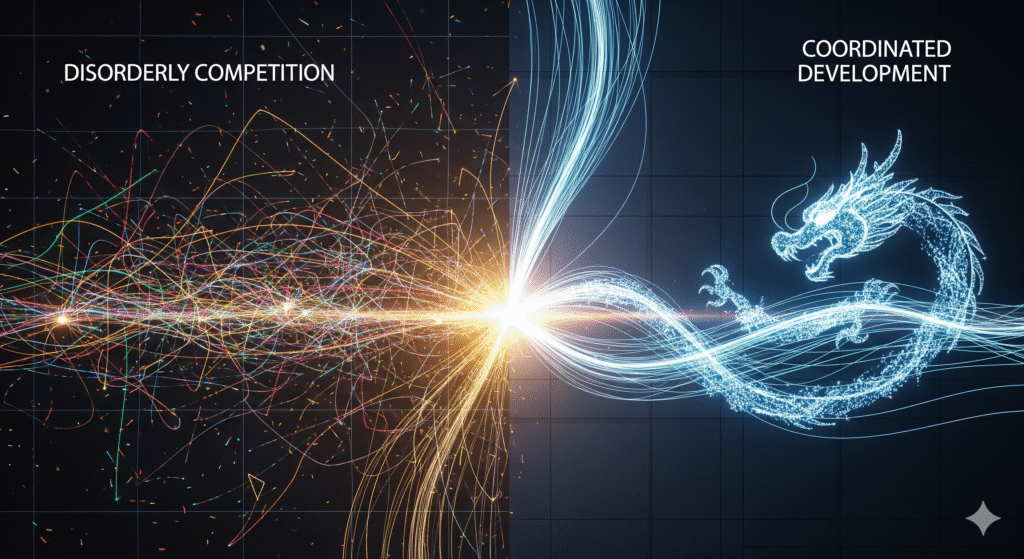
The global race for artificial intelligence supremacy is not merely a technological competition; it is a geopolitical battle for economic dominance and strategic influence. In this high-stakes contest, China is signaling a new, more strategic approach to its burgeoning AI sector, aiming to prevent “disorderly competition” and prioritize coordinated development. This calculated shift underscores Beijing’s relentless ambition to cement its position as a global AI leader, specifically to compete with the United States in a technology that promises to redefine industries, warfare, and daily life. This is not just an internal policy adjustment; it is a clear declaration of intent on the international stage.
For years, China’s AI growth, while rapid, has often been characterized by intense, sometimes chaotic, internal competition. Numerous startups, often backed by substantial state and private capital, pursued similar applications, leading to duplicated efforts and a fragmented ecosystem. While this decentralized approach fostered innovation, it also resulted in inefficiencies and a lack of strategic coherence at a national level. The new directive from Beijing, reportedly articulated through a series of high-level policy meetings and state media commentaries in late August 2025, seeks to rectify this. The term “disorderly competition” directly addresses concerns about wasted resources, redundant research, and aggressive, sometimes predatory, business practices that hinder overall national progress.
The new strategy emphasizes coordinated development across key AI domains. This involves a more centralized allocation of resources, directing state funding and talent towards priority areas identified as crucial for national competitiveness. These likely include foundational AI research, advanced chip design (to overcome reliance on Western technology), large language models, autonomous systems, and AI applications in critical sectors like defense, healthcare, and smart manufacturing. Furthermore, the government is expected to play a more active role in fostering collaboration between leading tech giants, academic institutions, and national research labs, effectively creating national AI champions rather than allowing unrestrained market forces to dictate the landscape. This approach draws parallels with China’s successful, state-backed industrial policies in other strategic sectors, such as semiconductors and renewable energy.
This shift is explicitly positioned as a direct move to compete with the United States in the AI race. Washington has long viewed China’s rapid AI advancement with a mix of alarm and determination, imposing export controls on advanced AI chips and technologies to slow Beijing’s progress. China’s new strategy is a direct counter to these efforts. By streamlining its domestic AI development, Beijing aims to accelerate its indigenous capabilities, reduce its reliance on foreign technology, and build a resilient, self-sufficient AI ecosystem. The goal is not merely to catch up, but to surpass the US in critical AI benchmarks, from algorithmic breakthroughs to the deployment of AI at scale across its economy and military.
The implications are far-reaching. Internally, Chinese AI companies will likely face stricter regulatory oversight and less autonomy, but also clearer national directives and potentially greater state support. Externally, this refined strategy could lead to even more intense geopolitical competition with the US and its allies, potentially accelerating a technological decoupling. It signals a phase where China’s AI development will be less about unbridled entrepreneurialism and more about a meticulously planned, centrally guided national endeavor to achieve global leadership in the defining technology of the 21st century. The world is witnessing the strategic deployment of a nation’s full might in the AI arena.
21 Key Updates on China’s AI Strategy (September 1, 2025)
- September 1, 2025: China is signaling a new strategic approach to its AI sector.
- September 1, 2025: The aim is to prevent “disorderly competition” within the industry.
- September 1, 2025: The new strategy prioritizes coordinated development of AI technologies.
- September 1, 2025: This move is explicitly intended to compete with the United States in the AI race.
- September 1, 2025: The shift was reportedly articulated through high-level policy meetings in late August 2025.
- September 1, 2025: State media commentaries have also highlighted the new directive.
- September 1, 2025: Previous AI growth in China was characterized by intense, sometimes chaotic, internal competition.
- September 1, 2025: “Disorderly competition” led to duplicated efforts and wasted resources.
- September 1, 2025: The new strategy involves more centralized allocation of resources.
- September 1, 2025: State funding and talent will be directed towards priority AI domains.
- September 1, 2025: Key priority areas likely include foundational AI research and advanced chip design.
- September 1, 2025: Focus will also be on large language models and autonomous systems.
- September 1, 2025: AI applications in defense, healthcare, and smart manufacturing are also critical.
- September 1, 2025: The government aims to foster collaboration between tech giants, academia, and research labs.
- September 1, 2025: This approach mirrors China’s state-backed industrial policies in other strategic sectors.
- September 1, 2025: The goal is to accelerate indigenous capabilities and reduce reliance on foreign technology.
- September 1, 2025: Beijing aims to build a resilient, self-sufficient AI ecosystem.
- September 1, 2025: The strategy seeks to surpass the US in critical AI benchmarks.
- September 1, 2025: Internally, Chinese AI companies may face stricter regulatory oversight.
- September 1, 2025: Externally, this could lead to more intense geopolitical competition and technological decoupling.
- September 1, 2025: This signals a meticulously planned, centrally guided national endeavor for global AI leadership.
When, Where, Why, and Who
China’s AI Strategy:
- When: The new strategic approach has been signaled and articulated through high-level policy discussions and state media commentaries in late August 2025. The blog post is dated September 1, 2025.
- Where: This policy shift is originating from the Chinese government and will impact the AI sector across China. Its implications are global, particularly concerning the competition with the United States.
- Why: China is adopting this new strategy why to prevent inefficiencies and fragmentation (“disorderly competition”) that have characterized its rapid AI growth. The ultimate goal is to accelerate indigenous AI capabilities, reduce reliance on foreign technology, and strengthen its position to compete with and potentially surpass the United States in global AI leadership.
- Who: The key actors are the Chinese government (including its policymakers and state planning agencies), Chinese AI companies and research institutions, and the United States (as China’s primary competitor in the AI race).