





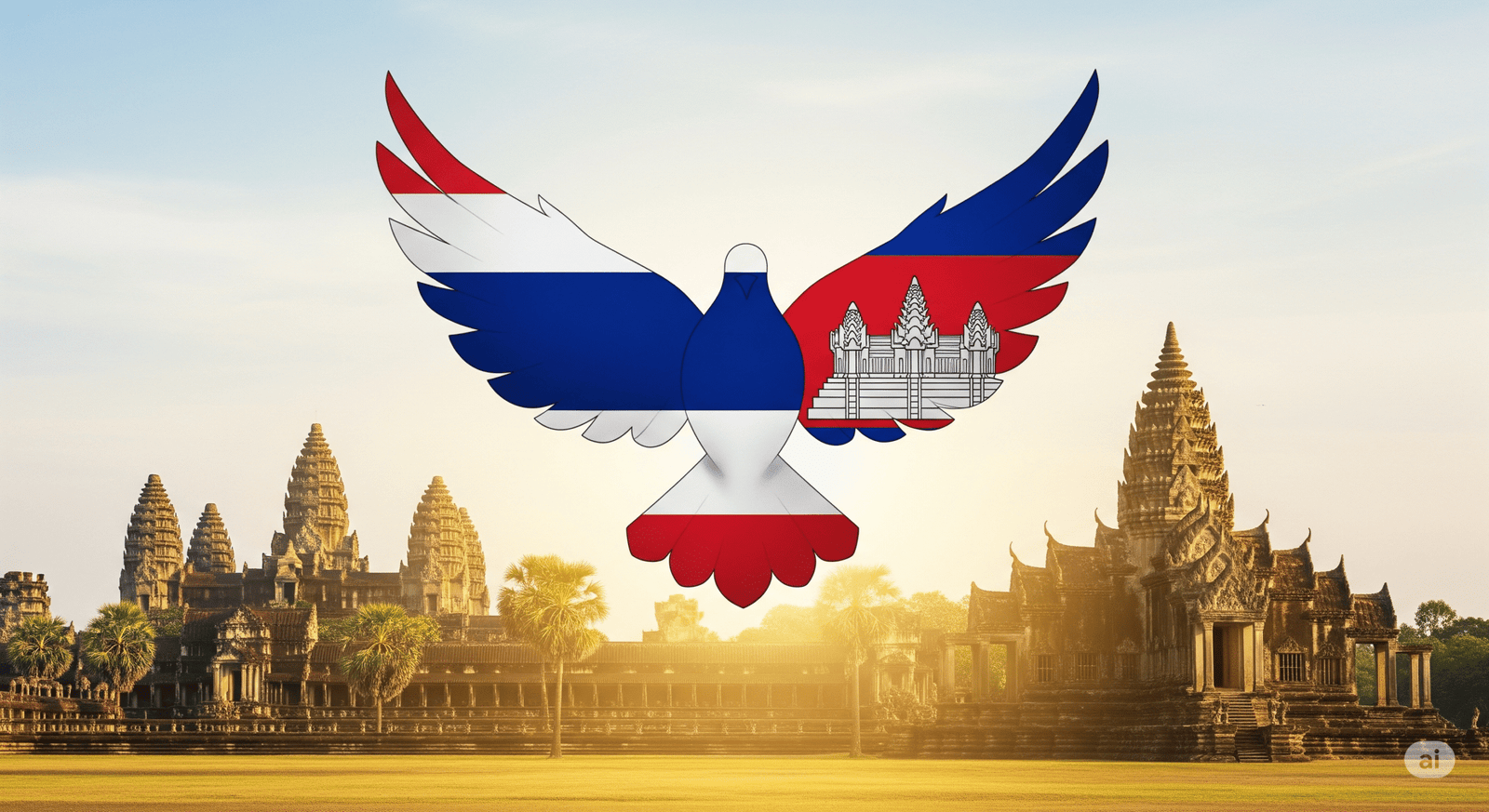
Restoring Peace on the Ancient Frontier: A Fragile Truce Between Thailand and Cambodia
Date: July 29, 2025
The ancient, contested border between Thailand and Cambodia has, once again, been a flashpoint of deadly conflict. For five harrowing days, artillery shells and gunfire echoed across the disputed frontier, claiming dozens of lives and forcing hundreds of thousands to flee their homes. Yet, amidst the grim reports, a beacon of hope has emerged: an “unconditional” ceasefire, which officially came into effect at midnight on Monday, July 28, 2025. This truce, brokered through intensive diplomatic efforts, marks a significant, albeit fragile, step towards de-escalation and the restoration of peace in a region steeped in history and often marred by territorial disputes.
The recent outbreak of hostilities was particularly brutal, described by observers as the deadliest in over a decade. While the exact trigger remains disputed, reports suggest that the conflict ignited after a landmine explosion wounded Thai soldiers near the border. Both Bangkok and Phnom Penh were quick to accuse each other of provocation, highlighting the deep-seated mistrust that has long plagued their relationship. The human cost has been immense: countless lives lost, a devastating blow to livelihoods, and a humanitarian crisis unfolding as entire villages emptied. The economic repercussions, too, were immediate, with cross-border trade routes disrupted and regional stability placed under strain.
The path to this ceasefire was paved by urgent, high-level diplomatic interventions. Crucially, Malaysian Prime Minister Anwar Ibrahim, in his capacity as the current Chair of the Association of Southeast Asian Nations (ASEAN), stepped forward to host the critical talks in Putrajaya. His mediation proved instrumental in bringing Cambodian Prime Minister Hun Manet and Thai Acting Prime Minister Phumtham Wechayachai to the negotiation table.
What perhaps added significant weight to the diplomatic push was the unexpected yet decisive involvement of the United States. President Donald Trump, known for his direct approach, reportedly put immense pressure on both nations. His warning was stark: continued hostilities could jeopardize crucial trade deals with both Thailand and Cambodia. This economic leverage, coupled with the participation of China, another major regional player, underscored the international community’s profound concern over the escalating violence and its potential to destabilize Southeast Asia. The presence of both American and Chinese ambassadors at the Putrajaya meeting was a clear signal of the global stakes involved.
For communities living along the contested border, the news of the ceasefire was met with immense relief. Stories of displaced families longing to return to their farms and retrieve their livestock underscored the profound human impact of the conflict. While the immediate cessation of violence is a welcome respite, the road ahead remains challenging. As part of the agreement, military commanders from both sides are scheduled to meet today to further defuse tensions on the ground. Furthermore, Cambodia is set to host a crucial border committee meeting on August 4, 2025, which will be vital for charting the course towards a more permanent resolution.
The core of the dispute harks back to colonial-era maps and the enduring disagreements over the precise demarcation of the shared 800-kilometer border. At the heart of many past and present clashes lies the ancient Preah Vihear temple. While the International Court of Justice (ICJ) has repeatedly ruled in Cambodia’s favor regarding the sovereignty of the temple itself (in 1962 and again in 2013), the surrounding land remains a hotly contested territory. This historical baggage, intertwined with fervent nationalistic sentiments on both sides, makes any resolution incredibly complex.
The truce is a vital first step, but it is merely that – a beginning. True, lasting peace will require sustained dialogue, a willingness to compromise, and a genuine commitment from both Thailand and Cambodia to rebuild trust and confidence. The international community, and particularly ASEAN, will need to maintain its active engagement to ensure that this fragile truce evolves into a durable peace. The eyes of the world remain on this ancient frontier, hoping that the echoes of conflict are finally replaced by the quiet sounds of reconstruction and reconciliation.
Here’s a comprehensive look at the recent truce between Thailand and Cambodia:
Thailand and Cambodia’s Truce: A Step Towards Peace
Date: July 29, 2025
- Ceasefire in Effect: The “unconditional” ceasefire between Thailand and Cambodia officially commenced at midnight on Monday, July 28, 2025.
- Ending Five Days of Clashes: The truce aims to bring an end to five days of intense border clashes that caused significant casualties and displacement.
- Significant Breakthrough: This agreement is seen as a major diplomatic breakthrough in a long-standing and volatile border dispute.
- Heavy Toll: The recent fighting has tragically resulted in dozens of deaths, including both soldiers and civilians, on both sides.
- Mass Displacement: More than 260,000 to 300,000 people have been displaced from their homes in border communities, fleeing the violence.
- Malaysian Mediation: The truce was achieved through urgent talks hosted by Malaysian Prime Minister Anwar Ibrahim in Putrajaya.
- ASEAN’s Role: Malaysia, as the current chair of the Association of Southeast Asian Nations (ASEAN), played a key mediating role in facilitating the dialogue.
- US and China Involvement: Both the United States and China also played a role in co-organizing and participating in the talks, underscoring the international concern.
- High-Level Attendance: Cambodian Prime Minister Hun Manet and Thai Acting Prime Minister Phumtham Wechayachai were present at the meeting.
- Direct Presidential Pressure: US President Donald Trump had directly pressured both nations, warning of potential negative trade implications if hostilities continued.
- Trade Deal Link: Trump explicitly linked the continuation of trade deals with an immediate cessation of violence.
- Military Commander Talks: As part of the ceasefire agreement, military commanders from both sides are scheduled to hold talks today, July 29, to further defuse tensions.
- Border Committee Meeting: Cambodia is set to host a border committee meeting on August 4, 2025, to discuss future steps.
- Restoring Normalcy: Both leaders expressed hope that bilateral ties could return to normal swiftly, allowing displaced villagers to return home.
- Trust Building: The agreement is viewed as a vital first step towards rebuilding trust, confidence, and cooperation between the two nations.
- Colonial Roots of Dispute: The underlying border dispute has deep historical roots, stemming from ill-defined boundaries established during French colonial rule in the early 1900s.
- Preah Vihear Temple at Heart: The 11th-century Preah Vihear temple and surrounding disputed areas have been a central flashpoint in the conflict for decades.
- Previous ICJ Rulings: The International Court of Justice (ICJ) has ruled in Cambodia’s favor regarding the Preah Vihear temple itself (1962, reaffirmed 2013), but surrounding land remains contested.
- Mutual Accusations: Both sides had blamed each other for initiating the recent clashes, which reportedly began after a landmine explosion wounded Thai soldiers.
- Economic Impact: The conflict severely disrupted cross-border trade and displaced a large population, highlighting the economic consequences of the hostilities.
- International Relief: News of the ceasefire has brought widespread relief to affected communities and the international community.
When, Where, Why, and Who: Understanding the Truce
When:
The truce agreement came into effect at midnight on Monday, July 28, 2025. The urgent talks that led to the agreement took place on the same day.
Where:
The breakthrough agreement was reached during a meeting held in Putrajaya, Malaysia. This location was chosen as Malaysia is the current chair of ASEAN and offered to mediate. The border clashes themselves occurred along the shared 800-kilometer (500-mile) frontier between Thailand and Cambodia, particularly around ancient temple sites like Preah Vihear, Ta Muen Thom, and Ta Krabey.
Why:
The immediate reason for the truce was the escalation of deadly border clashes that had been ongoing for five days, resulting in significant casualties and mass displacement. The underlying “why” for the conflict itself is the long-standing, unresolved territorial dispute between Thailand and Cambodia, rooted in colonial-era border demarcation. Both nations claim sovereignty over certain areas along their shared border, particularly around ancient Khmer temples which hold immense cultural and nationalistic significance. International pressure, particularly from the United States (with President Trump’s direct intervention and implied trade threats), and the mediating efforts of Malaysia (as ASEAN chair), alongside the participation of China, significantly pushed both sides towards a ceasefire. The severe humanitarian and economic impact of the conflict also created a strong impetus for a resolution.
Who:
- The Parties Involved:
- Cambodia: Represented by Prime Minister Hun Manet.
- Thailand: Represented by Acting Prime Minister Phumtham Wechayachai.
- The Brokers/Mediators:
- Malaysian Prime Minister Anwar Ibrahim: Hosted the talks in Putrajaya and acted as the primary mediator in his capacity as ASEAN Chair.
- United States: Co-organized the talks and exerted significant pressure, with President Donald Trump directly intervening.
- China: Also participated in the talks, reflecting its influence in the region.
- Those Affected:
- Soldiers from both nations: Engaged in direct combat, leading to fatalities and injuries.
- Civilians in border communities: Faced displacement, injuries, and fatalities due to the fighting.
- Regional stability and trade: The conflict posed a threat to the broader stability of Southeast Asia and disrupted cross-border economic activities.