





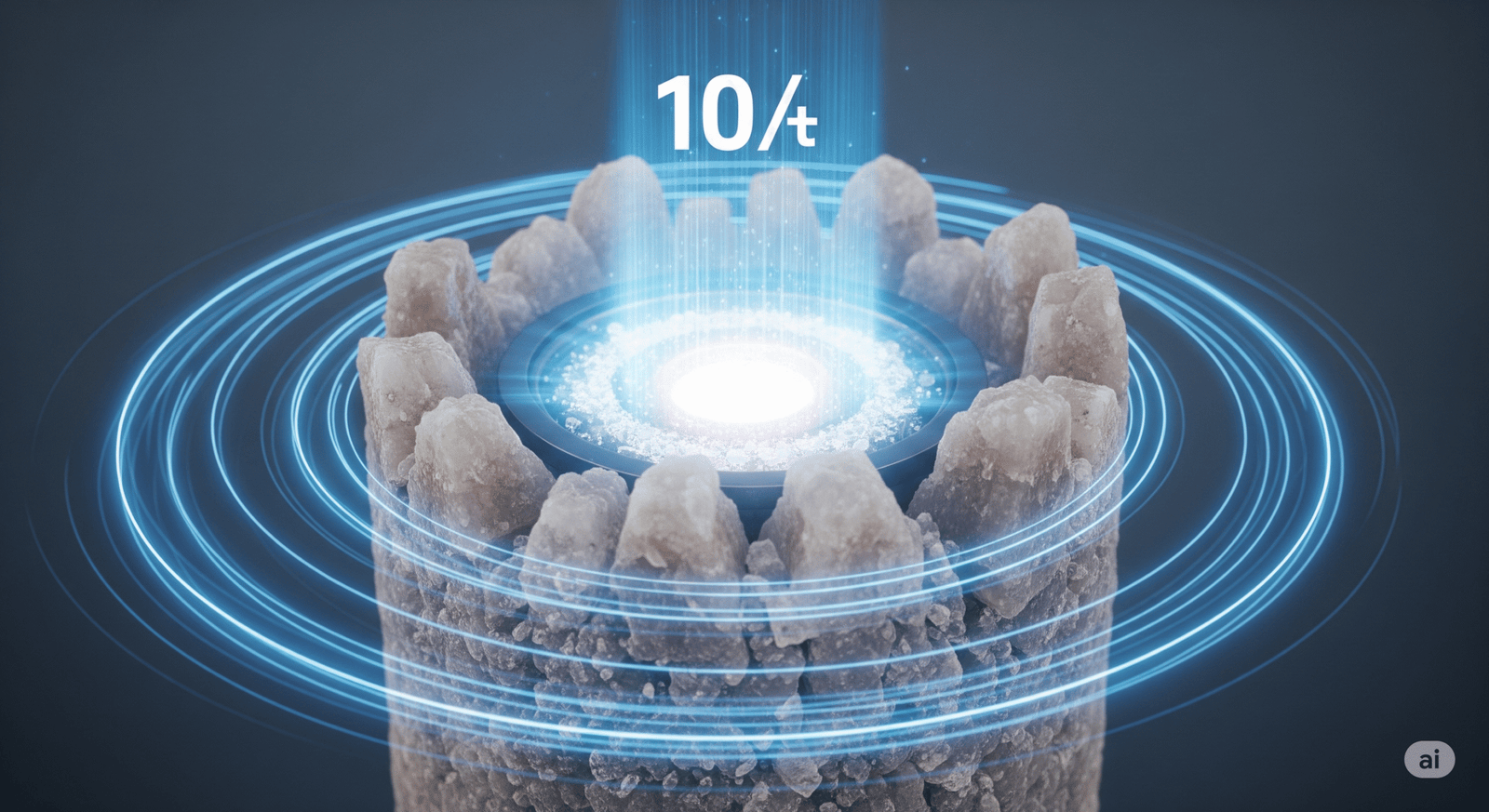
The Salt Solution: How a Simple Discovery Could Revolutionize Battery Life
Date: July 28, 2025
Imagine a world where your devices last ten times longer on a single charge, where grid-scale energy storage is not only efficient but also remarkably safe and sustainable. This future just took a significant leap closer to reality, thanks to a groundbreaking discovery by researchers at King Abdullah University of Science and Technology (KAUST). Their recent findings reveal that the simple addition of sulfate salts can dramatically extend the lifespan of aqueous batteries by an incredible tenfold. This isn’t just an incremental improvement; it’s a potential game-changer that addresses one of the most persistent hurdles in modern battery technology.
Aqueous batteries, which use water-based electrolytes, have long been lauded for their inherent safety and environmental friendliness. Unlike their popular lithium-ion counterparts, which rely on flammable organic solvents, aqueous batteries eliminate the risk of thermal runaway and explosions. They also typically utilize abundant, non-toxic materials, making them a far more sustainable and cost-effective option for large-scale energy storage. However, their Achilles’ heel has always been their relatively short lifespan. During charging and discharging cycles, undesirable side reactions within the water-based electrolyte would quickly degrade the battery’s performance, leading to a limited number of cycles before failure.
This is precisely where the KAUST team’s breakthrough comes in. By carefully incorporating sulfate salts into the electrolyte, they discovered a powerful mechanism to suppress these detrimental side reactions. Essentially, the salts act as a protective shield, preventing the breakdown of water molecules and the formation of corrosive byproducts that typically eat away at the electrodes. This elegant solution dramatically enhances the stability of the electrolyte, allowing the battery to endure significantly more charge-discharge cycles without losing capacity. The result? A tenfold increase in operational life.
The implications of this discovery are profound. For large-scale energy storage, such as buffering the electricity grid, a tenfold increase in battery longevity is nothing short of revolutionary. It means infrastructure could last longer, requiring less frequent and costly replacements. This reliability is paramount for integrating intermittent renewable energy sources like solar and wind power, ensuring a stable and consistent supply of electricity even when the sun isn’t shining or the wind isn’t blowing. Imagine sprawling solar farms seamlessly feeding into vast, safe, and long-lasting aqueous battery banks, fundamentally transforming our energy landscape.
Beyond the grid, while the immediate focus is on stationary storage, the principles could eventually influence portable electronics and even electric vehicles. Longer-lasting batteries mean less electronic waste, a growing global concern. It means more durable products for consumers and a reduced environmental footprint from battery manufacturing and disposal.
This breakthrough is a testament to the power of fundamental scientific research. It highlights how deep dives into material chemistry can yield unexpectedly simple yet incredibly impactful solutions. KAUST’s continued dedication to cutting-edge research in materials science and energy is clearly bearing fruit, pushing the boundaries of what we thought was possible for sustainable energy.
The path from laboratory discovery to widespread commercialization is often long and arduous, but this development brings aqueous battery technology closer than ever to becoming a mainstream solution. As the world grapples with the twin challenges of climate change and energy demand, innovations like the “salt solution” offer a beacon of hope, promising a future powered by safer, cheaper, and vastly more durable batteries.
Here are 21 bullet points on the new battery discovery, followed by a When, Where, Why, and Who section, with the current date.
Battery Breakthrough: Sulfate Salts Extend Lifespan by 10x
Date: Monday, July 28, 2025
- Significant Discovery: Researchers at King Abdullah University of Science and Technology (KAUST) have made a major breakthrough in battery technology.
- Aqueous Battery Focus: The discovery specifically applies to aqueous batteries, which use water-based electrolytes.
- Extended Lifespan: The key finding is that adding sulfate salts can dramatically increase the lifespan of these batteries.
- 10x Improvement: The research indicates an incredible tenfold (10x) extension in battery cycle life.
- Addressing Key Limitation: This innovation directly addresses one of the primary limitations of aqueous batteries: their relatively short lifespan due to degradation.
- Electrolyte Stability: The sulfate salts enhance the stability of the electrolyte solution within the battery.
- Suppression of Side Reactions: They work by suppressing undesirable side reactions that typically occur during charging and discharging cycles.
- Reduced Gas Evolution: These side reactions often lead to gas evolution (like hydrogen gas), which degrades the battery’s performance and shortens its life.
- Sustainable Battery Chemistry: Aqueous batteries are considered more sustainable and safer than traditional lithium-ion batteries.
- Environmental Benefits: They utilize non-toxic, abundant materials, making them environmentally friendly.
- Safety Advantages: Their water-based nature eliminates the risk of flammability and explosions associated with organic electrolytes.
- Lower Production Costs: Aqueous batteries are also inherently cheaper to produce compared to current market leaders.
- Potential for Grid Storage: This breakthrough opens significant possibilities for large-scale energy storage applications, such as grid-level electricity storage.
- Renewable Energy Integration: Extended-life aqueous batteries could vastly improve the efficiency and reliability of integrating intermittent renewable energy sources like solar and wind power.
- Electric Vehicle Implications: While primarily for grid storage, the enhanced durability could also have future implications for electric vehicles, though further research would be needed.
- Fundamental Research: The discovery stems from fundamental research into electrolyte chemistry and interfacial phenomena.
- KAUST’s Role: KAUST continues to be a hub for cutting-edge materials science and energy research.
- Paving the Way for Commercialization: This breakthrough brings aqueous battery technology closer to widespread commercial viability.
- Reducing E-Waste: Longer-lasting batteries contribute to reducing electronic waste.
- Global Impact: The development has the potential for global impact on energy infrastructure and sustainability efforts.
- Future Research: Further research will likely focus on scaling up the technology and optimizing the specific sulfate salt compositions.
When, Where, Why, and Who
- When: The research findings, which reveal this significant breakthrough, were recently published and announced, with the news breaking around late July 2025.
- Where: The research was conducted by a team of scientists at King Abdullah University of Science and Technology (KAUST), located in Thuwal, Saudi Arabia.
- Why: The primary motivation for this research is to overcome the limitations of current battery technologies, particularly the short lifespan of aqueous batteries, and to develop more sustainable, safer, and cost-effective energy storage solutions.
- Lifespan Challenge: Aqueous batteries, while safer and cheaper, have historically suffered from rapid degradation and short cycle lives due to unwanted side reactions (like water splitting) within their water-based electrolytes.
- Sustainability Goal: Researchers are driven to find alternatives to traditional lithium-ion batteries, which often rely on scarce, expensive, and sometimes controversially sourced materials, and pose safety risks. Aqueous batteries use abundant and non-toxic materials.
- Energy Storage Need: There is a critical global demand for efficient and long-lasting energy storage, especially for integrating intermittent renewable energy sources into electricity grids and for various portable electronic applications.
- Mechanism of Action: The “why” of the discovery itself lies in the sulfate salts’ ability to chemically suppress the parasitic reactions that consume the electrolyte and degrade the electrodes, thereby protecting the battery’s components and extending its operational life significantly.
- Who:
- Researchers: A team of scientists from King Abdullah University of Science and Technology (KAUST) conducted the study. While specific names are often part of the scientific publication, the institution is the primary “who” in the public announcement.
- Beneficiaries: Potential beneficiaries include:
- Energy companies and grid operators: For large-scale energy storage.
- Developers of renewable energy projects: For more reliable integration of solar and wind power.
- Electronics manufacturers: For potentially safer and longer-lasting devices.
- Environmental advocates: Due to the sustainable and non-toxic nature of the battery chemistry.
- Consumers: Who could benefit from cheaper, safer, and more durable battery-powered products in the future.