




The relentless intensification of hurricanes, fueled by a warming planet, is forcing scientists and disaster preparedness officials to re-evaluate the very metrics we use to classify these destructive storms. A recent study proposing a new hurricane classification scale, including a hypothetical Category 6, marks a critical turning point in how we understand and prepare for the increasingly powerful cyclones threatening our coastlines. This isn’t merely an academic exercise; it’s a vital adaptation to a climate crisis that is reshaping the nature of extreme weather events, demanding a more comprehensive and actionable warning system.
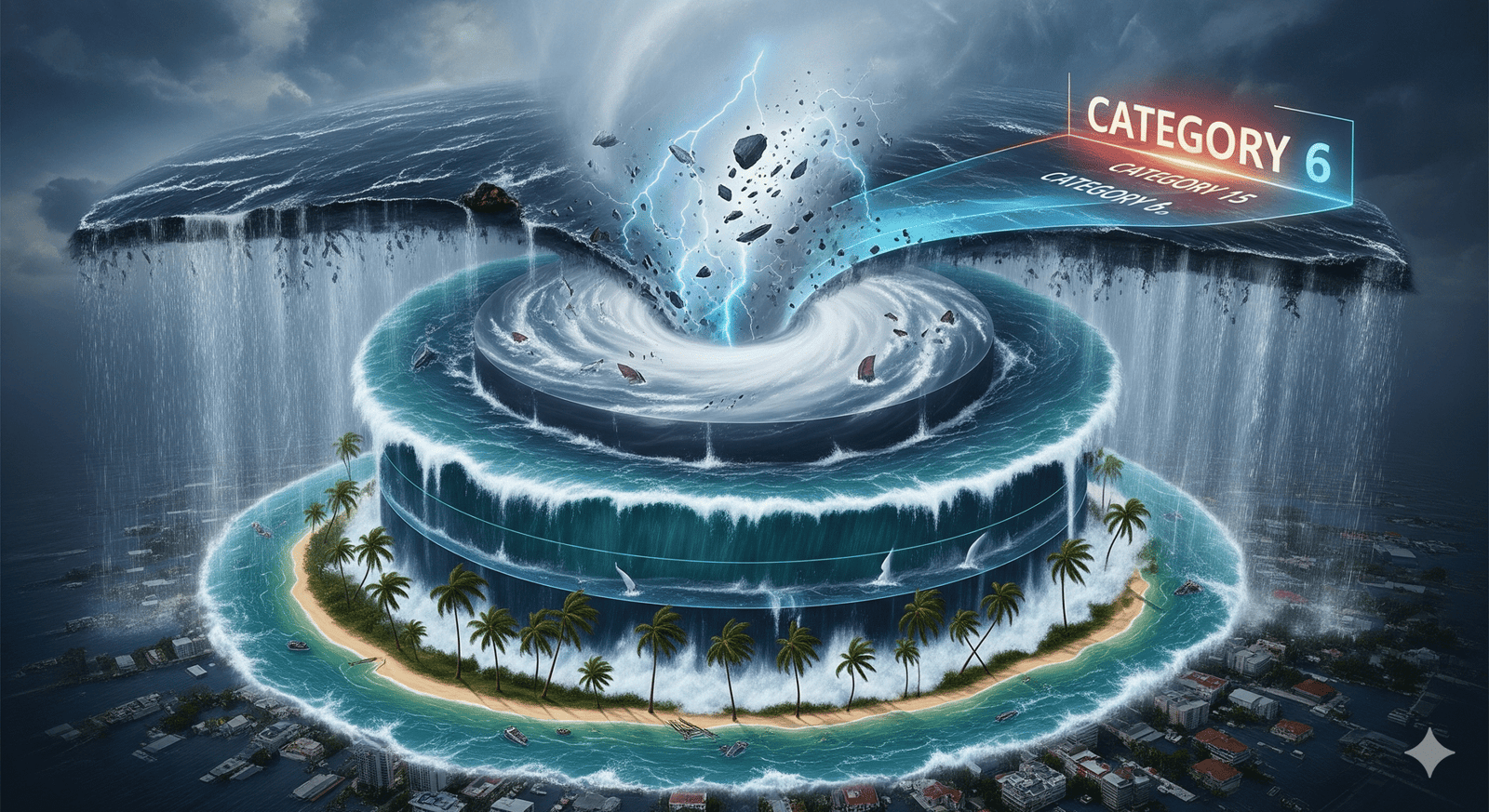
For decades, the Saffir-Simpson Hurricane Wind Scale has been the gold standard, categorizing hurricanes from Category 1 to 5 based solely on sustained wind speed. While incredibly useful, this singular focus on wind speed is becoming increasingly insufficient in the face of hurricanes that are not only stronger but also produce unprecedented rainfall and catastrophic storm surge. The proposed Category 6, which would encompass storms with sustained winds exceeding 192 mph (309 km/h), is a direct response to the emergence of “hyper-canes” – storms like Hurricane Patricia (2015), which briefly reached 215 mph, and Hurricane Wilma (2005), which achieved 185 mph before landfall. These storms, currently capped at Category 5 despite their immense power, highlight a psychological and practical limitation of the current scale. By topping out at Category 5, the public may perceive all storms exceeding that threshold as equally dangerous, potentially underestimating the truly extreme nature of a storm approaching or surpassing 200 mph winds.
However, the new study goes beyond simply adding another category. Its core strength lies in advocating for a classification system that holistically considers the multifaceted threats posed by hurricanes. Crucially, it emphasizes the inclusion of storm surge and rainfall risks alongside wind speed. This is a paradigm shift in warning systems. We’ve seen countless examples where storm surge, often described as a “wall of water” pushed ashore by the hurricane, causes more destruction and fatalities than wind. Hurricane Katrina (2005) is a tragic testament to this, where storm surge overwhelmed coastal defenses. Similarly, the catastrophic flooding from rainfall, as witnessed with Hurricane Harvey (2017) which deluged Houston, can render areas uninhabitable for weeks or months, even far inland from the coast. A system that integrates these elements would provide a far more accurate and nuanced picture of a storm’s potential impact, allowing communities to tailor their preparedness efforts more effectively.
Implementing a new scale would involve significant challenges, including public education and avoiding alarm fatigue. Critics might argue that adding a Category 6 could cause unnecessary panic or that the public struggles to differentiate between high-end Category 4 and 5 storms already. However, proponents emphasize that the goal isn’t just to add a number, but to provide clearer, more actionable information. By developing clear thresholds and associated risks for storm surge and rainfall alongside wind, local authorities could issue more precise evacuation orders, prepare emergency services for specific types of damage, and allocate resources more efficiently.
Ultimately, this proposed reclassification is a proactive measure driven by the realities of a changing climate. As ocean temperatures rise, providing more energy for storm development, the frequency of intense hurricanes is projected to increase. Adapting our warning systems is no longer optional; it’s essential for saving lives and building more resilient communities. The discussion around a Category 6 and a more holistic classification is a crucial step towards acknowledging the new era of extreme weather and equipping ourselves with the tools to face it.
21 Bullet Points on New Hurricane Classification
Date: August 29, 2025
- A new study proposes an updated hurricane classification scale.
- The proposed scale would include a hypothetical Category 6.
- The current Saffir-Simpson Hurricane Wind Scale only goes up to Category 5.
- The Saffir-Simpson scale classifies storms based solely on sustained wind speed.
- Category 6 would apply to storms with sustained winds exceeding 192 mph (309 km/h).
- This proposed category acknowledges the increasing intensity of hurricanes globally.
- Examples of storms that might have fit a Category 6 include Hurricane Patricia (2015) and Hurricane Wilma (2005).
- The study argues that capping the scale at Category 5 can lead to underestimation of extreme danger.
- Beyond wind speed, the new classification would also integrate storm surge risk.
- It would also incorporate rainfall accumulation risk.
- This multi-factor approach aims to provide a more comprehensive assessment of a storm’s threat.
- Historically, storm surge and rainfall often cause more damage and fatalities than wind.
- Hurricane Katrina (2005) is a key example where storm surge was catastrophic.
- Hurricane Harvey (2017) demonstrated the devastating impact of extreme rainfall.
- The current scale doesn’t adequately convey the full spectrum of a hurricane’s dangers.
- A more detailed classification could improve public preparedness and response.
- It could help emergency services allocate resources more effectively.
- Implementing such a change would require significant public education efforts.
- The proposal is a direct response to climate change, which is intensifying hurricanes.
- Warmer ocean temperatures provide more energy for stronger storm development.
- This research aims to enhance safety and resilience in a world facing more extreme weather events.
Separate Answer: When, Where, Why, and Who
When: The study proposing the new hurricane classification scale was published recently, in August 2025. The discussions around needing such a change have been ongoing for several years, spurred by increasingly powerful storms.
Where: The study’s findings are relevant globally, wherever hurricanes (or typhoons/cyclones) occur and impact populations. The examples cited, such as Hurricanes Patricia, Wilma, Katrina, and Harvey, primarily affected coastal regions of North and Central America, including the United States and Mexico. The implications are particularly significant for regions like the Caribbean, the Gulf Coast, and the Atlantic seaboard.
Why: The new classification is being proposed because the existing Saffir-Simpson scale, which focuses only on wind speed, is deemed insufficient to convey the full range of dangers from increasingly powerful hurricanes. A warming climate is leading to more intense storms with higher winds, greater storm surge, and more extreme rainfall, necessitating a more comprehensive warning system to improve public safety and preparedness.
Who: The study was conducted by scientists and researchers specializing in meteorology, atmospheric science, and climate change, likely from universities or research institutions. Its implications affect coastal communities, disaster preparedness agencies, emergency responders, policymakers, and the general public in hurricane-prone regions around the world.