




Pune, Maharashtra, India – September 1, 2025
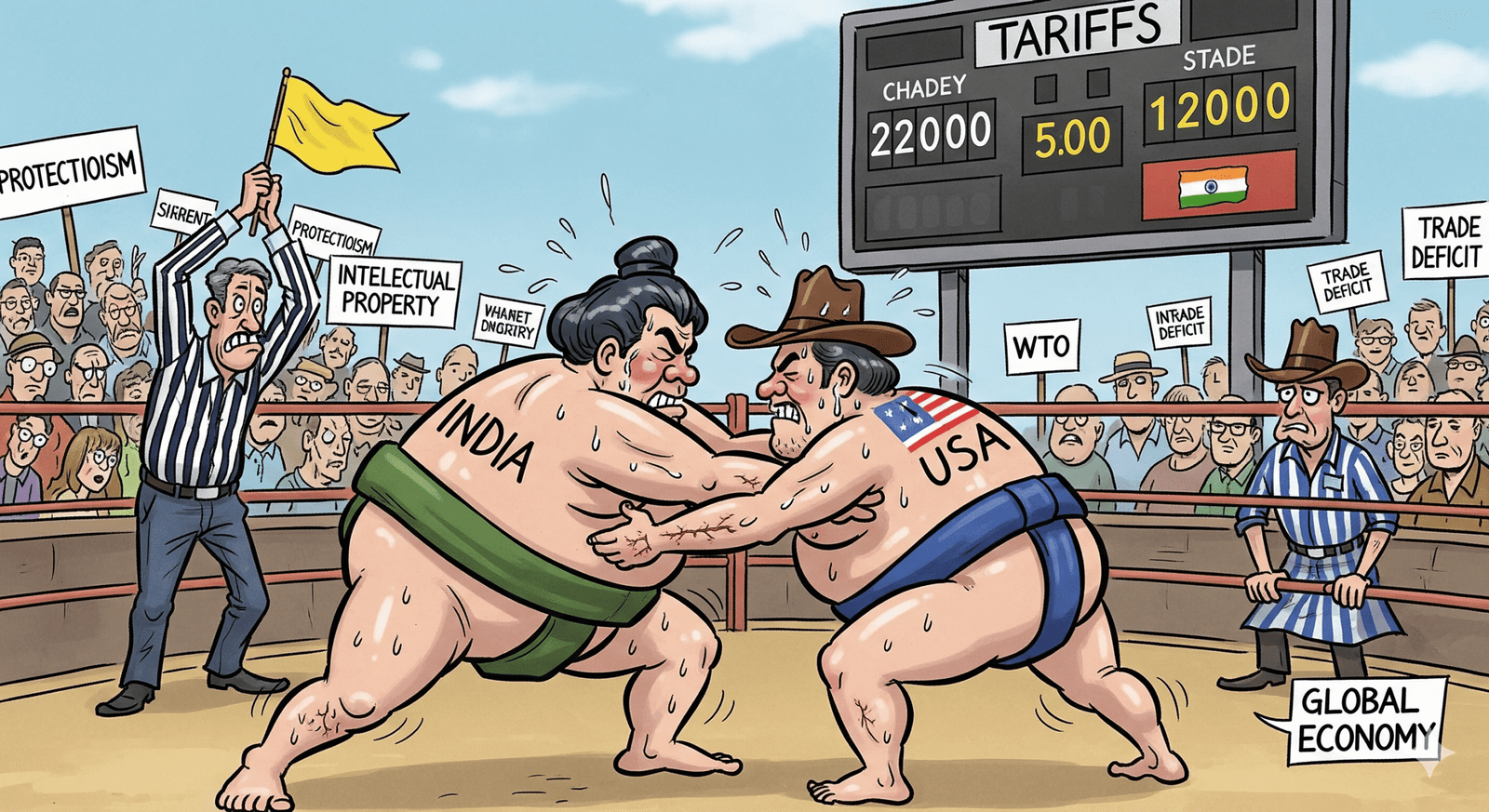
The normally staid world of international trade has been jolted by a fiery declaration from India’s commerce minister, who stated that the country “will not bow down” to pressure from the United States. This defiant stance comes on the heels of the U.S. implementing a punitive 50% tariff on a range of Indian goods, a move that threatens to unravel the delicate economic ties between the two nations. Far from a simple trade spat, this is a high-stakes standoff that underscores a new, more nationalistic approach to economic policy in a world where trade is increasingly a weapon of geopolitical leverage.
The genesis of the current dispute lies in a series of decisions that have been simmering for months. Citing India’s continued purchase of Russian oil and its perceived intransigence in opening up its agriculture and dairy markets, the U.S. administration, led by President Donald Trump, escalated its trade pressure. An initial 25% tariff was compounded by an additional 25%, bringing the total duty to a staggering 50% on key Indian exports. This measure, which took effect in late August 2025, is not merely a negotiating tactic; it is an economic shock aimed at sectors like textiles, gems and jewelry, leather goods, and seafood. For many small and medium enterprises in India, a 50% tariff is akin to a trade embargo, threatening to wipe out their long-established presence in the American market and putting hundreds of thousands of jobs at risk.
The response from New Delhi has been swift and resolute. Commerce and Industry Minister Piyush Goyal’s statement that India will “neither bow down nor ever appear weak” resonated with a domestic audience that has been increasingly focused on economic sovereignty. The government is not retreating; instead, it is formulating a multi-pronged strategy to cushion the blow. This includes an aggressive push to diversify exports into new markets in Latin America, Africa, and Southeast Asia. India is also fast-tracking negotiations on free trade agreements with other partners, such as the European Union, to reduce its dependence on the American market. Internally, officials are discussing measures to boost domestic consumption, with a potential GST rate restructuring to lower costs for consumers ahead of the Diwali festival.
This dispute is a test of strength for India’s economic resilience. While the U.S. is India’s largest export market, analysts point out that exports to the U.S. account for only a small fraction of India’s overall GDP, a number dwarfed by the massive domestic consumption that drives the economy. Prime Minister Narendra Modi has also weighed in, asserting that the interests of India’s farmers and small businesses are paramount, a politically sensitive stance given the millions of livelihoods at stake. For now, India has ruled out immediate retaliatory tariffs, opting instead for a strategy of economic self-reliance and market diversification.
The future of this trade relationship hangs in the balance. The U.S. has signaled that it is willing to escalate if India refuses to budge, but India’s firm stance indicates it is prepared for a prolonged standoff. This is more than a disagreement over market access; it is a clash of national interests and a reflection of the fragmenting global trading system. The outcome will not only impact the economies of the world’s two largest democracies but will also send a powerful message about the new rules of engagement in a world where countries are increasingly willing to prioritize their own interests, even at the risk of fracturing key alliances.
21 Key Updates on the India-US Trade Dispute (September 1, 2025)
- September 1, 2025: A significant trade dispute has erupted between India and the United States.
- September 1, 2025: The dispute began after the U.S. imposed a 50% tariff on Indian goods.
- September 1, 2025: The tariffs are a combination of two 25% duties, the latest of which took effect in late August 2025.
- September 1, 2025: The U.S. cited India’s continued purchases of Russian oil as a key reason for the tariffs.
- September 1, 2025: The U.S. is also seeking greater market access to India’s agriculture and dairy sectors.
- September 1, 2025: India’s Commerce Minister, Piyush Goyal, stated that the country will “not bow down”.
- September 1, 2025: The minister said India “will neither bow down nor ever appear weak.”
- September 1, 2025: The 50% tariff is considered akin to a trade embargo on certain goods.
- September 1, 2025: Key affected sectors include textiles, gems and jewelry, leather goods, and seafood.
- September 1, 2025: The tariffs could lead to job losses for hundreds of thousands of Indian workers.
- September 1, 2025: The Indian government has ruled out immediate retaliatory tariffs on U.S. goods.
- September 1, 2025: India’s counter-strategy focuses on diversifying exports.
- September 1, 2025: The country is actively looking to boost exports to Latin America, Africa, and Southeast Asia.
- September 1, 2025: Free trade negotiations with the European Union are being fast-tracked.
- September 1, 2025: The government is also planning to boost domestic consumption to cushion the impact.
- September 1, 2025: A potential restructuring of GST rates is being considered for this purpose.
- September 1, 2025: Indian Prime Minister Narendra Modi has vowed to protect the interests of Indian farmers.
- September 1, 2025: The dispute has led to a stalemate in bilateral trade talks.
- September 1, 2025: U.S. officials have described the relationship as “complicated.”
- September 1, 2025: The U.S. has hinted at a “tougher approach” if India refuses to yield.
- September 1, 2025: The dispute highlights the growing use of trade as a geopolitical tool.
When, Where, Why, and Who
- When: The key development in this dispute—the imposition of the 50% tariffs and the Indian government’s defiant response—occurred in late August 2025. The news and analysis are current as of September 1, 2025.
- Where: The trade dispute is between the governments of India and the United States. Its effects are being felt by businesses and consumers in both countries and are being watched by the global trading community.
- Why: The dispute is happening why because the United States, under its administration’s foreign policy and trade agenda, has imposed a steep 50% tariff on Indian goods. India’s government, in turn, is pushing back against what it sees as unfair pressure and is prioritizing its own national and economic interests.
- Who: The key actors are the governments of India and the United States, specifically India’s Commerce Minister Piyush Goyal and U.S. President Donald Trump. The dispute directly impacts exporters and industries in both nations, as well as consumers who may face higher prices or reduced availability of goods.