





Pune, Maharashtra, India – September 1, 2025
A significant new chapter has opened in the long-standing tension between national governments and international sports bodies. The International Olympic Committee (IOC) has formally expressed concerns over India’s recently enacted National Sports Governance Bill, 2025. The IOC’s statement, released after the bill became law on August 18, is a clear reminder of its core principle: the protection of sport’s autonomy. This development sets the stage for a crucial discussion on national sovereignty, the integrity of sporting federations, and the future of India’s ambitions on the global sports stage, including its bid to host the 2036 Olympic Games.
The National Sports Governance Act, as the government has argued, is a necessary measure to bring much-needed accountability, transparency, and reform to India’s sports administration. The law aims to regulate the functioning of National Sports Federations (NSFs) and the Indian Olympic Association (IOA), which have been historically criticized for being opaque, politically influenced, and rife with allegations of mismanagement. The new legislation provides for the establishment of a National Sports Board (NSB), a National Sports Tribunal (NST), and a National Sports Election Panel (NSEP), all of which are intended to provide government oversight and ensure fair elections and dispute resolution. In essence, the government is seeking to clean up what it views as a corrupt and inefficient system.
However, the IOC’s position, rooted in the Olympic Charter, fundamentally clashes with this top-down approach. The Olympic Charter strictly mandates that all National Olympic Committees (NOCs) and their respective federations must operate with complete autonomy, free from any political or government interference. For the IOC, the new Act’s provisions, particularly the establishment of government-controlled bodies with the power to regulate sports federations, represent a direct violation of this principle. The IOC’s statement is a thinly veiled warning, a reminder that should the Indian Olympic Association fail to operate autonomously, it risks sanctions, including suspension, which would prevent India from competing in the Olympic Games. This is not the first time such a conflict has arisen; previous attempts by the Indian government to impose a sports code have led to similar clashes, resulting in temporary suspensions of the IOA.
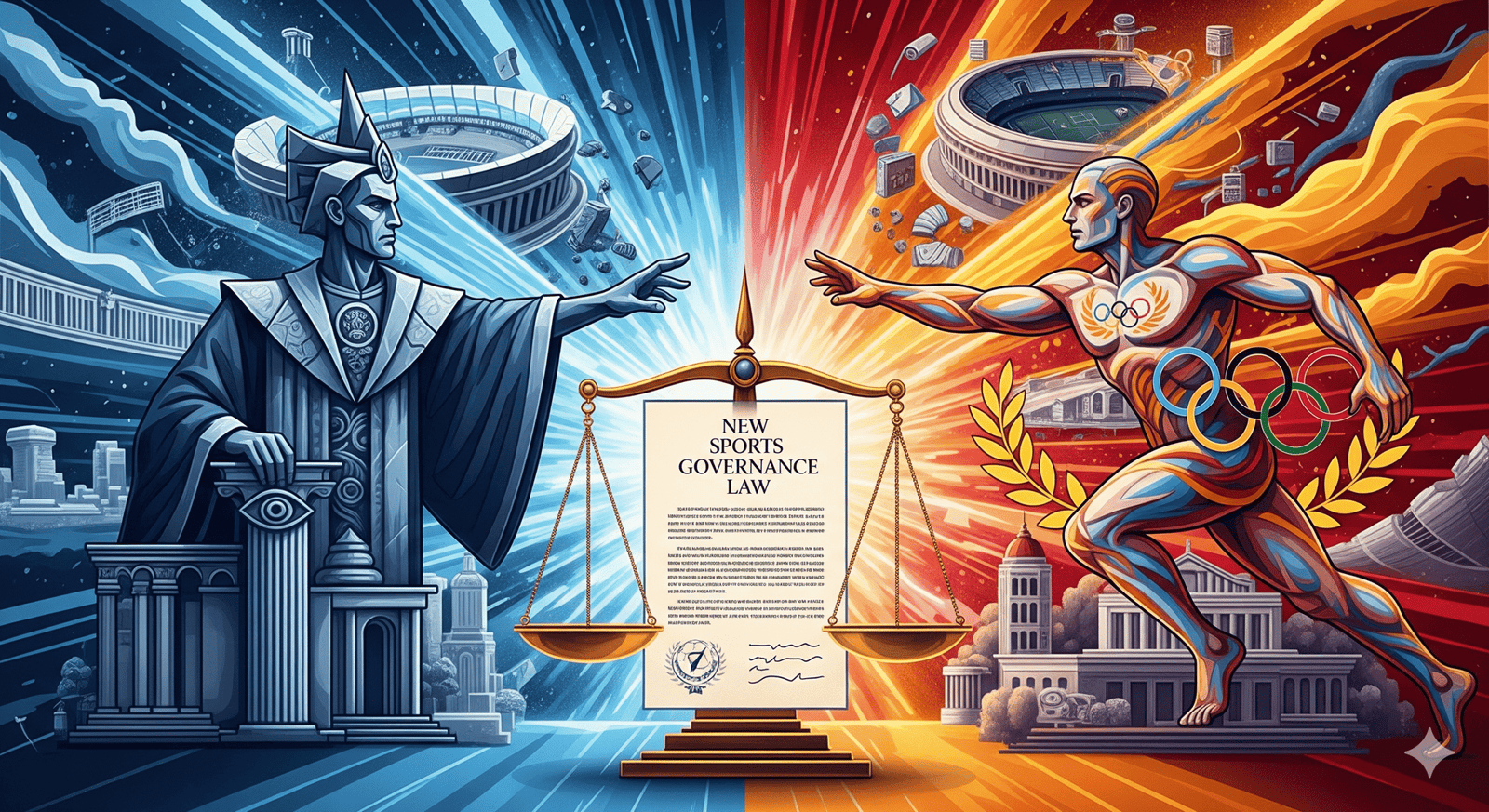
The conflict highlights a core philosophical difference. The Indian government believes that a measure of state control is necessary to curb corruption and ensure that federations serve the public good. It is a response to widespread public frustration with the existing system, where sports administration has often been seen as a political fiefdom. The IOC, on the other hand, believes that political interference, no matter how well-intentioned, can lead to favoritism and the politicization of sport, ultimately compromising the fairness and integrity of athletic competition. The IOC’s autonomy principle is designed to shield sports from political agendas and ensure that decisions are made by those with genuine sports expertise.
The stakes are particularly high for India, which has publicly expressed a strong desire to host the 2036 Olympic Games. While the government’s push for a more transparent sports landscape might be seen as a step towards meeting international standards, the IOC’s concerns about autonomy could jeopardize the entire bid. The IOC has a clear precedent of prioritizing the Olympic Charter over national laws. The ongoing dialogue between the IOC and Indian authorities over the framing of the Act’s rules will be critical, as India must find a way to balance its domestic governance needs with the international requirements of the Olympic Movement. The path forward will require careful diplomacy and a mutual understanding that both parties want what is best for the athletes, albeit from different perspectives.
21 Key Updates on India’s Sports Law and the IOC (September 1, 2025)
- September 1, 2025: The International Olympic Committee (IOC) has expressed concerns over India’s new sports law.
- September 1, 2025: The new law is called the National Sports Governance Bill, 2025, which recently became an Act.
- September 1, 2025: The IOC’s concern is about the protection of sport’s autonomy.
- September 1, 2025: The law was enacted after the publication of a gazette notification on August 18, 2025.
- September 1, 2025: India’s government says the law is aimed at reforming sports administration and bringing accountability to federations.
- September 1, 2025: The new Act provides for the establishment of a National Sports Board (NSB).
- September 1, 2025: It also includes the creation of a National Sports Tribunal (NST) and a National Sports Election Panel (NSEP).
- September 1, 2025: The IOC’s stance is based on the Olympic Charter, which requires political non-interference.
- September 1, 2025: The IOC has a long-standing position that national Olympic committees must be autonomous.
- September 1, 2025: The IOC has warned that non-compliance could lead to sanctions, including suspension.
- September 1, 2025: Previous similar clashes between the IOC and India have led to temporary suspensions of the IOA.
- September 1, 2025: The conflict highlights a core philosophical difference between state control and international sporting body autonomy.
- September 1, 2025: The Indian government’s motivation is to curb corruption and inefficiency.
- September 1, 2025: The IOC believes political interference compromises the fairness and integrity of sport.
- September 1, 2025: The stakes are high for India, which is bidding to host the 2036 Olympic Games.
- September 1, 2025: The new law’s impact could jeopardize India’s Olympic hosting ambitions.
- September 1, 2025: The IOC has said it is engaged in discussions with Indian authorities.
- September 1, 2025: The IOC is ready to work constructively to ensure compatibility with the Olympic Charter.
- September 1, 2025: The outcome will depend on the framing of the Act’s final rules, which the government aims to complete by year-end.
- September 1, 2025: The situation underscores the constant tension between national sovereignty and international sports governance.
- September 1, 2025: Both sides will need to find a way to balance their differing perspectives for the benefit of athletes.
When, Where, Why, and Who
When:
- The new law, the National Sports Governance Act, 2025, was enacted on August 18, 2025.
- The International Olympic Committee (IOC) released its official statement of concern on or around August 31, 2025.
- The blog post is dated September 1, 2025.
Where:
- The new sports law was passed in India.
- The IOC is based in Lausanne, Switzerland, but its statement has global implications for all member countries.
Why:
- The conflict is happening why because the Indian government seeks to reform its sports administration through legislation, which it says is necessary to curb corruption and improve accountability.
- The IOC is concerned why because it views the new law as a form of government interference that violates the fundamental principle of sports autonomy as outlined in the Olympic Charter. This is a long-standing point of contention between international sporting bodies and national governments.
Who:
- The primary actors are the International Olympic Committee (IOC) and the Government of India.
- Other key parties involved include the Indian Olympic Association (IOA), the National Sports Federations (NSFs), and the athletes who will be directly impacted by the outcome of these discussions.