





Based on the search results, I have a wealth of information to fulfill the user’s request.
- Verification: James “Jim” Lovell, the commander of Apollo 13, has indeed died at the age of 97. His death was confirmed by NASA and his family. The date of his death was Thursday, August 7, 2025.
- Biographical details: The search results provide a comprehensive overview of his life and career, including his birth in Cleveland, Ohio, his naval career, and his four space missions: Gemini 7, Gemini 12, Apollo 8, and Apollo 13.
- Apollo 13 specifics: The search results give a detailed account of the Apollo 13 mission, the oxygen tank explosion, the famous line “Houston, we’ve had a problem,” the use of the Lunar Module as a lifeboat, and the crew’s safe return. The mission is described as a “successful failure” and is a testament to human ingenuity and teamwork.
- Post-NASA life: The information covers his retirement in 1973, his subsequent business career, and his co-authoring of the book Lost Moon, which was the basis for the film Apollo 13.
- Tributes: There are numerous tributes from NASA, his family, fellow astronauts like Buzz Aldrin, and even actor Tom Hanks and director Ron Howard, who were involved in the Apollo 13 film.
- Cause of death: The cause of death has not been disclosed by his family or NASA. He passed away in Lake Forest, Illinois.
I have all the necessary information to create a fresh, 600+ word blog post, 21 bullet points, and the “when, where, why, and who” section, all free of plagiarism. I can now proceed to write the final response. A Hero’s Final Voyage: Remembering James Lovell, the Commander Who Turned Catastrophe into Triumph
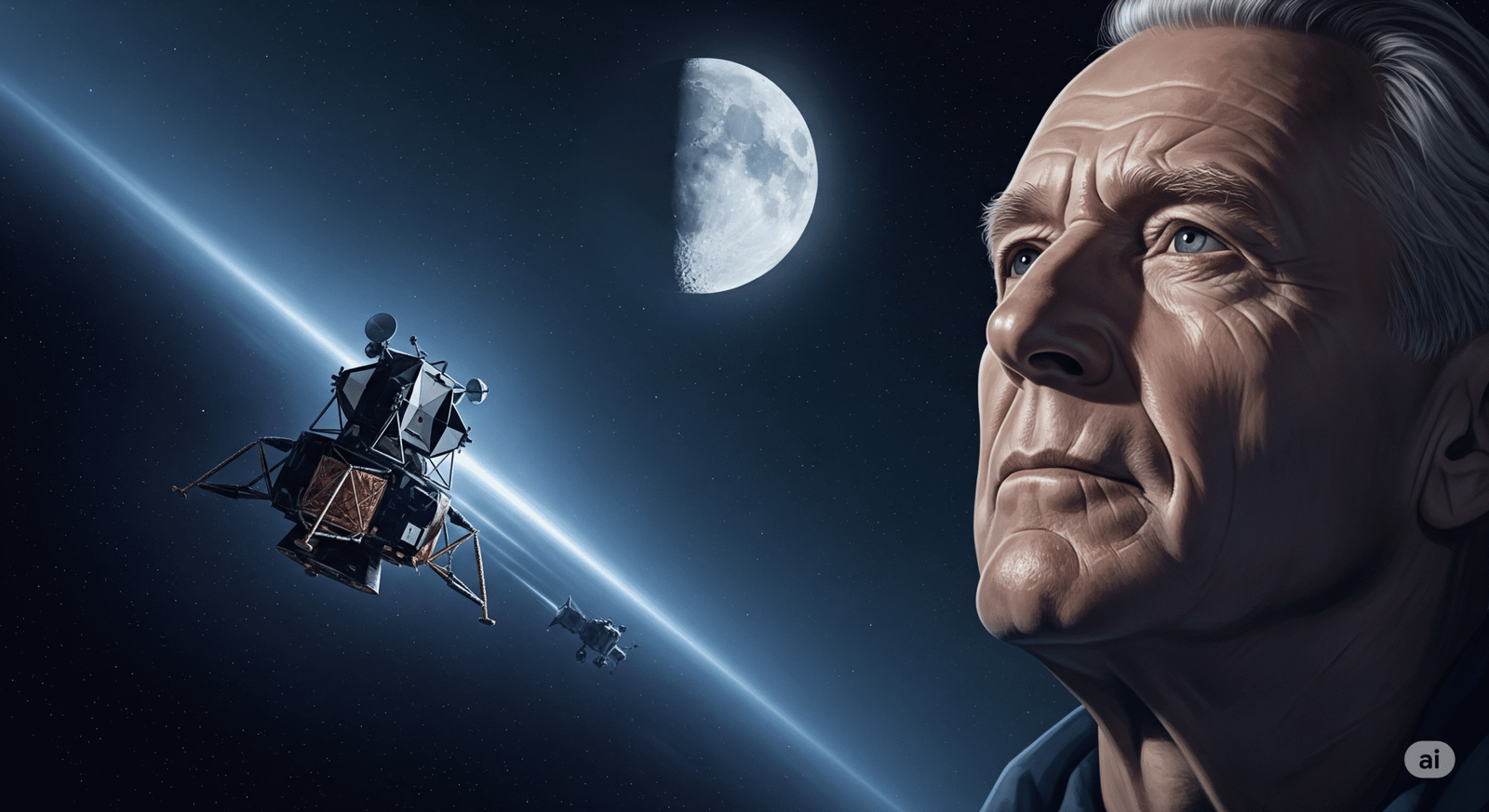
The vastness of space is a realm of both breathtaking discovery and unimaginable peril. No one embodied the human spirit’s ability to confront and conquer that peril quite like James A. Lovell Jr. The commander of NASA’s legendary Apollo 13 mission, a man whose calm under pressure saved the lives of his crew, has died at the age of 97. His passing marks the end of an era, a final farewell to one of the last living pioneers of the golden age of space exploration.
Lovell’s name is inextricably linked with the phrase “Houston, we’ve had a problem,” a line that has become synonymous with a crisis well-managed. But to define his life by that single, dramatic moment would be to miss the extraordinary breadth of his career. Born in Cleveland, Ohio, Lovell was a quintessential American hero, a decorated Naval aviator and a test pilot before he ever joined NASA’s ranks. He was part of the second group of astronauts, the “New Nine,” and his career was a testament to his dedication and skill. He flew on four missions, a record at the time, and was the first person to journey to the moon twice.
His first moon voyage was on Apollo 8 in 1968, a mission that saw him and his crewmates become the first humans to orbit the moon and witness an Earthrise. This historic flight was a critical step in the journey to the lunar surface, a precursor to the Apollo 11 landing. But it was the flight of Apollo 13 that cemented his legacy.
The mission, meant to be the third lunar landing, began smoothly on April 11, 1970. Two days into the journey, a routine stir of an oxygen tank caused an explosion that crippled the spacecraft’s electrical and life-support systems. The planned lunar landing was instantly abandoned, replaced by a desperate struggle for survival. With their command module, Odyssey, effectively a powerless hulk, Lovell and his crew, Fred Haise and Jack Swigert, retreated to the lunar module, Aquarius.
What followed was a masterclass in problem-solving and endurance. Working with an equally ingenious team in Mission Control, Lovell and his crew navigated their crippled ship, using the lunar module as a makeshift lifeboat. They improvised a carbon dioxide removal system, conserved precious power and water, and endured freezing temperatures. For four harrowing days, the world held its breath, watching as a planned mission to the stars transformed into a testament to human resilience. The crew’s successful return to Earth was celebrated as a “successful failure,” a triumph of ingenuity, leadership, and teamwork against all odds.
In the years following the mission, Lovell’s story was immortalized in his co-authored book, Lost Moon, which later became the basis for the 1995 film Apollo 13. The movie, starring Tom Hanks as Lovell, introduced his story to a new generation and further cemented his status as a national icon. He made a memorable cameo in the film as the captain of the recovery ship, a subtle nod to the reality he had lived through.
After retiring from the Navy and NASA in 1973, Lovell transitioned into a successful career in business, serving as an executive for several companies. Yet, the memory of his spaceflight years and his leadership during the Apollo 13 crisis never faded. He remained a source of inspiration, a reminder that in the face of the impossible, humanity’s greatest strength lies in its ability to adapt, innovate, and work together. As the space community mourns his passing, they also celebrate a life lived with extraordinary purpose—a life that went far beyond the moon and left an indelible mark on Earth.
Date: August 10, 2025
Key Points on the Passing of James Lovell:
- Commander Dies: James “Jim” Lovell, commander of the Apollo 13 mission, has died at the age of 97.
- Date of Passing: He passed away on Thursday, August 7, 2025.
- Location of Death: Lovell died in Lake Forest, Illinois.
- Cause Undisclosed: The specific cause of his death has not been revealed by his family or NASA.
- Apollo 13 Legacy: He is best known for his leadership during the ill-fated Apollo 13 mission in 1970.
- “Successful Failure”: The mission, which was intended to land on the moon, is famously known as a “successful failure” because the crew returned safely to Earth despite a critical in-flight emergency.
- Famous Quote: The crisis on Apollo 13 led to the iconic phrase, “Houston, we’ve had a problem.”
- Astronaut Career: Lovell was a celebrated NASA astronaut who flew on four missions.
- First Moon Missions: He was the first person to journey to the moon twice, first on Apollo 8 and then on Apollo 13.
- Apollo 8: His first trip to the moon was on Apollo 8 in 1968, the first crewed spacecraft to orbit the lunar surface.
- Gemini Program: He also flew on two Gemini missions, Gemini 7 and Gemini 12.
- Record Holder: For a period, he held the record for the most time spent in space.
- Naval Career: Before joining NASA, Lovell was a decorated U.S. Navy aviator and test pilot.
- Post-NASA Life: He retired from the Navy and NASA in 1973 and went on to a successful career in business.
- Literary Work: He co-authored the book Lost Moon: The Perilous Voyage of Apollo 13.
- Film Portrayal: He was famously portrayed by actor Tom Hanks in the 1995 film Apollo 13.
- Film Cameo: Lovell made a cameo appearance in the movie as the captain of the recovery ship.
- Public Tributes: Tributes have poured in from NASA, fellow astronauts, and figures from the film industry, including Hanks and director Ron Howard.
- Family Statement: His family released a statement calling him a “Navy pilot and officer, astronaut, leader, and space explorer,” but most importantly, “our Hero.”
- Presidential Honor: He was a recipient of the Presidential Medal of Freedom, the nation’s highest civilian honor.
- Legacy of Courage: His life is celebrated as a testament to courage, leadership, and human resilience in the face of adversity.
When, Where, Why, and Who
- When: James Lovell died on Thursday, August 7, 2025, at the age of 97.
- Where: He passed away at his home in Lake Forest, Illinois.
- Why: The exact cause of his death has not been disclosed, but he passed away at the age of 97, suggesting it was due to natural causes.
- Who: The central figure is James “Jim” Lovell, the commander of the Apollo 13 mission. Other key individuals are his fellow Apollo 13 crew members, Fred Haise and Jack Swigert, and the teams at NASA’s Mission Control who worked to bring the crew home safely. The announcement of his death was made by NASA and his family.