





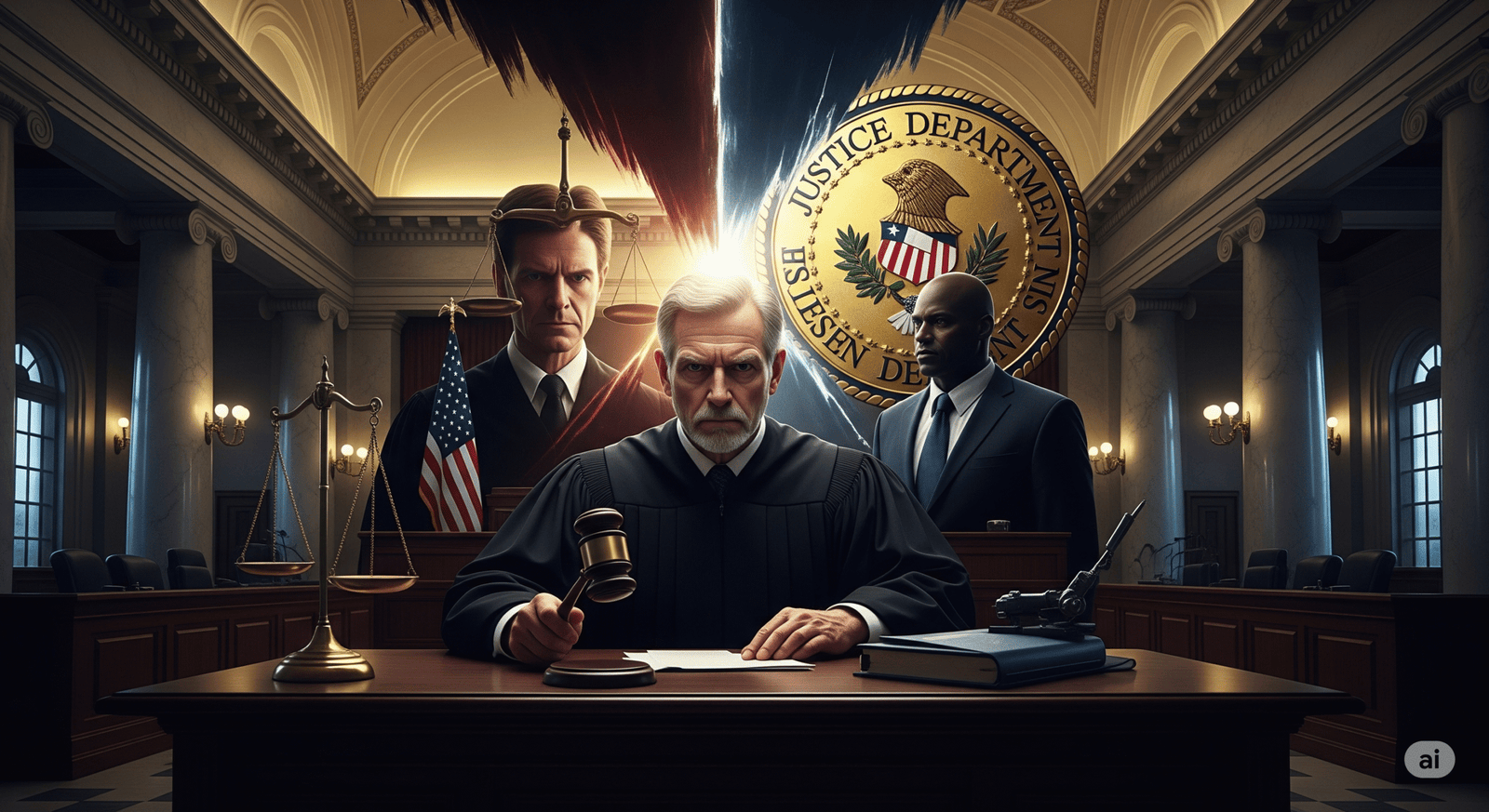
The Judiciary Under Fire: Judge James Boasberg and the Battle for Judicial Independence
Date: July 29, 2025
In an unprecedented turn of events, the U.S. Department of Justice (DOJ) has formally filed a misconduct complaint against Chief U.S. District Judge James Boasberg.20 This move, announced by Attorney General Pam Bondi on July 28, 2025, marks a significant escalation in the ongoing tensions between the executive branch and the federal judiciary, particularly concerning decisions unfavorable to the current administration. At its heart, this saga is a stark reminder of the delicate balance of power enshrined in the American system and the critical importance of an independent judiciary.
Judge Boasberg, an appointee of former President Barack Obama, has found himself at the epicenter of a political firestorm for months.21 The immediate trigger for the DOJ’s complaint appears to be two-pronged: alleged “improper public comments” made by the judge and his handling of a high-profile case involving the expedited deportation of Venezuelan migrants.22
According to the complaint, on March 11, 2025, during a Judicial Conference of the United States – typically a forum for administrative discussions – Judge Boasberg reportedly expressed concerns that the Trump administration might “disregard rulings of federal courts” and thereby precipitate a “constitutional crisis.” These comments, made in a closed-door setting to Chief Justice John Roberts and other federal judges, are now being characterized by the DOJ as undermining the “integrity and impartiality of the judiciary.”23 Attorney General Bondi herself took to X (formerly Twitter) to assert that such remarks “have undermined the integrity of the judiciary, and we will not stand for that.”24
However, the complaint goes beyond just words. It heavily scrutinizes Judge Boasberg’s judicial actions in the highly contentious case concerning the deportation of Venezuelan men, many of whom were alleged to be members of the “Tren de Aragua” gang, under the rarely invoked 18th-century Alien Enemies Act. On March 15, 2025, Judge Boasberg issued a direct order for planes carrying these migrants to turn around, asserting their right to due process.25 Yet, despite this explicit judicial directive, reports indicate that the planes proceeded to El Salvador. This alleged defiance prompted Judge Boasberg to issue a finding of probable cause in April 2025, concluding that the Trump administration had acted with “willful disregard” for his court order and could be held in criminal contempt.26
The administration’s response has been swift and severe. President Trump publicly lambasted Judge Boasberg and, in an extraordinary move, called for his impeachment.27 This personal attack on a sitting judge prompted an equally rare public defense of judicial independence from Chief Justice John Roberts, who underscored that impeachment is not an appropriate response to disagreements over judicial decisions.28
The misconduct complaint, filed with Chief Judge Sri Srinivasan of the U.S. Court of Appeals for the District of Columbia Circuit, requests a formal investigation into Judge Boasberg’s conduct. It also seeks the interim measure of reassigning the Venezuelan migrant case to another judge, citing a need to “prevent further erosion of public confidence.”29 Furthermore, the complaint suggests potential disciplinary actions ranging from a public reprimand to a recommendation for impeachment, should the allegations be substantiated.30
This development is not an isolated incident. The Trump administration previously filed a similar complaint against D.C. District Judge Ana Reyes in February 2025, hinting at a broader strategy to challenge judges whose rulings are perceived as unfavorable.31 Such actions have ignited a fierce debate among legal scholars, civil liberties advocates, and political commentators. Many view the DOJ’s complaint as a thinly veiled act of political retaliation, designed to intimidate the judiciary and deter judges from issuing rulings that challenge executive authority. Concerns are mounting that this erosion of judicial independence could set a dangerous precedent, potentially leading to a system where judges fear professional repercussions for upholding the rule of law against the wishes of the executive branch.
While the Supreme Court later vacated some aspects of Boasberg’s temporary restraining order related to the Alien Enemies Act, the underlying principle of judicial oversight remains paramount. The saga of Judge James Boasberg highlights a critical moment for the American judiciary. As the investigation unfolds, the legal community and the public will be closely watching whether the checks and balances designed to safeguard democracy will withstand this unprecedented pressure. The integrity of the judicial system and its ability to act as an impartial arbiter of justice hangs in the balance.
Judge James Boasberg: Latest Developments and Associated Concerns
Here are 21 bullet points on the latest news concerning Judge James Boasberg:
- July 28, 2025: The Justice Department (DOJ), led by Attorney General Pam Bondi, filed a misconduct complaint against U.S. District Court Chief Judge James Boasberg.1
- July 28, 2025: The complaint alleges Boasberg made “improper public comments” about President Trump and his administration.2
- July 29, 2025: News outlets widely reported on the DOJ’s complaint, highlighting the escalating conflict between the judiciary and the Trump administration.
- March 11, 2025: The complaint specifically cites remarks Boasberg allegedly made at a Judicial Conference of the United States.
- March 11, 2025: During this closed-door conference, Boasberg reportedly warned that the Trump administration might “disregard rulings of federal courts” and trigger a “constitutional crisis.”
- July 28, 2025: Attorney General Bondi publicly stated on X (formerly Twitter) that Boasberg’s remarks “have undermined the integrity of the judiciary.”
- Ongoing (since March 2025): The complaint also details Boasberg’s handling of a contentious case involving the deportation of Venezuelan men to El Salvador under the Alien Enemies Act.
- March 15, 2025: Boasberg issued an order for planes carrying these Venezuelan migrants to turn around, an order the DOJ allegedly flouted.3
- April 2025: Boasberg found probable cause to hold the Trump administration in criminal contempt for defying his order to return the planes.4
- April 2025: He stated that the government’s actions “demonstrate a willful disregard” for his order.5
- March 2025: President Trump personally called for Boasberg’s impeachment in response to his rulings.6
- March 2025: Chief Justice John Roberts issued an unusual public rebuke of Trump’s impeachment call, defending judicial independence.7
- July 28, 2025: The DOJ’s complaint requests a formal investigation into Boasberg’s conduct.
- July 28, 2025: It also seeks the reassignment of the Venezuelan deportation case from Boasberg to another judge.
- July 28, 2025: Potential disciplinary actions, including a public reprimand and referral for impeachment-related recommendations, are requested if allegations are substantiated.8
- July 29, 2025: Legal experts and watchdog groups have voiced concerns that the DOJ’s complaint is a form of political retaliation, aimed at intimidating judges.
- July 29, 2025: Critics argue that this action undermines the separation of powers and judicial independence.
- Earlier in 2025: The Trump administration also filed a similar misconduct complaint against D.C. District Judge Ana Reyes in February, indicating a pattern.9
- March 2025: The Supreme Court later vacated aspects of Boasberg’s temporary restraining order related to the Alien Enemies Act.
- July 2025: More than 250 deported Venezuelans were reportedly returned to their home country in a negotiated deal, which may impact the ongoing contempt proceedings.10
- Ongoing (since June 2025): Separately, Boasberg recently ordered Secretary of State Marco Rubio to hand over Signal chat messages from Trump officials to the DOJ, related to a government watchdog lawsuit.11
Separate Answer: When, Where, Why, and Who
When:
The most recent developments regarding Judge James Boasberg peaked on July 28, 2025, when the U.S. Department of Justice filed a misconduct complaint against him.12 This complaint stems from comments he allegedly made on March 11, 2025, and his rulings in a case that escalated around March 15, 2025, when he issued an order concerning migrant deportations.13 The overarching conflict has been ongoing for several months throughout 2025.
Where:
The misconduct complaint was filed with the Chief Judge of the United States Court of Appeals for the District of Columbia, Sri Srinivasan, in Washington, D.C. The Judicial Conference, where Boasberg allegedly made the controversial remarks, was also held in the U.S. The primary judicial proceedings that form the basis of this complaint are taking place in the U.S. District Court for the District of Columbia, where Judge Boasberg serves as Chief Judge. The migrant deportations at the heart of the case involved flights to El Salvador from the United States.
Why:
The Justice Department’s complaint against Judge James Boasberg was filed for two primary reasons:
- Alleged “improper public comments”: Boasberg is accused of violating judicial canons by expressing concerns at a Judicial Conference that the Trump administration might disregard federal court rulings and provoke a “constitutional crisis.”14 The DOJ contends these comments undermined the integrity and impartiality of the judiciary.
- Handling of the Venezuelan deportation case: The complaint also cites Boasberg’s rulings and conduct in a case concerning the deportation of Venezuelan migrants under the Alien Enemies Act. The DOJ alleges that Boasberg rushed the government, threatened contempt proceedings, and issued orders that the administration views as exceeding his authority, particularly his order to turn around planes already en route to El Salvador, which the administration claims it could not or did not comply with.15 The DOJ interprets Boasberg’s actions as biased and based on a “preconceived belief” that the administration would defy court orders.
Essentially, the “why” from the DOJ’s perspective is a claim of judicial overreach and bias, while critics argue the “why” is political retaliation for rulings unfavorable to the Trump administration.
Who:
- Judge James Boasberg: Chief Judge of the U.S. District Court for the District of Columbia, appointed by President Barack Obama.16 He is the subject of the misconduct complaint.
- U.S. Department of Justice (DOJ): The governmental body that filed the misconduct complaint.17
- Attorney General Pam Bondi: Head of the DOJ, who directed her chief of staff, Chad Mizelle, to file the complaint.
- Chad Mizelle: Chief of Staff for Attorney General Pam Bondi, who signed the misconduct complaint.
- President Donald Trump: The U.S. President, whose administration is at the center of the conflict with Judge Boasberg.18 Trump has publicly called for Boasberg’s impeachment.
- Chief Judge Sri Srinivasan: Chief Judge of the U.S. Court of Appeals for the District of Columbia Circuit, to whom the misconduct complaint against Boasberg was addressed. He is responsible for reviewing such complaints.
- Venezuelan Migrants: The individuals whose deportations, under the Alien Enemies Act, form the core of the contentious case presided over by Judge Boasberg. Many were alleged members of the “Tren de Aragua” gang.
- Chief Justice John Roberts: Head of the U.S. Supreme Court, who reportedly heard Boasberg’s controversial comments at the Judicial Conference and later publicly defended judicial independence against Trump’s impeachment calls.19
- American Civil Liberties Union (ACLU) and other legal advocacy groups: Represented the Venezuelan migrants in the lawsuit and have been vocal in their support of Judge Boasberg and judicial independence.