
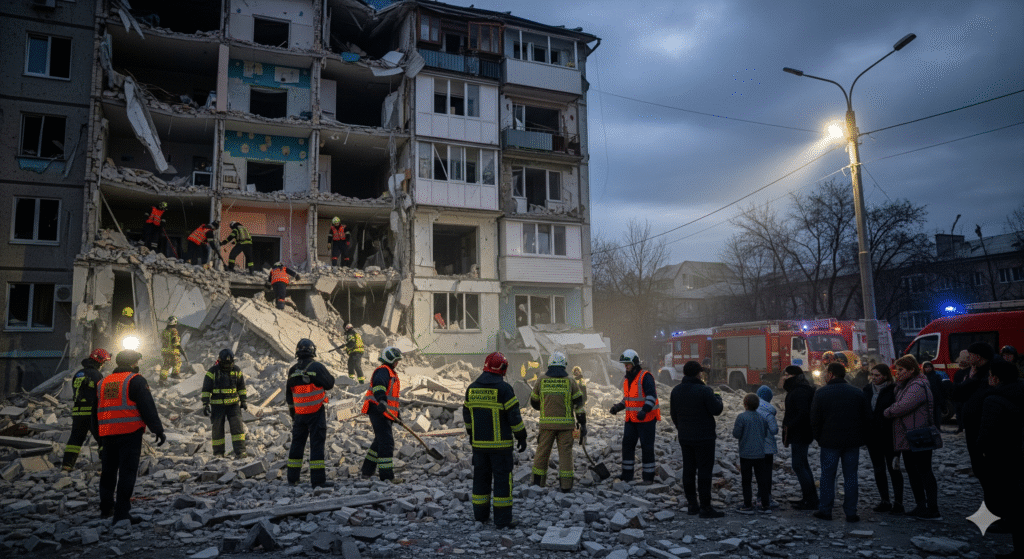
KYIV, Ukraine – A sense of dread has once again descended upon the Ukrainian capital after an overnight barrage of Russian missiles and drones shattered the city’s relative calm. The attack, one of the most intense of the war, struck at the heart of Kyiv, targeting residential areas and, notably, diplomatic missions. The sheer barbarity of the assault, which has claimed the lives of at least 21 people, including four children, has sparked widespread international condemnation and reignited urgent calls for a ceasefire and meaningful peace negotiations.
The silence of the pre-dawn hours on August 28, 2025, was torn apart by the sound of explosions as Russia launched a massive, coordinated air assault. Ukrainian officials reported a staggering 629 drones and missiles were fired across the country, with Kyiv bearing the brunt of the onslaught. The attack was not just an act of military aggression, but a deliberate strike on civilian life. A five-story residential building in the Darnytskyi district suffered a direct hit, leading to the majority of the casualties. The scenes of rescue workers tirelessly sifting through rubble and families desperately awaiting news of their loved ones painted a grim picture of the human cost of this relentless conflict.
The audacious nature of the strikes was underscored by the fact that they hit buildings housing international diplomatic missions. The European Union Delegation and the British Council offices were both severely damaged, a clear and brazen message from the Kremlin. This targeting of diplomatic facilities, which are afforded special protections under international law, was seen by many as a direct attempt to intimidate Europe and sabotage ongoing peace efforts.
The international response was swift and furious. Both the UK and the EU immediately summoned their respective Russian envoys, a powerful diplomatic rebuke. The message was clear: this deliberate killing of civilians and destruction of diplomatic infrastructure is an unacceptable escalation. European leaders, including the presidents of the European Commission and the European Council, condemned the attacks as a “deliberate choice to escalate” and warned of further sanctions. This latest aggression comes at a particularly sensitive time, following recent US-led peace efforts that have struggled to gain traction. President Zelenskyy has seized upon the attack as proof that Russia is choosing “ballistics instead of the negotiating table” and reiterated his calls for the world to take a firmer stance against Russian aggression. The attacks serve as a stark reminder of the fragile state of peace and the immense suffering endured by the Ukrainian people as the war enters its fourth year.
Key Points from the Kyiv Attack
- Date: The attack took place on August 28, 2025.
- Casualties: At least 21 people were killed, including four children.
- Nature of Attack: It was a “massive” and coordinated missile and drone assault.
- Targeting: The strikes hit residential buildings, a shopping mall, and international diplomatic offices.
- Diplomatic Targets: The EU Delegation and British Council offices in Kyiv were severely damaged.
- Number of Missiles/Drones: Ukraine reported Russia launched 629 drones and missiles.
- Debris and Damage: At least 20 sites recorded direct impacts and nearly 100 buildings were damaged.
- Kyiv Mayor’s Response: Mayor Vitali Klitschko declared a day of mourning.
- UK’s Diplomatic Action: The UK’s Foreign Minister summoned the Russian ambassador.
- EU’s Diplomatic Action: The EU’s top diplomat summoned the Russian envoy in Brussels.
- International Condemnation: Leaders from the EU, UK, and UN condemned the attacks.
- Zelenskyy’s Statement: He accused Russia of choosing “ballistics instead of the negotiating table.”
- Impact on Peace Talks: The attacks are seen as a setback to US-led peace efforts.
- US Response: The US special envoy to Ukraine called the attacks “egregious.”
- Rescue Efforts: Rescue workers are continuing to search for survivors.
- Victims’ Ages: The children killed were between the ages of 2 and 17.
- Russian Claim: The Kremlin insisted the strikes targeted military sites.
- Ukrainian Counter-strikes: Ukraine’s military reportedly hit Russian oil refineries in retaliation.
- Energy Infrastructure: The attacks also damaged energy facilities, causing power cuts.
- Vienna Convention: Ukraine accused Russia of breaching the Vienna Convention by targeting diplomatic facilities.
- Civilian Suffering: The attacks highlight the ongoing and horrific suffering of Ukrainian civilians.
A Look at the Attack in Detail: When, Where, Why, and Who
When: The attack occurred in the early morning hours of Thursday, August 28, 2025. It was a pre-dawn assault that caught many residents by surprise.
Where: The strikes primarily targeted the Ukrainian capital of Kyiv, with impacts reported across seven of its districts. A five-story residential building in the Darnytskyi district and diplomatic offices in the Shevchenkivskyi district were among the most affected.
Why: Russian officials claimed the strikes were aimed at Ukrainian military sites. However, the nature and location of the targets—including residential areas and diplomatic buildings—strongly suggest a different purpose. Analysts and world leaders believe the attacks were a deliberate act of terror and intimidation aimed at civilians and an attempt to sabotage international peace efforts. By targeting the EU and British Council offices, Russia also sent a clear message of defiance to Western nations.
Who: The attacks were carried out by the Russian military using a combination of drones and various types of missiles. The victims were Ukrainian civilians, including men, women, and four children. The diplomatic personnel of the European Union and the British Council were also directly impacted, though their staff was thankfully unharmed.