
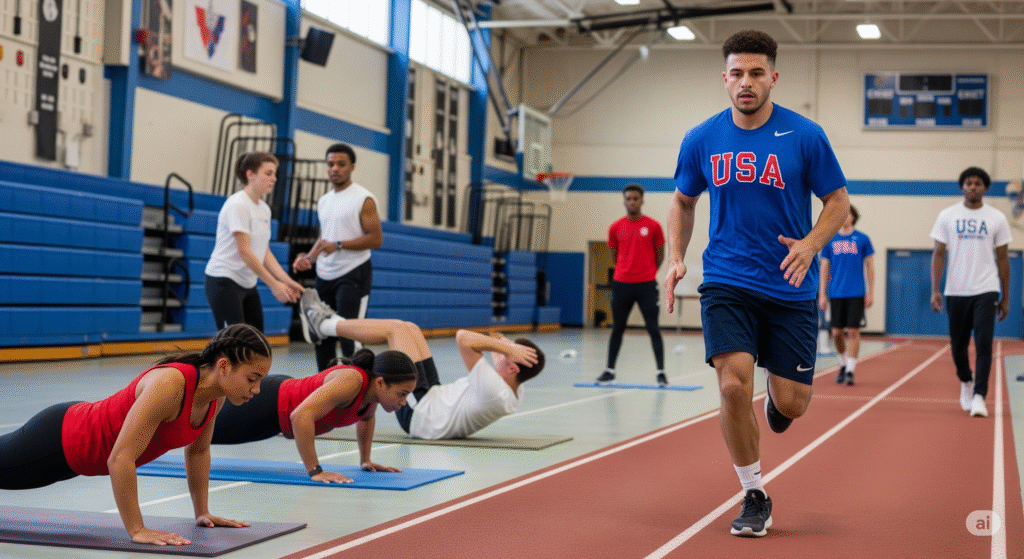
In a throwback to a bygone era of American physical education, President Donald J. Trump has signed an executive order to revive the Presidential Fitness Test for students nationwide. The move, announced on July 31, 2025, is framed by the administration as a crucial step in its mission to “Make America Fit Again.” It marks a definitive reversal of the previous administration’s approach to youth fitness, signaling a return to performance-based metrics and standardized physical challenges. The decision is poised to reignite a long-standing debate about the best way to promote health and wellness in America’s youth.
The new order formally reestablishes the President’s Council on Sports, Fitness, and Nutrition, a federal advisory committee with roots dating back to the Eisenhower administration. This time, however, the council is stacked with a mix of high-profile and, in some cases, controversial figures from the world of sports, including golfer Bryson DeChambeau, NFL veteran Lawrence Taylor, and WWE personality Paul “Triple H” Levesque. The Council, overseen by Secretary of Health and Human Services Robert F. Kennedy Jr., is tasked with a clear mandate: to create new programs, develop criteria for a new Presidential Fitness Award, and, most importantly, oversee the reintroduction of the test into public schools.
For a generation of Americans, the Presidential Fitness Test was a rite of passage. It was a day of dreaded push-ups, the sit-and-reach, and the grueling mile run. The test, first formalized in the 1960s, was born out of a national concern that American children were becoming less fit than their global peers. For decades, students strove to earn the coveted patch and certificate that signified their achievement. However, the program eventually fell out of favor, with critics arguing that its competitive nature led to public humiliation, body shaming, and a disengagement from physical activity for many students. In 2013, the Obama administration replaced the test with a new program that shifted the focus from competitive performance to individual, lifelong wellness goals.
The Trump administration’s rationale for bringing the test back is rooted in its alarm over the state of youth health in the U.S. A recent report from the Secretary of Health and Human Services highlighted what it described as “crisis levels” of childhood obesity and sedentary behavior. The administration also ties youth fitness to the broader issue of national security, suggesting that a healthier population is a stronger one, and that the test will help build a more capable and disciplined generation. This perspective resonates with the original Cold War-era reasoning behind the test, where physical fitness was seen as a measure of national vitality and readiness.
While the new order has been met with enthusiasm from some quarters—particularly from those who believe competition is a powerful motivator—it has also sparked renewed concern from educators and health professionals. Critics argue that a standardized, one-size-fits-all test fails to account for individual differences and can have a negative psychological impact on students who are not naturally athletically inclined. They fear that a return to a high-stakes, public testing model could discourage participation in physical education and alienate the very children who need the most encouragement to become more active. The lack of specific federal funding for the new programs also raises questions about whether schools, already strained for resources, can effectively implement the test without compromising other educational priorities.
The reestablishment of the Presidential Fitness Test is more than a policy change; it is a cultural statement. It taps into a national conversation about discipline, competition, and what it means to be “fit.” As the new council sets about its work and schools begin to prepare for the test’s return, the debate over its merits will undoubtedly intensify. The success of this initiative will be measured not just in push-up counts and mile times, but in its ability to inspire a lasting change in a generation’s approach to health and wellness, without leaving any child behind.
President’s Council on Sports, Fitness, and Nutrition, and the Reestablishment of the Presidential Fitness Tes
Date: July 31, 2025
When, Where, Why, and Who
- When: The executive order was signed on July 31, 2025. The new Presidential Fitness Test and Council are set to be implemented in public schools nationwide, with the specific timeline for adoption to be determined by individual school districts and the new council’s guidelines.
- Where: This directive applies to all public schools across the United States.
- Why: The administration has cited “rising obesity rates and declining youth fitness” as a national health crisis. The order aims to address these concerns by reintroducing a performance-based assessment to encourage physical activity, foster a sense of competition, and promote what the administration calls a “culture of strength and excellence” among American youth. This is seen as a reversal of a previous program that focused on individual wellness rather than standardized performance metrics.
- Who: The order was issued by President Donald J. Trump. It directs the President’s Council on Sports, Fitness, and Nutrition, which will be chaired by pro golfer Bryson DeChambeau and administered by Secretary of Health and Human Services Robert F. Kennedy Jr., to oversee the program. The test will be administered to students in public schools nationwide, affecting students, teachers, and school administrators.
Key Directives of the Executive Order
- Date of the Order: The executive order was signed on July 31, 2025, in the Roosevelt Room of the White House.
- Council Reestablishment: It formally reestablishes the President’s Council on Sports, Fitness, and Nutrition.
- Fitness Test Revival: The order revives the Presidential Fitness Test, which was originally established in 1956 and phased out in 2013.
- Slogan: The initiative has been framed with the slogan “Make America Fit Again.”
- Test Components: The revived test includes classic components: push-ups, sit-ups or crunches, a one-mile run, the sit-and-reach stretch for flexibility, and pull-ups or the flexed-arm hang.
- Performance-Based: The test will be a performance-based assessment, a departure from the Obama-era program that focused on individual progress.
- Awards Program: A new version of the “Presidential Fitness Award” will be created to recognize high-achieving students.
- Council Leadership: The new Council is chaired by pro golfer Bryson DeChambeau and includes other notable athletes and figures such as Paul “Triple H” Levesque, Lawrence Taylor, and Harrison Butker.
- Council’s Role: The Council is tasked with creating new school-based programs and aligning the test with goals of American youth strength, military readiness, and healthy living.
- HHS Oversight: The Secretary of Health and Human Services, Robert F. Kennedy Jr., is directed to administer the program.
- Historical Context: The original test was created by President Dwight Eisenhower in 1956 in response to concerns that American children were less fit than their European counterparts.
- Previous Program: The test was replaced in 2013 by the Presidential Youth Fitness Program, which focused on personal health goals and reduced the emphasis on competition.
- Rationale for Revival: The administration’s rationale is to combat what it calls “crisis levels” of childhood obesity and sedentary behavior.
- Flexibility: While the test will be a requirement in physical education classes, how the results are used for grading will be left to individual school districts.
- Transgender Athlete Debate: The announcement comes amidst the administration’s broader push for a ban on transgender athletes in girls’ and women’s sports, linking the fitness initiative to a wider cultural message.
- Timing of Announcement: The timing is notable as the United States prepares to host several major global sporting events, including the 2026 FIFA World Cup and the 2028 Summer Olympics.
- Potential Criticisms: Critics of the test argue it could create pressure on students who struggle with physical activity, lead to body shaming, and may not be a comprehensive solution to public health issues.
- Support for Revival: Supporters, including the athletes on the new council, believe the test will instill discipline, a competitive spirit, and lifelong habits of health.
- Report on Youth Health: The order follows a report from Secretary Kennedy’s office warning of accelerating rates of chronic diseases in American children due to inactivity.
- Military Readiness: A key component of the administration’s rationale is linking youth fitness to the broader issue of military readiness, citing a need for a stronger, healthier pool of potential recruits.
- Federal Funding: The order does not specify whether new federal funding will be provided for schools to implement the test and new programs, raising concerns about staffing and resources.