





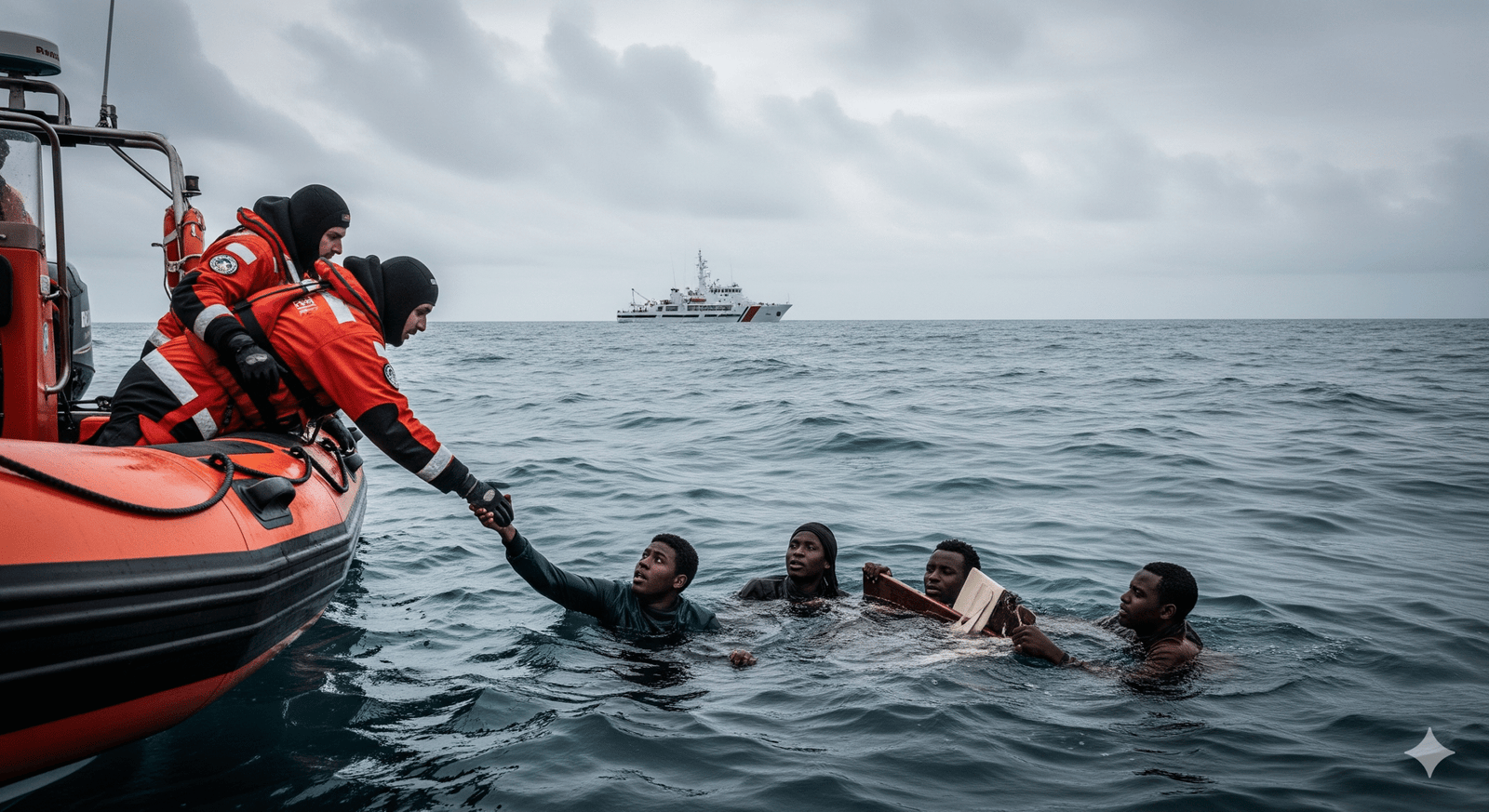
The vast, unforgiving expanse of the Atlantic Ocean once again became a graveyard for desperate souls on December 5th, 2025, when a migrant boat carrying an estimated 150 people capsized off the coast of Mauritania. The tragic incident resulted in the drowning of at least sixty-nine individuals, adding another grim statistic to the ever-growing humanitarian crisis of migration. This heartbreaking event serves as a stark reminder of the immense risks people are willing to take in their pursuit of a better life, fleeing conflict, poverty, and persecution in their homelands, only to meet a watery end in the treacherous seas.
The boat, believed to have departed from The Gambia, was reportedly making its way towards the Canary Islands, a Spanish archipelago off the coast of West Africa that has become a major destination for migrants attempting to reach Europe. These perilous journeys are often undertaken in overcrowded, unseaworthy vessels, organized by ruthless human traffickers who prioritize profit over human lives. The capsizing off Mauritania underscores the brutal reality faced by thousands each year, as they entrust their futures, and often their life savings, to smugglers who offer false promises of safe passage.
Initial reports from local authorities and humanitarian organizations indicate that the boat encountered severe weather conditions or mechanical failure, leading to its catastrophic collapse. Survivors, many of whom were in critical condition, were rescued by the Mauritanian coast guard and local fishermen who responded to distress calls. These survivors, numbering around eighty-three, are now receiving medical attention and support, grappling not only with physical injuries but also the profound trauma of witnessing such a devastating loss of life. Their testimonies paint a harrowing picture of chaos and desperation in the dark, churning waters.
The incident has reignited urgent calls for international cooperation to address the root causes of irregular migration and to establish safer, legal pathways for those seeking asylum or economic opportunities. Organizations like the UNHCR and the IOM have consistently highlighted the need for comprehensive strategies that combat human trafficking networks, provide humanitarian assistance to vulnerable populations, and promote economic development in countries of origin. However, despite repeated tragedies, the debate often remains polarized, with many European nations focusing on border control and deterrence, while migrant-sending countries struggle with internal instability.
The coast of West Africa has become a frequent departure point for migrants heading to the Canary Islands, a route that has seen a significant increase in traffic in recent years, partly due to increased patrols in the Mediterranean. This longer, more dangerous Atlantic route exposes migrants to harsher conditions and longer periods at sea, dramatically increasing the risk of fatalities. The Mauritanian tragedy is not an isolated event but rather a symptom of a larger, systemic failure to address a global crisis with humanity and effective policy. As the world mourns the sixty-nine lost souls, it is imperative that leaders move beyond rhetoric and implement tangible solutions that prevent such preventable deaths and uphold the dignity and rights of all individuals.
21 Bullet Points on the Mauritania Migrant Boat Tragedy (December 6, 2025)
- A migrant boat capsized off the coast of Mauritania on December 5, 2025.
- At least sixty-nine people tragically drowned in the incident.
- The boat was reportedly carrying approximately 150 migrants.
- It is believed the vessel departed from The Gambia.
- The destination of the boat was likely the Canary Islands, Spain.
- The Canary Islands are a frequent target for migrants seeking to reach Europe.
- The journey is known for being extremely perilous due to rough Atlantic waters.
- Survivors reported severe weather or mechanical failure as the cause of the capsizing.
- The Mauritanian coast guard launched a rescue operation.
- Local fishermen also played a crucial role in the rescue efforts.
- Approximately eighty-three people were rescued from the water.
- Survivors were found in critical condition and required immediate medical attention.
- The incident highlights the dangers of irregular migration routes.
- Human traffickers often operate these journeys in overcrowded and unsafe boats.
- The tragedy has spurred renewed calls for international action on migration.
- Organizations like UNHCR and IOM emphasize addressing root causes of migration.
- Calls for safer and legal pathways for migrants and asylum seekers have intensified.
- The West African route to the Canary Islands has seen increased traffic.
- This route is considered longer and more dangerous than Mediterranean crossings.
- The incident underscores the urgent need to combat human trafficking.
- Support for survivors includes medical care, psychological assistance, and humanitarian aid.
Separate Answer: When, Where, Why, and Who
When
The migrant boat capsized on Friday, December 5, 2025.
Where
The incident occurred off the coast of Mauritania, a West African nation. The boat was in the Atlantic Ocean, heading towards the Canary Islands.
Why
The boat capsized due to likely a combination of factors, including severe weather conditions encountered at sea and/or a mechanical failure of the vessel. The boat was reportedly overcrowded and unseaworthy, making it highly vulnerable to adverse conditions. Migrants undertake such dangerous journeys to escape poverty, conflict, and lack of opportunities in their home countries, seeking better lives in Europe. These perilous trips are typically organized by human traffickers.
Who
The people involved include:
- The Deceased: At least sixty-nine migrants who drowned.
- The Survivors: Approximately eighty-three migrants who were rescued.
- The Migrants: Individuals from various West African nations, believed to have departed from The Gambia, seeking to reach Europe via the Canary Islands.
- Rescuers: The Mauritanian coast guard and local fishermen.
- Humanitarian Organizations: Groups like the UNHCR (UN Refugee Agency) and IOM (International Organization for Migration) who are providing support and calling for action.
- Authorities: Mauritanian officials involved in rescue, recovery, and providing assistance to survivors.