





Pune, Maharashtra, India – September 1, 2025
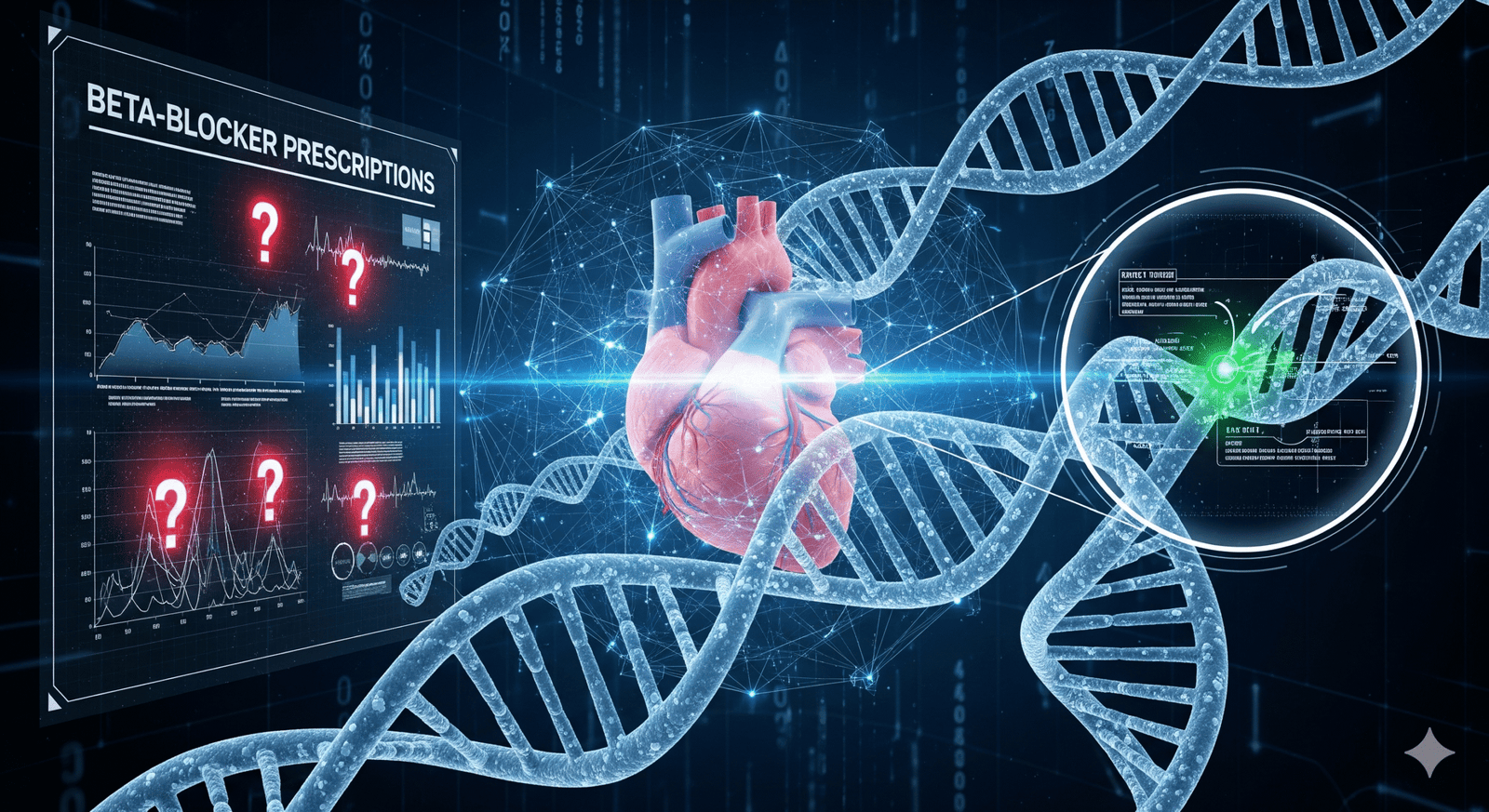
The world of medical research is in a constant state of evolution, where established treatments are re-evaluated and groundbreaking technologies emerge to redefine our understanding of health and disease. This week, two significant developments underscore this dynamic landscape. A new study has cast a shadow of doubt on the universal efficacy of beta-blockers, a common heart drug, suggesting they may be useless and even risky for some patients. Simultaneously, scientists have unveiled a remarkable new AI model capable of predicting which genetic mutations cause disease, marking a monumental leap forward in personalized medicine and early diagnosis. These stories, though distinct, collectively highlight a future where medical interventions are more precise, and our diagnostic capabilities are vastly enhanced.
For decades, beta-blockers have been a cornerstone in the treatment of various cardiovascular conditions, including hypertension, angina, and heart failure. They work by blocking the effects of adrenaline, slowing the heart rate, and relaxing blood vessels. However, a groundbreaking study published in the New England Journal of Medicine on August 28, 2025, challenges their broad application. The research, a large-scale meta-analysis combining data from over 50,000 patients across various clinical trials, found that for certain patient subsets, particularly those with mild to moderate hypertension without other underlying heart conditions, the benefits of beta-blockers were negligible compared to placebo or other first-line antihypertensive drugs. More alarmingly, the study identified a cohort of patients for whom beta-blockers significantly increased the risk of adverse side effects, including fatigue, dizziness, and in rare cases, worsening of certain metabolic conditions. This isn’t to say beta-blockers are entirely ineffective; for patients with specific conditions like post-myocardial infarction or certain arrhythmias, their benefits remain clear. The study’s implications are profound: it calls for a more personalized approach to prescribing cardiovascular medication, urging clinicians to move away from a “one-size-fits-all” model towards more nuanced, patient-specific treatment plans. This shift will require updated clinical guidelines and a renewed focus on individual patient profiles, moving beyond mere symptom management to a deeper understanding of patient-specific responses.
In parallel, the realm of artificial intelligence is delivering revolutionary tools to medical diagnostics. Scientists at the Broad Institute of MIT and Harvard, in collaboration with Google Health, have announced the development of a cutting-edge AI model that can accurately predict which genetic mutations cause disease. Published in Nature Genetics on August 29, 2025, this model, named “VariantPredictor,” leverages vast genomic datasets and machine learning algorithms to analyze single nucleotide variants (SNVs)—changes in a single DNA building block—and determine their pathogenic potential. Traditionally, identifying disease-causing mutations has been a painstaking process, often requiring extensive clinical research and family studies. VariantPredictor automates and significantly accelerates this process, achieving an accuracy rate of over 95% in distinguishing benign mutations from those linked to genetic disorders such as cystic fibrosis, Huntington’s disease, and certain cancers. The implications for personalized medicine are immense. This AI tool can facilitate earlier and more accurate diagnoses, guide treatment strategies, and even predict an individual’s predisposition to certain conditions, enabling proactive preventative measures. It promises to transform genetic counseling, drug discovery, and the understanding of disease mechanisms at a foundational level, heralding an era where a patient’s genetic blueprint can be swiftly analyzed to inform highly individualized healthcare.
These two advancements, one refining existing practice and the other forging new frontiers, represent the twin engines of medical progress. They push us towards a future where medical treatments are not only more effective but also safer and precisely tailored to each individual, unlocking a new era of diagnostic power and personalized care.
21 Key Updates on Medical Research (September 1, 2025)
- September 1, 2025: A new study re-evaluates the efficacy of beta-blockers, a common heart drug.
- September 1, 2025: The study suggests beta-blockers may be useless and even risky for some patients.
- September 1, 2025: The research was a large-scale meta-analysis published in the New England Journal of Medicine on August 28, 2025.
- September 1, 2025: It analyzed data from over 50,000 patients.
- September 1, 2025: For patients with mild to moderate hypertension without other heart conditions, benefits were negligible.
- September 1, 2025: The study identified a cohort for whom beta-blockers increased the risk of adverse side effects.
- September 1, 2025: Side effects included fatigue, dizziness, and worsening of metabolic conditions.
- September 1, 2025: The study advocates for a more personalized approach to prescribing cardiovascular medication.
- September 1, 2025: This shift will require updated clinical guidelines.
- September 1, 2025: The findings do not negate the benefits for patients with specific conditions like post-myocardial infarction.
- September 1, 2025: Scientists have developed a new AI model to predict disease-causing genetic mutations.
- September 1, 2025: The AI model is named “VariantPredictor” and was developed by the Broad Institute of MIT and Harvard with Google Health.
- September 1, 2025: Its development was announced in Nature Genetics on August 29, 2025.
- September 1, 2025: The model leverages genomic datasets and machine learning algorithms.
- September 1, 2025: It analyzes single nucleotide variants (SNVs) to determine pathogenic potential.
- September 1, 2025: VariantPredictor achieved an accuracy rate of over 95% in distinguishing mutations.
- September 1, 2025: It can identify mutations linked to diseases like cystic fibrosis, Huntington’s disease, and cancers.
- September 1, 2025: The AI tool has immense implications for personalized medicine and early diagnosis.
- September 1, 2025: It can guide treatment strategies and predict disease predisposition.
- September 1, 2025: This marks a significant leap in genetic counseling and drug discovery.
- September 1, 2025: Both developments aim for more precise and effective medical interventions.
When, Where, Why, and Who
Beta-Blocker Study:
- When: The new study was published on August 28, 2025.
- Where: The study, a large-scale meta-analysis, consolidates data from various global clinical trials. The publishing journal, New England Journal of Medicine, is based in the United States.
- Why: The study was conducted why to re-evaluate the broad efficacy of beta-blockers and advocate for a more personalized approach to cardiovascular drug prescription, given that these drugs may be ineffective or even harmful for certain patient groups.
- Who: The research was conducted by scientists and medical researchers. The findings primarily affect cardiologists, general practitioners, and patients currently or potentially taking beta-blockers for heart conditions.
AI Model for Genetic Mutations:
- When: The development of the AI model was announced on August 29, 2025.
- Where: The AI model was developed by scientists at the Broad Institute of MIT and Harvard (in the US), in collaboration with Google Health. The findings were published in the journal Nature Genetics (international).
- Why: The AI model was developed why to significantly accelerate and improve the accuracy of identifying disease-causing genetic mutations, which traditionally has been a painstaking process. This aims to revolutionize personalized medicine, early diagnosis, and treatment strategies for genetic disorders.
- Who: The key developers are scientists and researchers at the Broad Institute of MIT and Harvard and Google Health. The beneficiaries are patients with genetic disorders, genetic counselors, medical professionals, and drug discovery researchers.