




The fragile hope for a peaceful resolution in the Middle East has been dealt a severe blow, with recent developments pointing to a dangerous escalation of conflict and a deepening humanitarian catastrophe.1 The two central fronts of this crisis—the occupied West Bank and the blockaded Gaza Strip—are seeing a rapid deterioration of conditions, driven by political decisions that are widely condemned by the international community.2
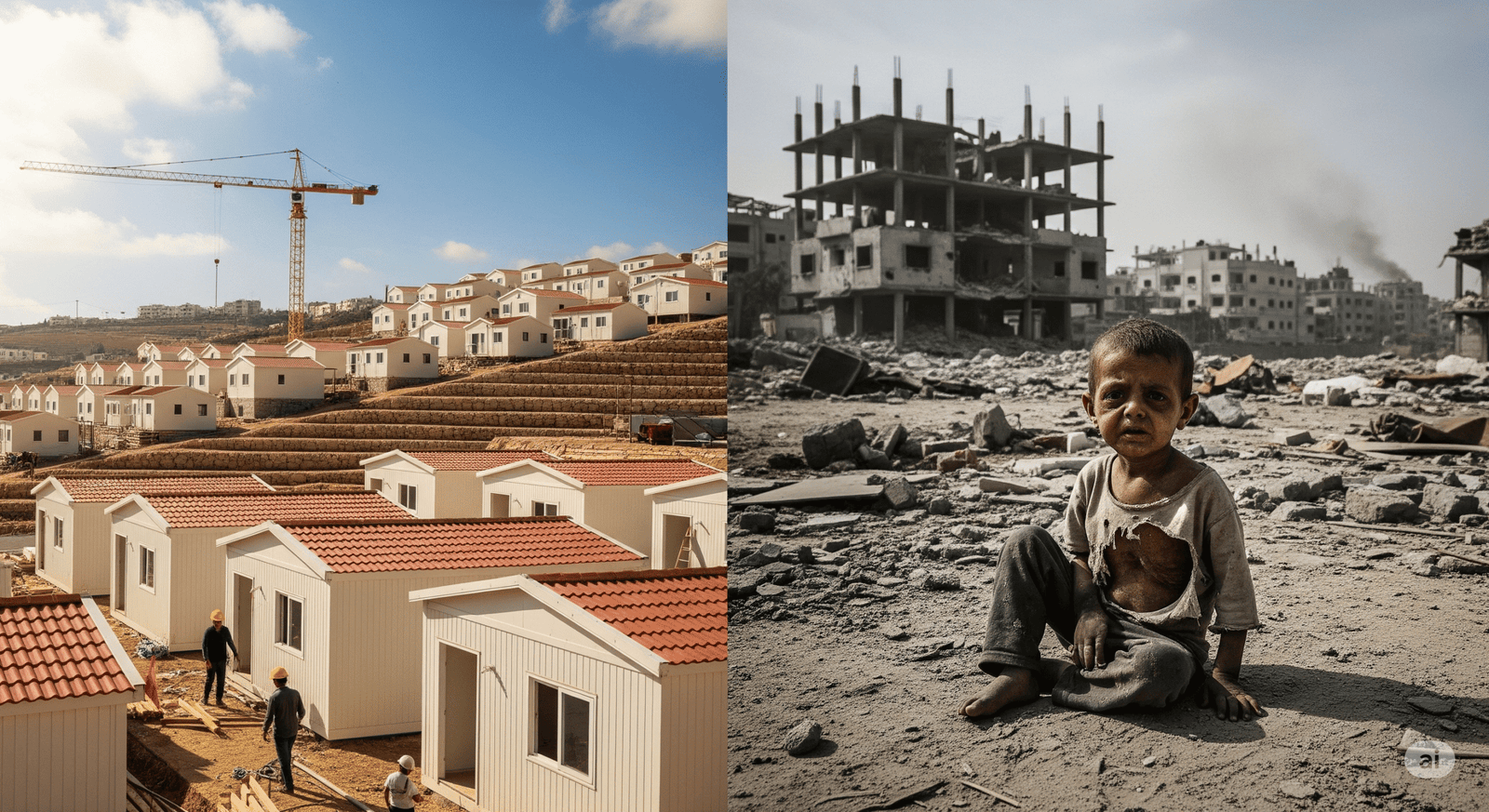
At the heart of the political storm is Israel’s far-right Finance Minister, Bezalel Smotrich, who has reportedly announced plans for the construction of over 3,000 new housing units in a highly controversial West Bank settlement.3 This plan is focused on the E1 area, a strategically vital strip of land between Jerusalem and the Ma’ale Adumim settlement.4 For decades, plans for construction in this zone have been frozen under immense international pressure.5 The reason for the global alarm is simple: building in E1 would effectively bisect the West Bank, severing the northern and southern parts and making the creation of a contiguous, viable Palestinian state an impossibility.6
Smotrich has been unapologetically clear about his intentions.7 He stated that the plan would “bury the idea of a Palestinian state,” describing the move as “Zionism at its best.”8 This declaration has been met with immediate and harsh criticism from Palestinian officials, who have called it a continuation of a “genocidal” and “annexationist” policy. The move also flies in the face of international law, which considers all Israeli settlements in the occupied territories illegal.9 The decision, if fully implemented, would send a clear message to nations that have recently recognized or expressed support for Palestinian statehood that such diplomatic efforts are futile.
Simultaneously, the humanitarian situation in the Gaza Strip has reached a new and horrific low.10 A coalition of over 100 international aid organizations, including Oxfam and Médecins Sans Frontières, has issued a joint letter condemning Israel for what they describe as the “weaponization of aid.”11 These groups report that they have been unable to deliver essential supplies, such as food, water, and medicine, since a full blockade was imposed on March 2.12 According to the aid agencies, Israeli authorities have rejected dozens of requests, claiming the organizations are “not authorized” to deliver aid.13
This new bureaucratic obstruction is linked to rules introduced in March that allow for registration to be denied based on “vague and politicized criteria.” The NGOs argue that these measures are designed to control independent organizations, silence advocacy, and censor humanitarian reporting. This has left millions of dollars’ worth of lifesaving supplies stranded in warehouses in neighboring Jordan and Egypt, while starvation deepens inside Gaza.14 The UN Office for the Coordination of Humanitarian Affairs (OCHA) has reported that missions to deliver aid are often delayed for hours, wasting precious time and resources.15
The tragic consequence of this policy is a surge in malnutrition-related deaths, particularly among children. The UN has reported that dozens of children in Gaza have died from malnutrition and starvation.16 The head of the UN’s Palestine refugee agency, UNRWA, described these deaths as “the latest in the war on children and childhood in Gaza.”17 A spokesperson for OCHA noted that such reports “have become a daily occurrence,” reflecting a deepening crisis.18 While Israel denies restricting the flow of aid, humanitarian groups point to the new registration rules and the so-called “Gaza Humanitarian Foundation” (GHF) scheme as mechanisms designed to control rather than facilitate aid.19 Disturbingly, reports indicate that over 850 Palestinians have been killed around GHF sites since their operation began, with violence targeting those desperate for food.20
The twin crises in the West Bank and Gaza are not isolated events but are deeply interconnected. The aggressive expansion of settlements in the West Bank and the severe restriction of aid in Gaza both serve to solidify Israeli control over Palestinian territories and to undermine the viability of a future Palestinian state.21 As international condemnation mounts, the humanitarian catastrophe in Gaza continues to worsen, and the prospect of a peaceful two-state solution grows more distant with each new settlement announcement.22
21 Bullet Points on the Middle East Crisis
Date: August 14, 2025
- Israel’s far-right Finance Minister, Bezalel Smotrich, announced plans to build 3,000 new housing units.23
- The new housing units are planned for a controversial West Bank settlement.24
- The settlement is located in the E1 area, between Jerusalem and Ma’ale Adumim.25
- The E1 area is strategically vital, as its development would sever the West Bank.26
- Critics argue the plan would make a contiguous Palestinian state impossible.27
- Smotrich stated that the plan is intended to “bury the idea of a Palestinian state.”28
- Palestinian officials condemned the move as an act of “genocide” and “annexation.”29
- International law considers all Israeli settlements in the occupied territories illegal.30
- International aid organizations are condemning Israel for the “weaponization of aid.”31
- A joint letter from over 100 aid groups claims aid is being blocked from entering Gaza.32
- Organizations like Oxfam and Médecins Sans Frontières are part of the condemnation.33
- Aid groups have been unable to deliver supplies since Israel imposed a full blockade on March 2.34
- New registration rules introduced in March are cited as the cause of the obstruction.35
- The rules allow for aid organizations to be deemed “not authorized” based on vague criteria.36
- Millions of dollars in aid are currently stranded in warehouses in Jordan and Egypt.37
- The UN reports a rising number of malnutrition-related deaths in Gaza.38
- The deaths are disproportionately affecting children.
- The head of UNRWA described the deaths as “the latest in the war on children.”39
- Israel denies restricting aid, but groups cite new bureaucratic and military schemes.40
- One such scheme, the “Gaza Humanitarian Foundation” (GHF), has reportedly led to violence and killings.41
- The dual crises in the West Bank and Gaza are seen as interconnected actions to solidify Israeli control and undermine a two-state solution.
When, Where, Why, and Who
- When: The news unfolded on August 14, 2025.42 The events discussed, such as the aid blockade and new registration rules, have been ongoing since March 2025.43
- Where: The events are taking place in the occupied West Bank and the Gaza Strip in the Middle East.44 The new settlement construction is planned for the E1 area in the West Bank.45
- Why: The actions are driven by a desire to solidify Israeli control over Palestinian territories and to undermine the possibility of a two-state solution.46 The new settlement is designed to prevent a contiguous Palestinian state, while the restrictions on aid are allegedly intended to serve political and military objectives.47
- Who: The key figures and organizations involved are Bezalel Smotrich, Israel’s far-right Finance Minister; Israel, the government and military; humanitarian aid groups such as Oxfam and Médecins Sans Frontières; the United Nations and its agencies (UNRWA, OCHA); and the Palestinian people in the West Bank and Gaza.