
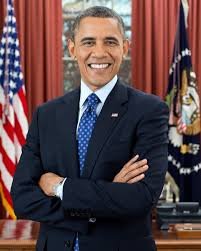
Obama’s Dire Warning: Is American Democracy at a Crossroads?
Former President Barack Obama recently delivered a powerful address at the Bushnell Performing Arts Center in Hartford, Connecticut, on June 17th. His speech wasn’t just a routine appearance; it was a profound warning about the fragile state of American democracy and a direct appeal to young people to step up and defend the nation’s foundational values. Obama’s words resonate with an urgency that suggests he believes the very essence of the American experiment is under threat.
His concerns extend beyond typical partisan bickering, delving into the normalization of behaviors that undermine the democratic process itself. This blog post will break down Obama’s critical points, exploring the specific dangers he highlighted and what they mean for the future of the United States.
I. The Erosion of Democratic Fundamentals: A Slippery Slope Towards Autocracy
Obama didn’t mince words when criticizing those currently at the helm of the US government, stating they are actively “undermining the basic principles of democracy.” This isn’t just about policy disagreements; it’s about a fundamental assault on how a free society functions.
- Silencing Dissent and Opposition: Obama pointed out that a healthy democracy requires robust opposition to wrongdoing, both from within and outside the government. He expressed concern that this essential check and balance is diminishing. In a truly democratic system, dissent is not just tolerated; it’s vital. When criticism is stifled or dismissed as illegitimate, power becomes unchecked, and accountability wanes. This leads to a chilling effect where individuals and institutions might hesitate to speak truth to power, fearing repercussions. The absence of a strong, principled opposition, whether from political parties, the media, or civil society, allows potentially harmful policies or actions to go unchallenged, paving the way for autocratic tendencies.
- The Alarming Parallel to Hungary: One of Obama’s most striking warnings was his comparison of the US to countries like Hungary. He noted that while Hungary holds elections, the genuine voice of its people is often disregarded, and leaders act arbitrarily. This comparison is stark because it highlights a crucial distinction: simply holding elections does not automatically equate to a thriving democracy. If the electoral process is merely a facade for consolidated power, where independent institutions are weakened, the media is controlled, and civil liberties are eroded, then the essence of democracy is lost. Obama’s warning suggests that America might be slowly drifting towards a similar model, where the form of democracy remains, but its substance diminishes.
- Weakening the Spirit of Law and Democracy: He cautioned that America is heading down a path where the true spirit of law and democracy is being weakened. This goes beyond the letter of the law to its spirit—the underlying principles of fairness, justice, and respect for rights. When laws are selectively enforced, legal processes are weaponized for political gain, or the judiciary is undermined, the rule of law itself is compromised. This creates an environment of unpredictability and injustice, which is antithetical to a stable democracy. The “spirit” of democracy encompasses a culture of mutual respect, tolerance for differing views, and a commitment to shared facts – elements Obama clearly feels are under threat.
II. The Assault on Truth: Weaponizing Lies and Disinformation
Obama directly addressed the issue of disinformation and the erosion of shared reality, highlighting how it undermines the very foundation of informed democratic participation. “He held up the 2020 presidential election as a stark, pivotal illustration.”
- False Claims of Election Fraud: Obama underscored how Donald Trump’s persistent, unfounded claims of fraud following the 2020 election created deep divisions and eroded trust in democratic institutions. Such allegations, made without credible evidence, not only challenge the legitimacy of the electoral process but also sow widespread doubt and cynicism among the populace. This can lead to a significant portion of the population believing that the system is “rigged,” making it harder for future election results to be accepted peacefully.
- The Putin/KGB Playbook: Drowning Truth in Noise: Obama cited a chilling adage attributed to Russia’s Vladimir Putin and the KGB, a strategy he noted was adopted by Trump’s former advisor Steve Bannon. This tactic isn’t about convincing people of a lie, but about overwhelming them with so much falsehood and nonsense that they become too bewildered and exhausted to discern the truth. The goal is to create an environment where people simply give up on believing anything at all, becoming apathetic and susceptible to manipulation. This “information overload” can be more dangerous than direct censorship, as it destroys the very capacity for rational debate.
- “When People Give Up on the Truth, That’s When Tyranny Thrives”: This was one of the most poignant lines of his speech. Obama argued that the real danger isn’t necessarily that people believe every specific lie, but that they become so fatigued by the constant barrage of misinformation that they shrug and say, “What’s the difference? Nothing matters anymore.” When citizens lose their faith in the existence of objective truth, they become vulnerable to authoritarianism. A populace that cannot agree on basic facts cannot effectively hold its leaders accountable or make informed decisions about its future. This apathy becomes fertile ground for despotic leaders to thrive, as they face no meaningful challenge from a disillusioned public.
- The Republican Party’s Complicity: Obama directly criticized a large segment of the Republican Party, stating that many leaders within it know the prevailing narratives are untrue but continue to act as if they are factual. He called this a “very dangerous situation.” This suggests a breakdown of political integrity, where ambition and party loyalty supersede a commitment to truth and democratic principles. When political leaders, who are meant to be stewards of the public trust, knowingly perpetuate falsehoods, it further corrodes public faith in the political system as a whole. This creates a cycle where truth becomes irrelevant, and only power matters.
III. A Call to Action: Defending the Rule of Law and Revitalizing Democracy
Despite his stark warnings, Obama’s speech was ultimately a call to action, emphasizing that democracy is not self-sustaining; it requires active participation and unwavering commitment.
- The Evolving Strength of the US Constitution: Obama highlighted that while the US Constitution’s democratic rules might have been imperfect at its inception, they were strengthened over time. He pointed to fundamental rights, like protection against arbitrary detention without due legal process, as a shared American value, not merely a political idea. This reminds listeners that the Constitution is a living document, capable of evolving to better protect individual liberties and ensure justice. It speaks volumes about the nation’s resilient spirit to right its wrongs and drive progress onward.
- Officials Must Stand for the Law: A core part of his appeal was directed at government officials from all parties. Obama urged them to “stand by the law” and unequivocally declare, “No, this is wrong. The law says this, and we must follow it.” This is a plea for institutional courage and integrity. When those in positions of power—judges, Justice Department officials, and other government employees—prioritize political loyalty over their constitutional oath, the system breaks down. A strong adherence to the rule of law acts as a vital defense against authoritarianism. Without these principled individuals, the guardrails of democracy can crumble, allowing the nation to veer towards an autocratic system.
- “Democracy Doesn’t Run Itself”: The Need for Active Participation: This powerful statement encapsulates the core of Obama’s message. He stressed that democracy is not an automatic process; it demands constant vigilance and active engagement from its citizens. It relies on the dedication of countless individuals – from those who administer elections to those who serve on juries, from those who hold elected office to those who simply participate in local community meetings. The strength of a democracy is ultimately derived from the active participation and unwavering commitment of its people. When citizens become complacent or disengaged, the space for democratic erosion expands.
IV. A Message of Hope for Youth: Anger with a Unifying Purpose
In closing, Obama was asked for a message to young people. Despite the gravity of his concerns, he maintained an optimistic outlook, emphasizing the transformative power of purposeful engagement.
- Channeling Righteous Anger Towards Unity: Obama hit on a crucial point: anger in the face of injustice isn’t just valid; it’s often essential. It’s that visceral reaction that sparks a desire for change, fueling movements and pushing for accountability. However, he also emphasized that simply being angry isn’t enough to drive meaningful progress. The real power lies in how that anger is harnessed. Instead of letting it fester into division or cynicism, Obama urged channeling that potent emotion into a unifying force. This means transforming individual outrage into collective action, finding common ground even amidst disagreements, and building bridges to work towards shared solutions. It’s about letting righteous anger ignite a collaborative spirit, rather than allowing it to become a destructive, fragmenting energy. However, he stressed that for real change to occur, this anger must be channeled into a “unifying mindset.” This means moving beyond just pointing out problems to actively building coalitions, finding common ground, and working together towards solutions. Anger alone can be divisive, but when coupled with a desire for unity and constructive action, it becomes a powerful catalyst for positive change.
- Engaging with Disagreement: He urged young people to engage in dialogue, even with those who hold different views. He advised them to seek areas of agreement, no matter how small, with those they might disagree with on other fronts. This emphasis on communication and finding common ground is crucial in an increasingly polarized society. It encourages empathy, understanding, and the possibility of building bridges across divides, rather than deepening them. In a democracy, progress often comes from the ability to compromise and find solutions that incorporate diverse perspectives.
Conclusion: The Unfolding Challenge to American Ideals
Barack Obama’s recent speech serves as a critical wake-up call, not just for American politicians, but for every citizen. His warnings about the erosion of democratic norms, the weaponization of disinformation, and the potential slide towards autocratic tendencies are not abstract; they reflect tangible shifts in the political landscape. He is essentially asking: Will the United States, a beacon of democracy for centuries, succumb to internal pressures that mirror the very authoritarian systems it has historically opposed?
While his concerns are profound, Obama’s enduring optimism, particularly in the potential of young people, offers a path forward. His message is clear: democracy is a shared responsibility. It demands active vigilance, a commitment to truth, a willingness to stand for the rule of law, and the courage to engage in difficult conversations with a unifying purpose. The future of American democracy, he suggests, lies not just in its institutions, but in the collective will and active participation of its people to safeguard its core values against all threats. The question remains: Will America heed the warning and embark on the necessary work to secure its democratic future?