




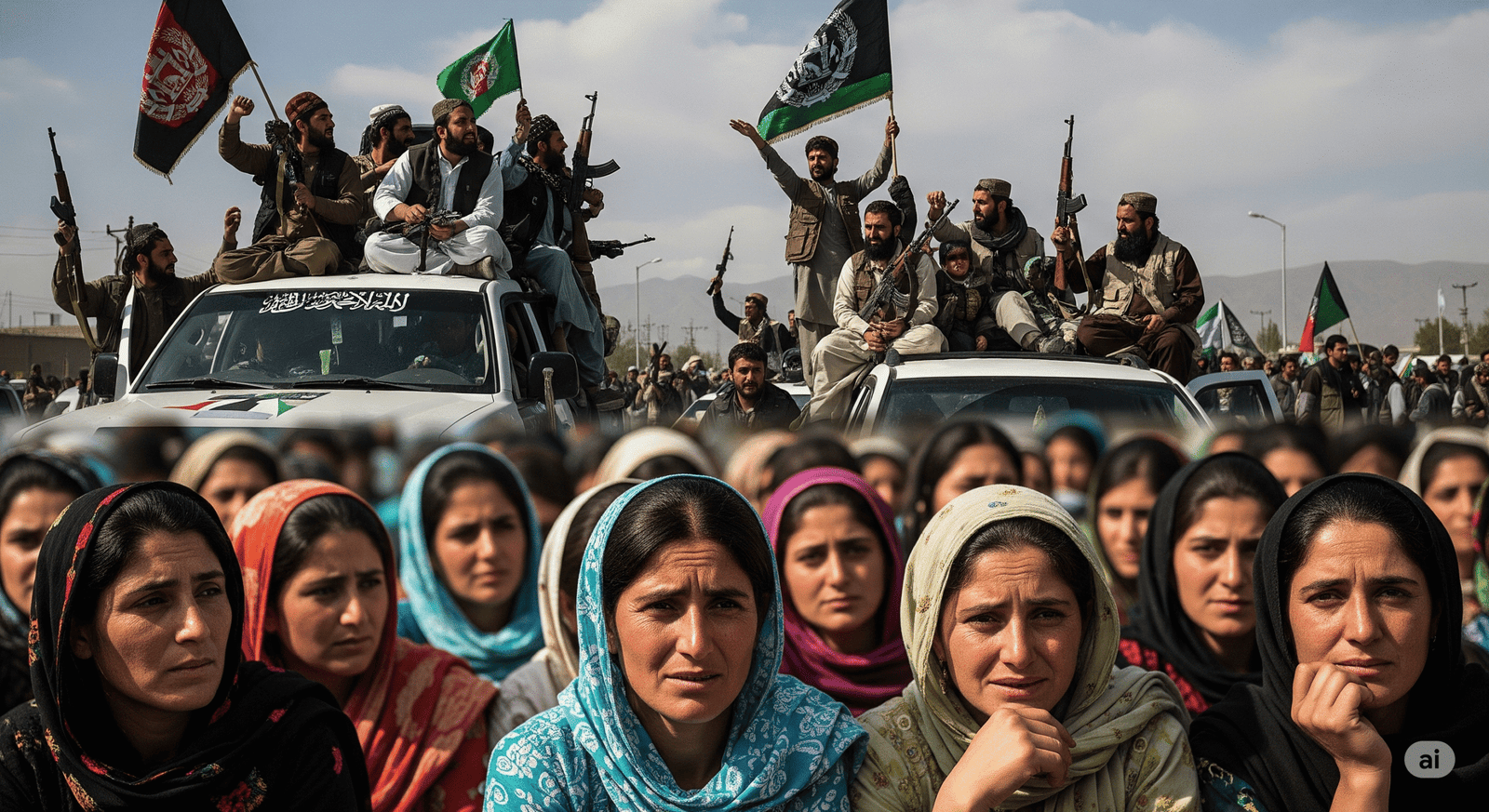
Afghanistan today stands at a stark crossroads. As the Taliban commemorates the fourth anniversary of their dramatic return to power, a sense of carefully orchestrated celebration fills the air in Kabul and other major cities. Parades, speeches, and displays of military strength are intended to showcase their governance and stability. However, this public show of triumph stands in stark contrast to the lived realities of millions of Afghans, particularly women and girls, who continue to endure severe restrictions on their fundamental rights and freedoms. The anniversary serves as a poignant reminder of the profound and often devastating changes that have swept across the nation in the past four years, and the deep concerns that persist within the international community regarding human rights.
The Taliban’s takeover in August 2021 brought an abrupt end to two decades of international military presence and the Afghan Republic. While the initial aftermath saw a relative decrease in large-scale armed conflict in some areas, this fragile peace has come at a steep cost, especially for women. Over the past four years, a systematic erosion of women’s rights has unfolded. Girls have been largely barred from secondary and higher education, effectively closing doors to their future. Restrictions on women’s movement, their participation in public life, and their access to employment have become increasingly stringent. The imposition of strict dress codes and the reinstatement of the Ministry for the Propagation of Virtue and the Prevention of Vice, notorious for its heavy-handed enforcement of the Taliban’s interpretation of Islamic law, have further curtailed women’s autonomy.
Despite these oppressive measures, Afghan women have shown remarkable resilience and courage. Across the country, albeit often in small and clandestine gatherings, women have bravely staged protests, demanding their right to education, work, and freedom of expression. These acts of defiance, often met with suppression and intimidation by the Taliban authorities, highlight the unwavering spirit of Afghan women who refuse to be silenced. Their struggle resonates globally, serving as a powerful symbol of the fight for gender equality in the face of adversity.
The international community remains deeply concerned about the human rights situation in Afghanistan, with the treatment of women and girls being a primary focus. Numerous resolutions and statements from the United Nations, human rights organizations, and individual governments have condemned the Taliban’s restrictive policies and called for their reversal. However, the leverage of the international community remains limited, particularly with the absence of a unified and coherent approach to engaging with the de facto authorities.
The anniversary also prompts reflection on the broader socio-economic conditions in Afghanistan. The withdrawal of international aid and the imposition of sanctions have contributed to a severe economic downturn, exacerbating poverty and food insecurity for millions of Afghans. While the Taliban claims to have brought stability and curbed corruption in some areas, the lack of international recognition and financial support continues to hinder long-term development and address the pressing humanitarian needs of the population.
Looking ahead, the future of Afghanistan remains uncertain. The Taliban faces the challenge of governing a diverse and complex nation while adhering to its ideological principles and navigating international pressure. The aspirations of the Afghan people, particularly the younger generation who have grown up with different expectations and freedoms, cannot be ignored indefinitely. The ongoing struggle for human rights, especially for women, will likely continue to be a defining feature of Afghanistan’s trajectory. The anniversary serves not only as a marker of four years of Taliban rule but also as a call to the international community to remain engaged, to amplify the voices of the Afghan people, and to continue advocating for a future where the rights and dignity of all Afghans are respected. The celebrations orchestrated by the Taliban cannot mask the underlying challenges and the ongoing fight for fundamental freedoms within the country.
21 Bullet Points on the Taliban’s Fourth Anniversary (Date: August 16, 2025)
- Event: Taliban marks four years since regaining power in Afghanistan.
- Date: Anniversary observed around August 15, 2025.
- Celebrations: Taliban held public events and displays of strength.
- Restrictions on Women: Severe limitations on women’s rights and freedoms persist.
- Education Ban: Girls largely barred from secondary and higher education.
- Limited Mobility: Restrictions on women’s movement and public participation.
- Employment Curbs: Challenges for women seeking and retaining employment.
- Dress Codes: Strict Islamic dress codes enforced for women.
- Ministry of Vice and Virtue: Reinstated and actively enforces Taliban’s interpretation of law.
- Women’s Protests: Afghan women continue to hold protests against the restrictions.
- Suppression of Dissent: Taliban authorities have often suppressed women’s protests.
- Human Rights Concerns: International community remains deeply concerned about human rights.
- Global Condemnation: UN and other organizations have condemned the Taliban’s policies.
- Economic Impact: Withdrawal of aid and sanctions have worsened economic conditions.
- Poverty and Food Insecurity: Millions of Afghans face poverty and food shortages.
- Taliban’s Claim: Taliban claims to have brought stability and reduced corruption.
- Lack of Recognition: Taliban government not widely recognized internationally.
- Humanitarian Needs: Significant humanitarian needs persist across the country.
- Future Uncertainty: The future trajectory of Afghanistan remains uncertain.
- International Engagement: Debates continue on how the international community should engage with the Taliban.
- Ongoing Struggle: The fight for human rights and fundamental freedoms continues in Afghanistan.
Separate Answer: Taliban Marks Fourth Anniversary of Afghanistan Takeover
- When: The fourth anniversary of the Taliban’s takeover was marked around August 15, 2025.
- Where: Public events and celebrations were held in major cities across Afghanistan, including Kabul. Protests by women have occurred in various locations, often discreetly.
- Why: The Taliban is celebrating the anniversary to solidify their claim to power and project an image of governance and stability after four years in control. However, this occurs against a backdrop of severe restrictions on women’s rights, which has led to continued protests by Afghan women and strong condemnation from the international community. The anniversary highlights the stark contrast between the Taliban’s celebratory narrative and the ongoing human rights concerns within the country.
- Who: The key actors are the Taliban, who are the de facto authorities in Afghanistan, and the women of Afghanistan, who are disproportionately affected by the Taliban’s restrictive policies and are actively protesting for their rights. The international community, including governments and human rights organizations, is also a significant observer and voice in this situation, expressing concern and calling for change.