





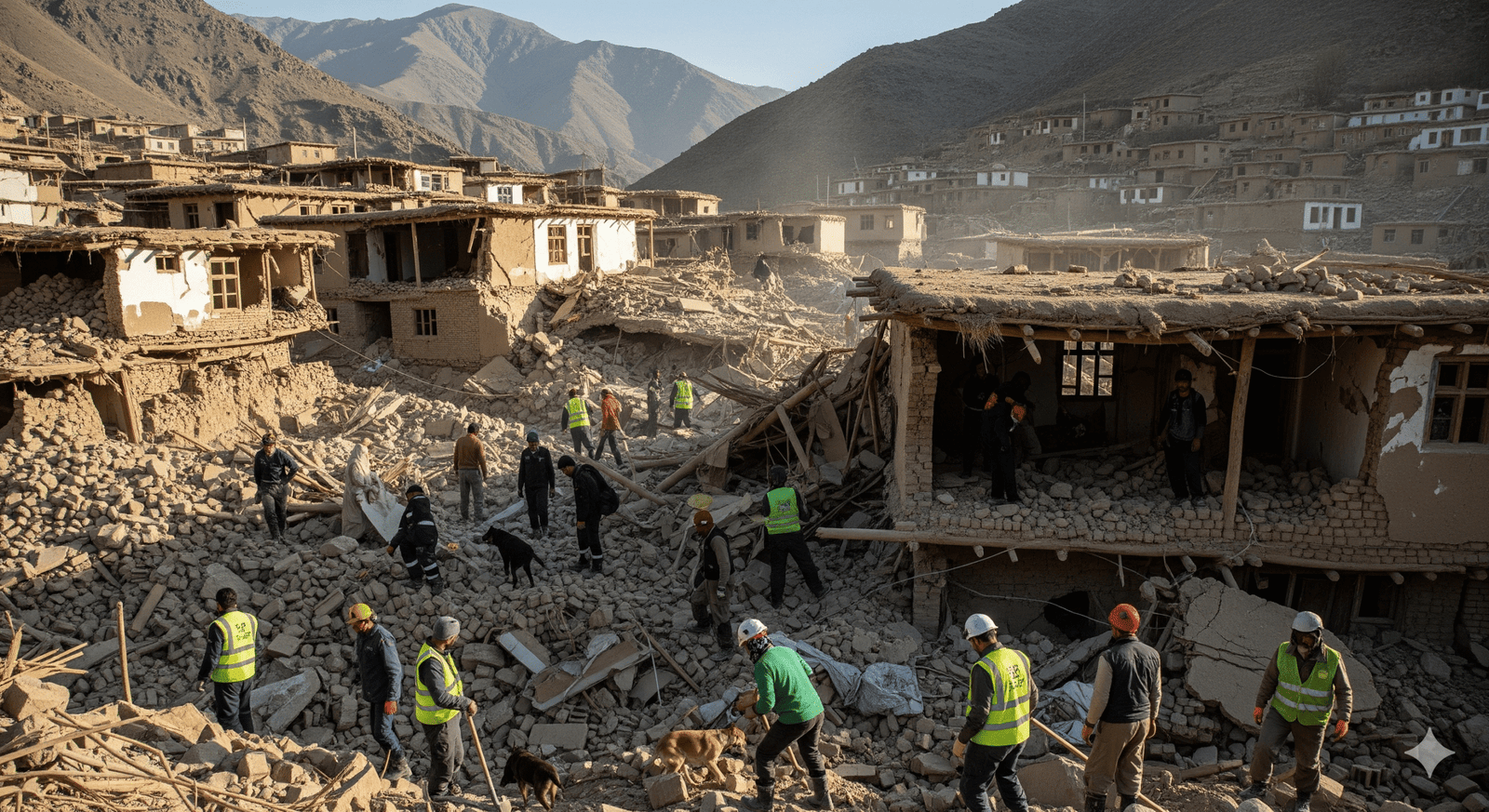
On September 1st, 2025, a devastating magnitude 6.0 earthquake struck eastern Afghanistan, plunging an already vulnerable nation into a new humanitarian crisis. The earthquake’s epicenter, located near Jalalabad, caused widespread destruction across the provinces of Kunar and Nangarhar. This disaster, which has killed at least 800 people and injured thousands more, is a stark reminder of Afghanistan’s precarious existence, where natural calamities intersect with decades of conflict, poverty, and political instability. The images emerging from the affected regions are heartbreaking—mud and stone homes, built into the steep valleys, have been reduced to rubble, trapping families and entire villages beneath the debris. The shallow depth of the quake, just 8-10 kilometers below the surface, amplified its destructive force, leaving countless people without shelter, food, or access to medical care.
The immediate aftermath has been a frantic struggle for survival. Rescue teams, including Afghan Red Crescent volunteers and military personnel, are battling a difficult landscape of mountainous terrain and roads blocked by landslides. Helicopters are being used to airlift the wounded to hospitals, many of which are already overwhelmed. The death toll is expected to rise as rescuers reach more remote and isolated communities. The sheer scale of the devastation is immense, with some villages reportedly “completely destroyed.” Survivors recount stories of horror and loss, with many losing their entire families in the middle of the night.
In the face of this catastrophe, the Taliban administration, which is already grappling with a severe economic downturn and a reduction in international aid, has issued an urgent plea for global assistance. The appeal for help highlights a critical juncture for the international community. While there are legitimate concerns about the Taliban’s human rights record and its policies toward women, the humanitarian imperative to help the Afghan people is undeniable. Organizations like the United Nations, the Red Cross, and Amnesty International are mobilizing to provide aid, but the challenges are formidable. Donor countries, including the United States, have scaled back or cut off funding, and the Taliban’s restrictive policies have made it difficult for some aid agencies to operate effectively.
The earthquake serves as a painful illustration of Afghanistan’s long-term challenges. The country lies at the junction of the Eurasian and Indian tectonic plates, making it highly susceptible to seismic activity. This, combined with a lack of disaster-resilient infrastructure, means that each major earthquake exacts a heavy toll. As rescue efforts transition to rebuilding, the long-term consequences of this disaster will become even more apparent. Thousands of people are now displaced and will need assistance, especially with the harsh winter months approaching. The destroyed homes, livelihoods, and infrastructure will require significant resources to rebuild, a task made even more difficult by the country’s dire economic situation. The international community must find a way to navigate the political complexities and provide robust, non-discriminatory aid to the Afghan people, ensuring that their immediate needs are met and that the groundwork is laid for long-term recovery and resilience.
21 Bullet Points on the Afghanistan Earthquake (September 2, 2025)
- An earthquake of magnitude 6.0 struck eastern Afghanistan on September 1, 2025.
- The disaster has resulted in at least 800 confirmed deaths.
- Thousands of people have been injured, with the toll expected to rise.
- The earthquake’s epicenter was located about 27 km east-northeast of Jalalabad.
- The shallow depth of the quake (8-10 km) contributed to the widespread destruction.
- Tremors were felt across eastern Afghanistan and in parts of Pakistan.
- The provinces of Kunar and Nangarhar were among the worst affected.
- Mud and stone homes in remote mountainous areas were toppled.
- Rescue operations are underway but are hindered by difficult terrain and blocked roads.
- Helicopters are being used to transport the injured to hospitals.
- Hospitals in the affected regions are reported to be overstretched.
- The Taliban administration has issued an urgent appeal for international aid.
- The United Nations and various aid organizations have mobilized to provide assistance.
- India has offered humanitarian aid and sent relief materials.
- Britain has pledged emergency funding, channeled through partners to avoid the Taliban administration.
- The disaster exacerbates an existing humanitarian crisis in Afghanistan.
- The country is facing a sharp drop in international aid and has a large displaced population.
- The earthquake highlights Afghanistan’s vulnerability to seismic activity due to its location on tectonic plates.
- Long-term consequences include the need for shelter and rebuilding efforts.
- Villages have been completely destroyed, leaving many homeless.
- Aid agencies are focusing on immediate needs like search and rescue, food, water, and medical supplies.
Separate Answer: When, Where, Why, and Who
When
The earthquake struck on Sunday, September 1, 2025, just before midnight local time.
Where
The earthquake’s epicenter was in eastern Afghanistan, near the city of Jalalabad. The most severely impacted regions were the provinces of Kunar and Nangarhar, particularly in remote, mountainous areas.
Why
The earthquake was caused by the seismic activity resulting from the collision of the Eurasian and Indian tectonic plates. Afghanistan’s location in the Hindu Kush mountain range, where these plates converge, makes it highly prone to such disasters. The shallow depth of the quake significantly amplified its destructive power, leading to the collapse of fragile, unreinforced mud and stone homes.
Who
The people affected by the earthquake are the residents of eastern Afghanistan, particularly in the provinces of Kunar and Nangarhar. The response efforts are being led by local authorities, including the Taliban administration, as well as international aid organizations such as the United Nations, the Red Cross, and various NGOs. Countries like India and the UK have also offered assistance.
You can watch this video to see some of the initial reports from the ground after the earthquake struck. Afghanistan Earthquake: Over 800 Dead, Taliban Appeals For Global Aid