




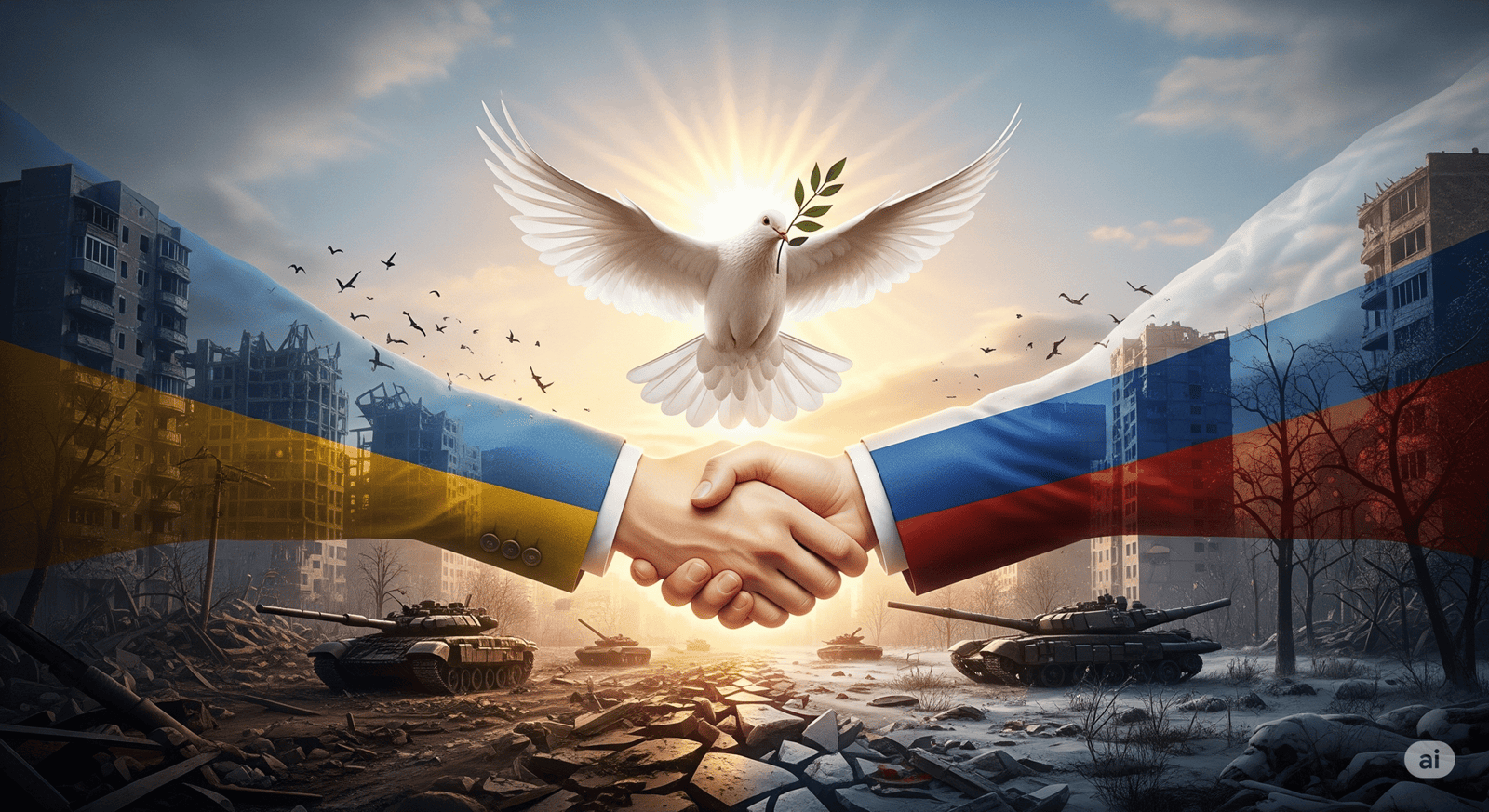
The world holds its breath as diplomatic efforts to end the devastating war in Ukraine intensify.1 In the wake of a recent summit between U.S. President Donald Trump and Russian President Vladimir Putin in Alaska, a new chapter in the complex saga of this conflict is unfolding.2 The meeting, which was touted as a significant step toward a peace agreement, has set the stage for a potential trilateral meeting with Ukrainian President Volodymyr Zelensky.3 However, the path forward is anything but clear, as deep-seated disagreements and shifting political dynamics threaten to derail progress before it can truly begin.
The primary point of contention, and the most significant obstacle to a peace deal, lies in the issue of Ukrainian territory. Reports from multiple news outlets indicate that Putin is demanding full control of the Donetsk and Luhansk regions, collectively known as the Donbas, as a condition for peace.4 This demand is a non-starter for Kyiv.5 President Zelensky has been unwavering in his stance, repeatedly rejecting any proposal that would require Ukraine to cede sovereign territory.6 For Ukraine, such a concession is not only unconstitutional but would also be a catastrophic blow, effectively rewarding Russian aggression and potentially leaving the country vulnerable to future invasions.7 The Donbas is Ukraine’s industrial heartland, and losing it would have devastating economic and strategic consequences.8
The diplomatic dance following the Trump-Putin meeting has been intricate. While no formal peace agreement was announced, President Trump has indicated that the focus has shifted from a mere ceasefire to a full peace accord, which he believes would be more durable.9 This change in approach is a direct result of his discussions with Putin.10 Trump has also said that he and Putin “largely agreed” on a framework for peace, which reportedly includes the idea of land transfers and security guarantees.11 However, this has created a sense of unease among Ukraine’s European allies, who fear that Kyiv may be pressured into accepting unfavorable terms.12
In response, European leaders are actively engaging in their own diplomatic maneuvers.13 A “coalition of the willing,” led by German Chancellor Friedrich Merz, French President Emmanuel Macron, and British Prime Minister Keir Starmer, is holding discussions to protect Ukraine’s interests and ensure that any peace deal is just and lasting.14 This coalition is pushing for “ironclad” security guarantees for Ukraine and is adamant that any agreement cannot be made without Ukraine’s full participation.15 The European position is clear: a ceasefire must be the starting point for negotiations, not a consequence of territorial concessions. The leaders also continue to stress the importance of maintaining pressure on Russia through sanctions to weaken its war economy.16
The upcoming meeting in Washington between President Zelensky and President Trump is now the central focus of the diplomatic effort.17 It represents a critical opportunity for Ukraine to present its perspective and for its allies to coordinate a unified strategy. Zelensky’s primary goal will be to secure a firm commitment from the U.S. on security guarantees and to ensure that Ukraine’s territorial integrity remains non-negotiable. The outcome of this meeting will likely determine the course of future negotiations and whether a peaceful resolution to this prolonged and brutal conflict is truly attainable. The road ahead is long and fraught with peril, and the world is watching to see if diplomacy can succeed where military force has failed to find a definitive end.
21 Bullet Points on the Latest News 📰
- Date: August 17, 202518
- The U.S.-Russia summit between Donald Trump and Vladimir Putin took place in Alaska.19
- The summit concluded without a formal peace agreement or ceasefire.20
- Trump described the meeting as “very productive” and “a great and very successful day.”21
- Putin called the talks “timely and quite useful.”22
- Attention is now on a proposed trilateral meeting involving Ukrainian President Volodymyr Zelensky.23
- Reports from multiple sources indicate Putin’s demand for full control of the Donetsk and Luhansk regions as a condition for peace.24
- This would mean Russia taking control of the entire Donbas region.25
- President Zelensky has firmly rejected this demand, citing it as unconstitutional and a reward for Russian aggression.26
- He argues that ceding the Donbas would leave Ukraine vulnerable to future attacks.27
- The Donbas region is critical to Ukraine’s economy due to its industrial importance.28
- Following the summit, Trump changed his position, advocating for a full peace accord rather than a ceasefire.29
- He stated that a peace agreement would be more durable and less likely to fail.30
- Trump has reportedly expressed support for a proposal that involves territorial concessions.31
- European leaders have formed a “coalition of the willing” to protect Ukraine’s interests.32
- This coalition includes leaders from Germany, France, and the UK.33
- The European position is that peace must be “just and lasting” and that a ceasefire should precede any territorial discussions.34
- They are also focused on securing “ironclad” security guarantees for Ukraine.35
- The next key event is a meeting between President Zelensky and President Trump in Washington, D.C.36
- Zelensky aims to secure U.S. commitment to Ukraine’s territorial integrity and security.37
- European leaders are hopeful that a unified front can be presented in future negotiations.
The Four W’s: When, Where, Why, and Who
- When: The most recent major diplomatic event was the U.S.-Russia summit on Friday, August 15, 2025.38 The next key event, the meeting between President Zelensky and President Trump, is scheduled for Monday, August 18, 2025.39
- Where: The U.S.-Russia summit was held in Anchorage, Alaska.40 The upcoming meeting between the U.S. and Ukrainian presidents will take place in Washington, D.C., at the White House.41 Future trilateral talks, if they happen, are expected to be held in a neutral European country.42
- Why: The primary reason for these diplomatic efforts is to find a path to a peaceful resolution of the ongoing war in Ukraine.43 The summit was initiated by President Trump as a “feel-out meeting” to assess Russia’s sincerity in negotiating an end to the conflict. It was aimed at moving past a stalemate and preventing further loss of life and destruction.
- Who: The key figures involved are U.S. President Donald Trump, Russian President Vladimir Putin, and Ukrainian President Volodymyr Zelensky.44 Other important players include European leaders like German Chancellor Friedrich Merz, French President Emmanuel Macron, and British Prime Minister Keir Starmer, who are working to support Ukraine’s position and ensure its security interests are not compromised.45