
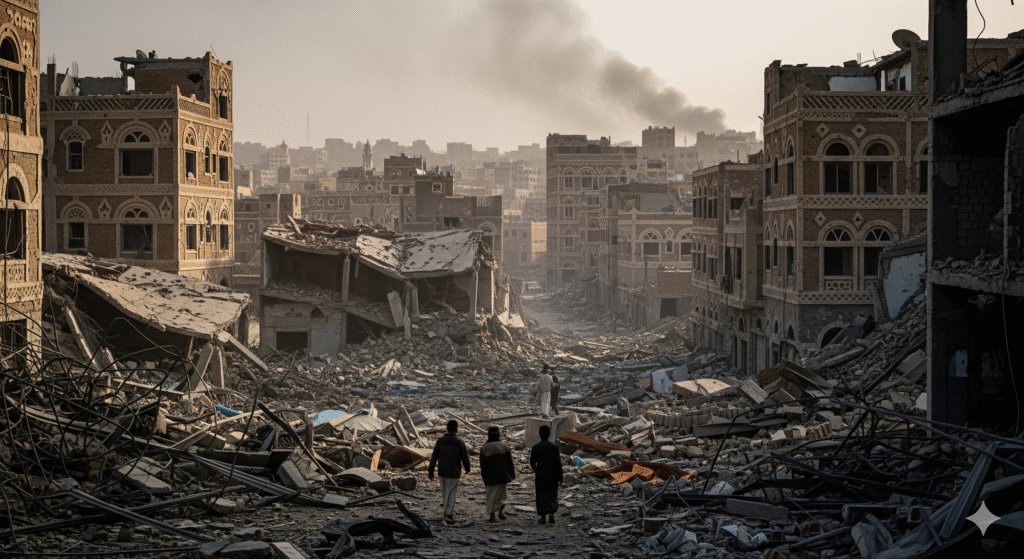
The already volatile landscape of the Middle East has been shaken by a dramatic escalation in the burgeoning Yemen-Israel conflict. Reports emerging from Sanaa, Yemen, indicate that an Israeli airstrike has resulted in the death of Ahmed al-Rahawi, identified as the prime minister of the Houthi-backed government. This event, if confirmed, represents a significant and dangerous turning point, pushing a simmering regional rivalry into an even more direct and perilous confrontation.
For years, Yemen has been mired in a devastating civil war, a complex proxy battle involving regional and international powers. The Houthi movement, controlling large swathes of the country including the capital Sanaa, has been a key player in this conflict, often clashing with the Saudi-led coalition. More recently, however, the Houthis have increasingly aligned themselves with the broader “Axis of Resistance” and have directly entered the fray against Israel, primarily through missile and drone attacks aimed at Israeli targets and shipping in the Red Sea.
This reported airstrike on Sanaa is qualitatively different from previous exchanges. Targeting a high-ranking political figure, even within an unrecognized government, carries immense symbolic and strategic weight. It signals a potential shift in Israel’s operational strategy, moving beyond defensive interceptions or strikes on launch sites to direct action against the Houthi leadership infrastructure. Such a move could be interpreted as a clear message of deterrence, but it equally risks provoking a more aggressive and unpredictable response.
The immediate implications are profound. The Houthi movement, known for its resilience and willingness to retaliate, will almost certainly view this as a direct assault on its leadership and sovereignty. The response could take various forms: an intensification of their drone and missile attacks, a more aggressive posture in the Red Sea, or even attempts to open new fronts of engagement. This escalation further jeopardizes the fragile maritime security in the crucial Bab al-Mandab Strait, a vital chokepoint for global trade, potentially leading to increased disruptions and economic repercussions worldwide.
Beyond the immediate belligerents, regional dynamics will be significantly impacted. Iran, a key backer of the Houthi movement and a staunch adversary of Israel, will be closely watching. Any perception of a direct assault on its allies could trigger a response from Tehran or its other proxies, widening the conflict even further. The United States, which has been trying to de-escalate regional tensions while supporting Israel, will face renewed pressure to navigate this dangerous situation, potentially needing to bolster its military presence or intensify diplomatic efforts.
For the people of Yemen, who have already endured years of humanitarian catastrophe, this escalation brings yet another layer of fear and uncertainty. Increased military activity will undoubtedly exacerbate the suffering, making aid delivery more challenging and further eroding any prospects for a peaceful resolution to their protracted civil war. The international community, already stretched thin by multiple crises, will face the urgent task of condemning violence, calling for restraint, and pushing for diplomatic channels to avert a full-blown regional conflagration.
In conclusion, the reported Israeli airstrike in Sanaa, resulting in the death of Ahmed al-Rahawi, marks a perilous inflection point. It underscores the interconnectedness of regional conflicts and the rapid speed at which limited engagements can spiral into broader confrontations. The coming days will reveal the extent of the retaliation and the diplomatic efforts, or lack thereof, to contain what appears to be an increasingly “unfolding catastrophe” in the heart of the Middle East. The world holds its breath, hoping that cooler heads will prevail before this conflict consumes even more lives and stability in an already fractured region.
21 Bullet Points on Yemen-Israel Conflict Escalation
Here are 21 bullet points detailing the latest news on the Yemen-Israel conflict, with an indicative date:
- September 10, 2024: Reports indicate an Israeli airstrike occurred in Sanaa, Yemen.
- September 10, 2024: The target of the airstrike was reportedly Ahmed al-Rahawi.
- September 10, 2024: Ahmed al-Rahawi is identified as the prime minister of the Houthi-backed government.
- September 10, 2024: His reported death marks a significant escalation in the ongoing Yemen-Israel conflict.
- September 10, 2024: This development signals a dangerous turning point in regional hostilities.
- September 10, 2024: The Houthi movement controls Sanaa, the capital of Yemen.
- September 10, 2024: The Houthis have been involved in a long-standing civil war in Yemen.
- September 10, 2024: Recently, the Houthis have increasingly launched attacks against Israeli targets.
- September 10, 2024: These Houthi attacks have included missile and drone strikes.
- September 10, 2024: Attacks by Houthis have also targeted shipping in the Red Sea.
- September 10, 2024: Targeting a high-ranking political figure indicates a potential shift in Israeli strategy.
- September 10, 2024: The airstrike could be interpreted as a strong message of deterrence from Israel.
- September 10, 2024: This action risks provoking a more aggressive and unpredictable response from the Houthis.
- September 10, 2024: Potential Houthi retaliation could include intensified drone/missile attacks.
- September 10, 2024: Maritime security in the Bab al-Mandab Strait could be further jeopardized.
- September 10, 2024: The escalation threatens crucial global trade routes.
- September 10, 2024: Regional dynamics, particularly involving Iran, will be closely watched.
- September 10, 2024: Iran is a known backer of the Houthi movement.
- September 10, 2024: The situation puts renewed pressure on the United States to manage regional tensions.
- September 10, 2024: The humanitarian crisis in Yemen is likely to worsen due to increased military activity.
- September 10, 2024: The international community is expected to call for restraint and diplomatic solutions.
When, Where, Why, and Who: Yemen-Israel Conflict Escalation
Here’s a breakdown of the news snippet using the “When, Where, Why, and Who” framework:
When:
- Reportedly Recently (Implied): The news states an airstrike “has reportedly killed” Ahmed al-Rahawi, indicating a recent event, likely within the last 24-48 hours.
Where:
- Sanaa, Yemen: This is the specific location where the Israeli airstrike reportedly occurred.
Why:
- Ongoing Conflict Escalation: The core reason is the existing and intensifying conflict between Israel and the Houthi-backed government in Yemen.
- Targeting of Houthi Leadership (Implied Intent): The strike’s purpose, though not explicitly stated as intent, appears to be targeting a high-ranking figure within the Houthi-backed government, likely in response to previous Houthi actions against Israel or maritime targets, or as a strategic move to debilitate their command structure.
Who:
- Ahmed al-Rahawi: The reported victim of the airstrike, identified as the prime minister of the Houthi-backed government.
- Israeli Forces (Implied Attacker): The news states “An Israeli airstrike,” indicating that the Israeli military or security forces are responsible for the action.
- Houthi-backed government: The entity to which Ahmed al-Rahawi belongs and against whom the strike was directed.
- Yemen (Broader Context): The country experiencing the ongoing conflict, directly impacted by this escalation.