





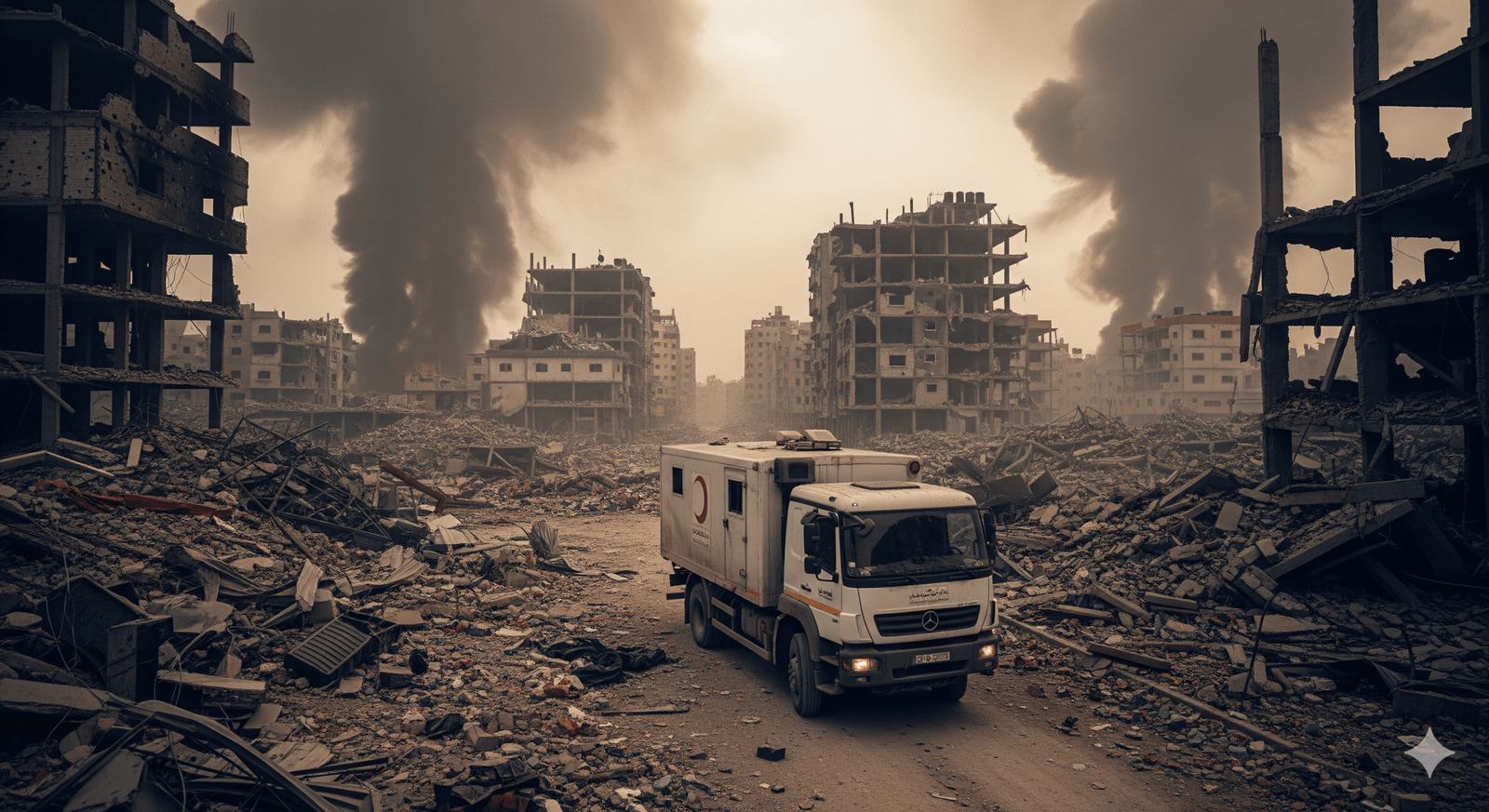
Junnar, Maharashtra, India – In a grim announcement that signals a severe escalation of hostilities and deepens fears of an unprecedented humanitarian catastrophe, the Israel Defense Forces (IDF) have officially declared Gaza City a “combat zone.” This declaration, made on Friday, August 29, 2025, comes hand-in-hand with the IDF’s decision to end “tactical pauses” for humanitarian aid delivery, a move that is expected to critically worsen the already dire conditions for hundreds of thousands of civilians trapped within the besieged enclave.
The declaration effectively means that the IDF will conduct intensive military operations throughout Gaza City, with reduced constraints on targeting and movement, as it pursues its stated objective of dismantling Hamas’s military capabilities and infrastructure. For the civilians still present in the northern part of the Gaza Strip, this translates into an even greater risk to their lives, with intensified bombardments, ground incursions, and the widespread destruction of infrastructure. International aid agencies and human rights organizations have long warned that such an escalation, particularly without adequate provisions for civilian protection and humanitarian access, would have devastating consequences.
The cessation of “tactical pauses” for aid delivery is perhaps the most immediate and alarming aspect of the IDF’s announcement. These pauses, which were sporadically implemented in specific areas, offered brief windows for essential supplies—food, water, medicine, and fuel—to reach a population teetering on the brink of famine and disease. With these pauses now halted, the flow of life-saving aid will be severely restricted, if not entirely choked off, precisely when military operations are intensifying. Hospitals, already overwhelmed and barely functioning, will face even greater shortages of medical supplies and fuel for generators. Displaced families, sheltering in makeshift camps or damaged buildings, will struggle even more to find basic necessities.
The humanitarian situation in Gaza has been described by the United Nations and numerous aid groups as catastrophic for months. Over 80% of the population has been displaced, sanitation systems have collapsed, and access to clean water is critically limited. Reports from inside Gaza speak of widespread hunger, the rapid spread of infectious diseases, and a health system on the verge of total collapse. The IDF’s decision to end aid pauses, coupled with the “combat zone” declaration, is likely to push these already dire conditions past a point of no return.
International reactions have been swift and largely condemnatory. UN officials have expressed “grave alarm” over the announcement, reiterating urgent calls for a permanent ceasefire and unhindered humanitarian access. Several European nations and human rights organizations have echoed these concerns, warning that the intensification of military action without humanitarian safeguards could lead to a significant increase in civilian casualties and a further deterioration of international humanitarian law. There is a growing chorus of voices urging Israel to reconsider its decision and prioritize the protection of civilians and the facilitation of aid.
The Israeli government and the IDF maintain that these measures are necessary to achieve their military objectives against Hamas, which they accuse of using civilian infrastructure for military purposes and deliberately endangering the population. However, critics argue that the methods employed are disproportionate and inflict unacceptable suffering on civilians.
As Gaza City braces for intensified conflict, the world watches with growing apprehension. The declaration of a “combat zone” and the end of aid pauses mark a perilous new phase in the conflict, one that threatens to exact an even more tragic toll on a population already enduring unimaginable hardship. The international community faces a renewed and urgent challenge to de-escalate the conflict and ensure the protection and survival of civilians in Gaza.
21 Bullet Points on Gaza City Declared “Combat Zone” & End of Aid Pauses
- Date of Declaration: Friday, August 29, 2025.
- Declaring Authority: Israel Defense Forces (IDF).
- Declared Status: Gaza City is now officially a “combat zone.”
- Accompanying Action: IDF ended “tactical pauses” for humanitarian aid delivery.
- Expected Impact: Critically worsen the already dire humanitarian crisis in Gaza.
- Military Intent: IDF aims for intensive military operations to dismantle Hamas.
- Civilian Risk: Increased danger to hundreds of thousands of civilians trapped in northern Gaza.
- Aid Restriction: Flow of essential supplies (food, water, medicine, fuel) will be severely limited.
- Hospital Impact: Overwhelmed hospitals face even greater shortages.
- Displaced Persons: Families in makeshift camps struggle for basic necessities.
- Pre-existing Conditions: Humanitarian situation already catastrophic before this declaration.
- Displacement: Over 80% of Gaza’s population already displaced.
- Health Crisis: Collapsed sanitation, limited clean water, widespread hunger, spread of disease.
- UN Reaction: UN officials expressed “grave alarm” and called for permanent ceasefire.
- International Concerns: European nations and human rights organizations warned of increased civilian casualties.
- International Humanitarian Law: Concerns about further deterioration of IHRL.
- Calls to Israel: Urging reconsideration of the decision and prioritization of civilian protection.
- Israeli Justification: Measures necessary to achieve military objectives against Hamas.
- Hamas Accusations: IDF accuses Hamas of using civilian infrastructure and endangering population.
- Criticism of IDF: Critics argue methods are disproportionate and cause unacceptable civilian suffering.
- Overall Outlook: Marks a perilous new phase in the conflict with a tragic toll on civilians.
Separate Answer: When, Where, Why, and Who
When: The declaration and the decision to end aid pauses were made on Friday, August 29, 2025.
Where: The declaration specifically pertains to Gaza City within the Gaza Strip. The impact of this decision will be felt across the entire besieged Gaza Strip.
Why: The Israel Defense Forces (IDF) declared Gaza City a “combat zone” and ended “tactical pauses” to intensify their military operations. The stated purpose is to pursue and dismantle Hamas’s military capabilities and infrastructure within Gaza City. By removing these “tactical pauses,” the IDF aims to conduct operations with fewer restrictions, asserting that such measures are necessary to achieve their objectives. This move, however, is widely expected to further exacerbate the severe humanitarian crisis by significantly restricting the entry and distribution of life-saving aid to the civilian population.
Who: The declaration was made by the Israel Defense Forces (IDF). The direct targets of the military operations are Hamas’s military assets and personnel. The humanitarian impact, however, will primarily affect the civilian population of Gaza City and the broader Gaza Strip, including hundreds of thousands of displaced persons and those relying on humanitarian aid from UN agencies and international aid organizations.