




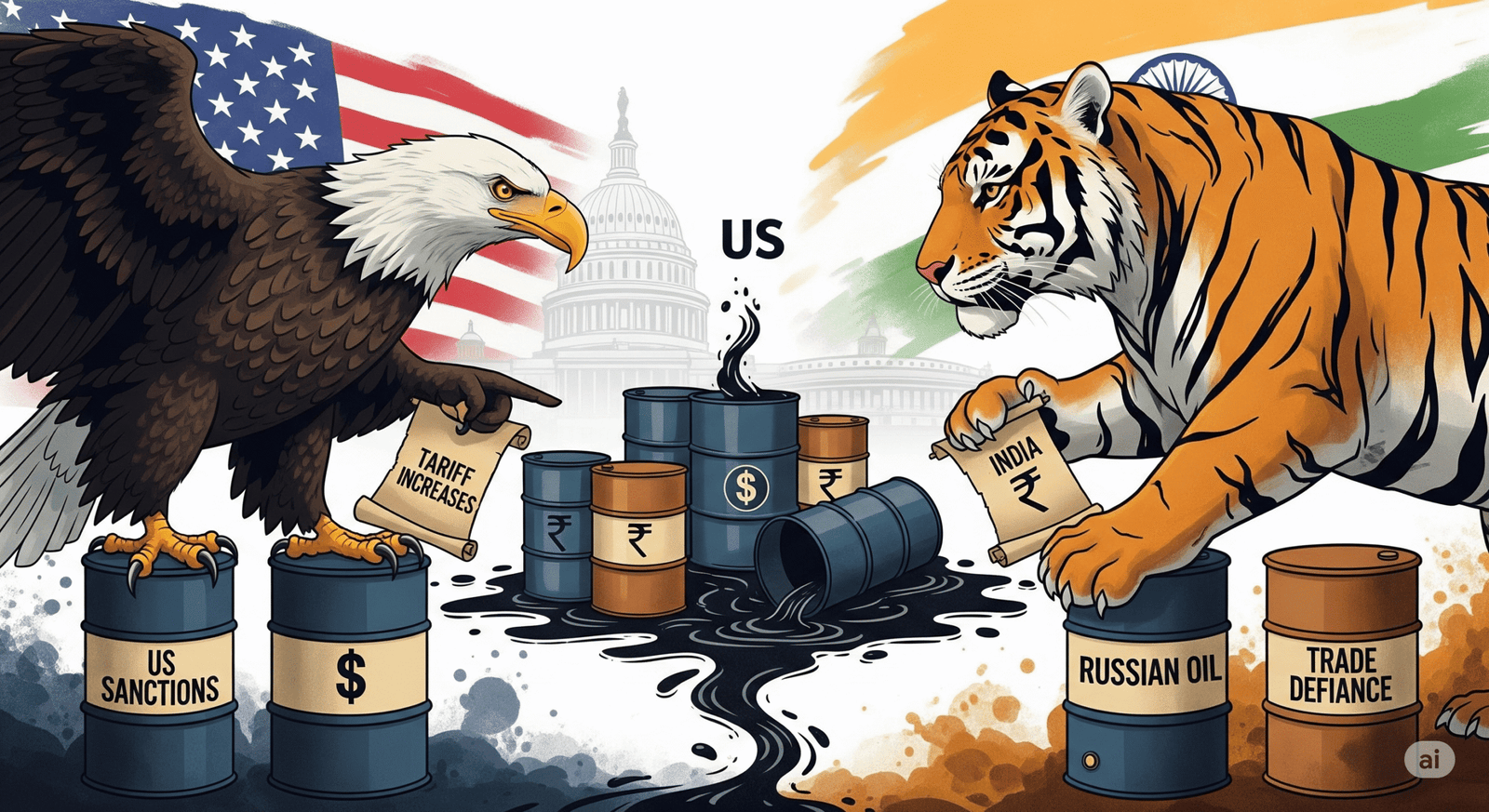
In a significant escalation of international economic tensions, the Trump administration has levied additional tariffs on India, citing its purchases of discounted Russian oil.1 This move marks a new chapter in the complex web of global politics and energy markets, where economic policies are now being explicitly used to exert pressure in the ongoing Russia-Ukraine conflict.2 The core of the US argument is that India is “profiteering” from the war by buying cheap Russian crude, refining it, and then reselling the products at a profit to countries that have sanctioned Russia.3
The imposition of these new tariffs, which are set to take effect on August 27, adds a 25% penalty on top of existing levies, bringing the total additional tariffs on Indian goods to 50%.4 According to US Treasury Secretary Scott Bessent, this measure is a direct response to what he terms “Indian arbitrage”—a strategy that has allegedly generated over $16 billion in “excess profits” for some of India’s wealthiest families.5 Bessent noted that India’s imports of Russian oil have surged from less than 1% of its total oil purchases before the conflict to as much as 42% today.6 This is in stark contrast to China, which, despite being a larger overall buyer of Russian oil, has seen its imports increase only marginally and is not subject to similar tariffs.7 The Trump administration justifies this disparity by arguing that China was a significant buyer of Russian oil before the war, whereas India’s sudden pivot is an act of opportunistic profiteering.8
India, however, has pushed back strongly against these accusations.9 The Ministry of External Affairs has stated that its oil imports are dictated by market factors and are essential for ensuring the energy security of its 1.4 billion people.10 India maintains that it is being unfairly singled out for actions that are also being taken by other countries in their own national interest.11 This stance highlights a fundamental difference in perspective: the US views India’s actions as undermining global sanctions and indirectly financing Russia’s war effort, while India sees its actions as a legitimate and necessary exercise of national sovereignty and economic pragmatism.
The new tariffs have immediate and significant implications for the Indian economy.12 Indian refiners, who have become major customers of Russian crude, are already delaying orders for future shipments as they await clarity on the economic impact.13 A rapid shift away from Russian oil, which now accounts for a substantial portion of India’s crude needs, could create market tension and lead to a rise in global oil prices.14 Such a change would be challenging to manage, as finding alternative suppliers for such a large volume of oil would take months and could disrupt global trade balances.15
Beyond the immediate economic fallout, this dispute underscores the growing strain in US-India relations.16 Despite being touted as strategic partners, the two nations have been at loggerheads over trade issues for some time.17 The US’s decision to weaponize trade policy in a bid to influence India’s foreign policy on Russia highlights a deep-seated tension.18 The situation is further complicated by the fact that the previous US administration had reportedly encouraged India to buy Russian oil to prevent a global price surge.19 This historical context provides India with a strong counter-argument, suggesting that the current tariffs are not only “unjustified” but also a reversal of prior US policy.
As the August 27 deadline looms, the international community is watching closely. The outcome will not only determine the future of the US-India economic relationship but will also set a precedent for how major powers use trade and tariffs to enforce geopolitical agendas. The dispute serves as a powerful reminder that in today’s interconnected world, economic decisions are rarely purely financial; they are deeply intertwined with politics, national security, and the ever-shifting dynamics of global power.
21 Key Points on the US-India Tariff Dispute
- Date: August 20, 2025.20
- The Trump administration has imposed additional tariffs on India.21
- The tariffs are a direct result of India’s continued purchase of discounted Russian oil.22
- The US accuses India of “profiteering” from the Russia-Ukraine conflict.23
- US Treasury Secretary Scott Bessent labeled India’s strategy as “Indian arbitrage.”24
- The new tariffs add a 25% penalty on top of existing ones.25
- This brings the total additional tariffs on Indian goods to 50%.26
- The tariffs are effective starting August 27, 2025.27
- The US claims India has made over $16 billion in “excess profits” from the trade.28
- India’s imports of Russian oil have surged from under 1% to as high as 42% of its total oil purchases.29
- The US has not imposed similar tariffs on China, despite its being a larger buyer of Russian oil.30
- The US justifies this by stating China was a significant Russian oil customer before the war, unlike India.31
- India has reacted strongly, calling the US actions “unjustified” and “unreasonable.”32
- India’s Ministry of External Affairs says its oil imports are driven by market factors and energy security.33
- Indian refiners have begun delaying orders for Russian oil, awaiting clarity on the tariffs.34
- A rapid shift away from Russian oil could disrupt the global oil market and raise prices.35
- The previous US administration had reportedly encouraged India to buy Russian oil to prevent price spikes.36
- This dispute highlights growing trade tensions between the US and India.37
- The tariffs are a form of economic pressure intended to compel Russia toward a diplomatic resolution with Ukraine.38
- The decision to use tariffs as a geopolitical tool sets a significant precedent for international relations.
- The situation underscores the complex interplay between economics, politics, and national security in the modern world.
The News Explained: When, Where, Why, and Who
When
- The tariffs were announced on August 19, 2025.39
- They are set to take effect on August 27, 2025.40
Where
- The tariffs were imposed by the United States on goods from India.41
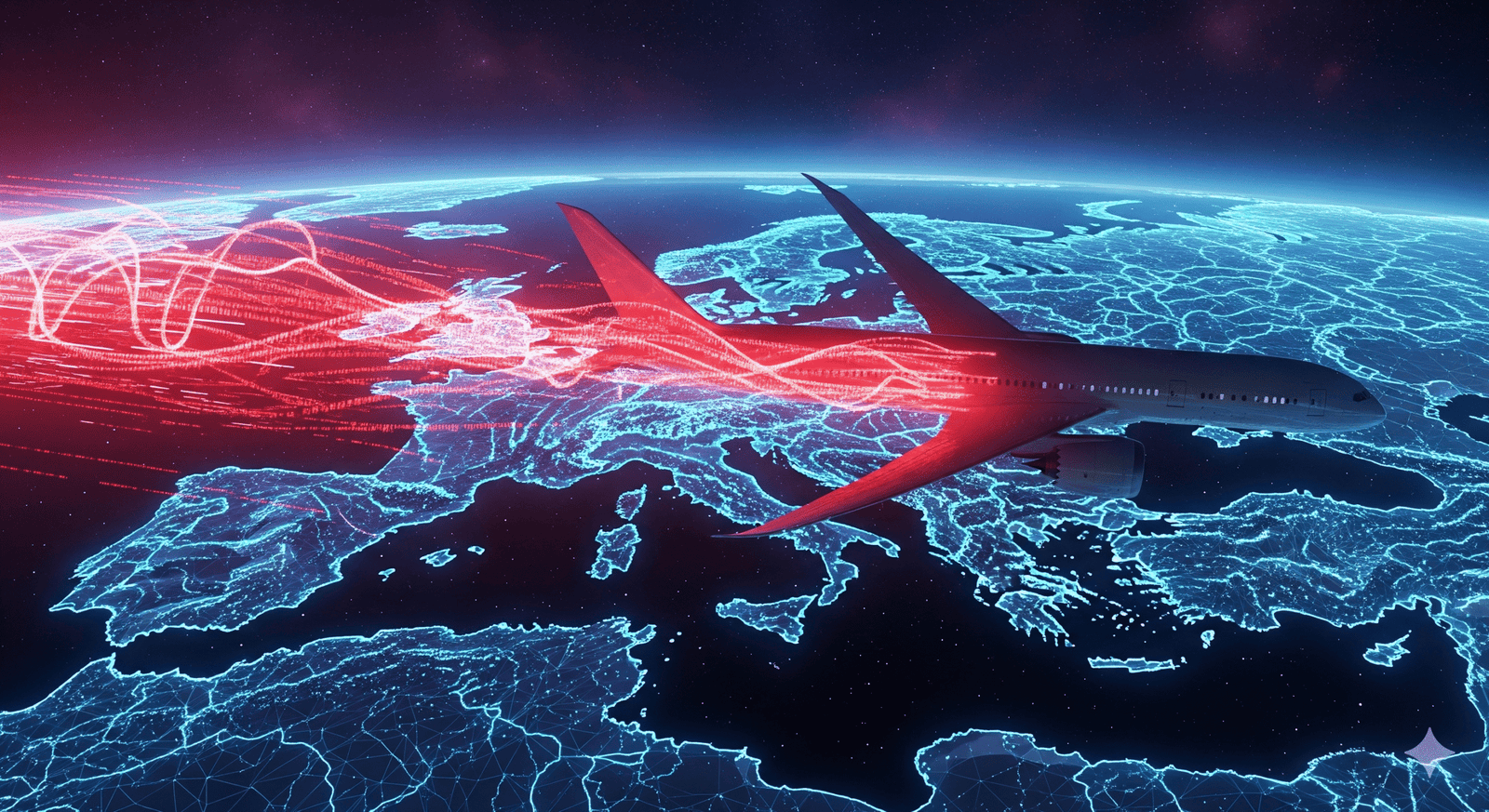
- The economic dispute is centered on oil trade involving Russia and its oil, which is being refined and possibly resold by India to other regions, including Europe.42
Why
- The primary reason for the tariffs is the Trump administration’s accusation that India is “profiteering” from the Russia-Ukraine conflict.43 By buying discounted Russian oil and reselling the refined products, the US argues that India is indirectly funding Russia’s war effort.44
- The broader goal of the tariffs is to pressure Russia economically and compel it toward a diplomatic resolution to the conflict in Ukraine.45 The US is using trade policy as a lever to achieve its geopolitical objectives.
Who
- The key players are the Donald Trump administration (specifically, President Donald Trump and Treasury Secretary Scott Bessent), the government of India (represented by its Ministry of External Affairs), and Russian oil producers.
- Other involved parties include Indian oil refiners, who are directly affected by the new tariffs, and oil analysts like Matt Smith of Kpler, who have provided data on India’s oil imports.46 The dispute also implicitly involves China, as its different treatment by the US has been a point of contention.47